Archive for March, 2012

By the hammer of Goodell…

Wednesday, March 21st, 2012

this is a bad day for the Saints.

This is going to be well covered elsewhere, short version:

  • Coach Sean Payton is suspended for a year without pay.
  • Gregg Williams, the former defensive coordinator who moved over to the Rams in the off-season, is out “indefinitely” without pay.  Goodell will review Williams’ status at the end of the 2012 season
  • General manager Mickey Loomis is out for the first eight games of the season without pay.
  • Joe Vitt, assistant head coach, is out without pay for the first six games.
  • The Saints will lose second round draft picks in 2012 and 2013.
  • The team will be fined $500,000.
  • “The Saints, individuals disciplined are expected to participate in efforts to develop programs that will instruct on:
    — Respect for game and those who participate in it
    — Principles of fair play, safety and sportsmanship
    — Ensure bounties will not be part of football at any level. “

I may have more thoughts on this later.

Edited to add: Now that I have a little more time to write about this:

  • I was expecting a larger team fine, something like $1 million. $500,000 is still twice what the Patriots were fined, though.
  • A year on the bench for Payton seems right. Reports indicate that will cost him $8 million.
  • If Payton gets a year, though, why does Loomis only get eight games? He disobeyed both the NFL and his owner: I think he’s more culpable than Payton, and should have gotten at least a year. (I called for a lifetime suspension initially. And I still do not think that was out of line.)
  • Why second round picks? Why not first round? Or a first in 2012 and a second in 2013?
  • I would have preferred an outright lifetime ban for Williams, but I think it is too early to complain about the “indefinite” suspension. For me, much depends on what the commissioner does with Williams at the end of the season.

Random notes: March 19, 2012.

Monday, March 19th, 2012

The “This American Life” retraction episode went up Friday night. You can download it or read the transcript here.

I listened to the whole thing over the weekend, and frankly I recommend listening rather than (or in addition to) reading the transcript. The transcript does not convey just how Mike Daisey comes across in Ira Glass’s discussion with him:

One thing that bothered me about this episode, though (and both Lawrence and Matthew Baldwin have made this same point).

Ira Glass says, “At that point, we should’ve killed the story,” when they found out that Daisey couldn’t (or wouldn’t) give them contact information for his interpreter.

Glass goes on to say “But other things Daisey told us about Apple’s operations in China checked out, and we saw no reason to doubt him. We didn’t think that he was lying to us and to audiences about the details of his story. That was a mistake.”

That’s not good enough. Someone should have been there and asked Glass: “Why didn’t you kill the story at that point? What were your reasons for going on with it? If you felt like it was an important enough story to run with, what were your reasons for going with Daisey, rather than someone like Rob Schmitz or the NYT reporters you spoke with?”

Yankees fan (well, nobody’s perfect) John Gruber has been all over the story since it broke on Friday as well. I’d suggest just going over to Daring Fireball and scrolling down from the top, clicking on whatever Daisey links interest you.

In non-Daisey related news: I gave up on Slate a few months ago. I felt like it had reached the point Salon came to quite a while back (when I gave up on them): saying outrageous and stupid things just to get page views, increasingly dumb writing (“Dear Prudence” in particular seems to have gone nucking futs), and generally not worth the time and effort involved in paying any attention to it.

However, I did see some good word of mouth on one Slate article recently, so I decided to click over. I’m happy that I did, as I can enthusiastically recommend Annie Lowrey’s “Where’s _why?”, a long article that simultaneously covers three things:

  • the culture surrounding the Ruby programming language (with a good explanation of what Ruby and Ruby on Rails are, and why they matter)
  • the author’s attempts to learn programming using Ruby as her first language
  • and the mystery of what happened to “Why the Lucky Stiff” a beloved figure in Ruby culture.

Betting watch.

Monday, March 19th, 2012

This is to note that I owe Lawrence $5 on our Gonzaga bet. (Gonzaga!)

(Actually, I would have paid him on Saturday night, but I needed to break a $10, and forgot to do so because we were all distracted by the bidets at the Turkish restaurant.)

(“distracted by the bidets at the Turkish restaurant” is not a phrase I ever thought I would write on this blog.)

Also, Lawrence has bet me $5 that the Cubs will not win the World Series this year.

Noted without comment.

Friday, March 16th, 2012

Invisible Children co-founder Jason Russell, San Diego police say, was caught Thursday night masturbating, vandalizing cars and acting under the influence of alcohol and possibly drugs.

Edited to add: Additional coverage from the LAT.

Daisey, Daisey, give me your answer do…

Friday, March 16th, 2012

I wanted to break this out into a separate piece rather than adding updates.

Marketplace’s story on the Apple/Daisey controversy is now up. Long quote follows:

Rob Schmitz: Cathy says you did not talk to workers who were poisoned with hexane.
Mike Daisey: That’s correct.
RS: So you lied about that? That wasn’t what you saw?
MD: I wouldn’t express it that way.
RS: How would you express it?
MD: I would say that I wanted to tell a story that captured the totality of my trip.
Ira Glass: Did you meet workers like that? Or did you just read about the issue?
MD: I met workers in, um, Hong Kong, going to Apple protests who had not been poisoned by hexane but had known people who had been, and it was a constant conversation among those workers.
IG: So you didn’t meet an actual worker who’d been poisoned by hexane.
MD: That’s correct.

“I met workers in, um, Hong Kong, going to Apple protests who had not been poisoned by hexane but had known people who had been…”

“My best friend’s sister’s boyfriend’s brother’s girlfriend heard from this guy who knows this kid who’s going with the girl who saw Ferris pass out at 31 Flavors last night. I guess it’s pretty serious.”

This week in journalism fraud.

Friday, March 16th, 2012

One great story that is just now breaking, and one sad story.

The great story: remember that “This American Life” episode about Apple’s factories in China? Aired back in January, I think? “#454: Mr. Daisey and the Apple Factory”? (Amazon link provided for informational purposes only; I have removed my affiliate ID.)

This American Life and American Public Media’s Marketplace will reveal that a story first broadcast in January on This American Life contained numerous fabrications. This American Life will devote its entire program this weekend to detailing the errors in the story, which was an excerpt of Mike Daisey’s critically acclaimed one-man show, “The Agony and the Ecstasy of Steve Jobs.”

More:

During fact checking before the broadcast of Daisey’s story, This American Life staffers asked Daisey for this interpreter’s contact information. Daisey told them her real name was Anna, not Cathy as he says in his monologue, and he said that the cell phone number he had for her didn’t work any more. He said he had no way to reach her.

 “At that point, we should’ve killed the story,” says Ira Glass, Executive Producer and Host of This American Life. “But other things Daisey told us about Apple’s operations in China checked out, and we saw no reason to doubt him. We didn’t think that he was lying to us and to audiences about the details of his story. That was a mistake.”

Excerpts are from the press release attached to the story on Jimbo’s website: the TAL website is currently inaccessible (it looks to me like they’re getting hammered).

Mike Daisey has a statement on his website, which is accessible:

My show is a theatrical piece whose goal is to create a human connection between our gorgeous devices and the brutal circumstances from which they emerge. It uses a combination of fact, memoir, and dramatic license to tell its story, and I believe it does so with integrity.

ETA 3/16 1:53 PM: TAL website seems to be accessible now.

ETA 3/16 2:05 PM: Selected shorts:

The China correspondent for the public radio show Marketplace tracked down the interpreter that Daisey hired when he visited Shenzhen China. The interpreter disputed much of what Daisey has been saying on stage and on our show.

Daisey lied to me and to This American Life producer Brian Reed during the fact checking we did on the story, before it was broadcast.

Daisey’s interpreter Cathy also disputes two of the most dramatic moments in Daisey’s story: that he met underage workers at Foxconn, and that a man with a mangled hand was injured at Foxconn making iPads (and that Daisey’s iPad was the first one he ever saw in operation).

The sad story, also by way of Jimbo: You may have seen the first part of this story earlier in the week. I didn’t cover it because it was well linked everywhere. Briefly, editorial editor Bob Caldwell of the Portland Oregonian died over the weekend. After some initial confusion, it came out that he hadn’t been found dead of a heart attack  in his parked car, but had passed away while engaged in a sex act with a 23-year-old woman.

That’s sad, but not the sad part I want to talk about. The initial information (that he’d been found dead in a parked car) was provided by a friend of the family who also worked for the Oregonian. That friend has been fired.

I understand both sides here. From editor Peter Bhatia’s summary of what went wrong:

…while we are used to sources lying to us, it is difficult to swallow when the source is a fellow Oregonian journalist.

But I understand the fired editor’s position, too. In a moment of grief and weakness, she chose to try to shield the family from the pain that would be caused by the circumstances of her friend’s death becoming public. I think she was wrong. I think she shouldn’t have lied. But I also think the paper could have had some compassion and sympathy for the position their editor was placed in: a one or two week unpaid suspension seems more reasonable to me. It may be that I’m a wimp. It may be that I’m not a serious journalist. But I feel a great deal of compassion for the fired editor, even though I think she made a mistake.

By the way…

Thursday, March 15th, 2012

Gonzaaaaaaaaaaaaaaaga!

Marc Randazza, and some thoughts about the First Amendment.

Thursday, March 15th, 2012

Ken over at Popehat has a post up about his friend Marc Randazza. I’m not part of Ken or Marc’s group. I’m not a lawyer, I’ve never met Marc Randazza, and I wouldn’t know him if he walked up to me and punched me in the face while using the word “f–k” repeatedly.

But I wanted to pull together some thoughts on the Hon. Marc Randazaa, and why I’d like to shake his hand and buy him a beer.

I think part of the reason for that is one of the small regrets I have in my life. When I was younger, I was inspired by the work of Nat Hentoff: not as a jazz critic, but as a First Amendment activist. My school libraries had books like The First Freedom and, later on, “The Village Voice” (a week or two behind, but…). For those who don’t remember, the VV ran Hentoff’s column on the First Amendment up until 2008.

I thought seriously about becoming a lawyer. But I didn’t want to be just any kind of lawyer: I wanted to be a First Amendment lawyer. I wanted to fight the good fight for little kids like me who were fighting high school newspaper censorship, and big newspapers and magazines who were fighting the government.

In the end, though, I gave up that idea because I didn’t think I could make any money at it. Don’t get me wrong: I didn’t want to get rich, but I wanted to be able to pay off my loans for law school and buy a new car every few years. Just being a First Amendment lawyer didn’t seem like it would lead down that path.

Many years later, I became aquatinted with Mike Godwin. Yeah, that Mike Godwin. I would recognize Mike if he walked up to me and punched me in the face, though it has been about…greeez, 15 years? since I last saw him in person. (He didn’t punch me in the face then, for what that may be worth.) The thing that strikes me about him, thinking back on that time, is that he did something interesting that I didn’t have the knowledge or ability to do: Mike Godwin was one of the people – perhaps the person – who pioneered Internet law. Literally, Mike pretty much invented a whole brand new field of law from scratch as the first general counsel of EFF.

And then there’s Marc Randazza. Why do I think he belongs in the company of people who make me wish I went to law school? Why do I praise a man I’ve never met? “Because that’s just the kind of hairball you are,” say some of my friends. They’re probably right about that. But:

I’ve been thinking about this since last night, and it seems to me that Marc Randazza is a modern day exemplar of the kind of people Melville Davisson Post was talking about:

And I saw that law and order and all the structure that civilization had builded up, rested on the sense of justice that certain men carried in their breasts, and that those who possessed it not, in the crisis of necessity, did not count.

No one of them believed in what the other taught; but they all believed in justice, and when the line was drawn, there was but one side for them all.

He was a just man, and honorable and unafraid.

“a just man, and honorable and unafraid”. I like that phrase very much. I believe there is a shortage of people in the world about whom that could be said, but I think it fits the honorable Mr. Randazza well.

Things you may have wondered about. (#3 in a series)

Thursday, March 15th, 2012

What do deep-fried Fruity Pebbles look like?

The HouChron has the answer, in yet another go around of the rodeo food (warning! Slideshow!) slideshow (warning! Slideshow!). The Fruity Pebbles photos are at the very start.

You may also have wondered what kind of person comes up with these ideas. The HouChron also has the answer at that same link, in the form of an interview with Ken Hoffman.

Not answered: how do they taste?

I have no joke here, I just like saying…

Thursday, March 15th, 2012

Gonzaga!

This is to note that Lawrence has bet me $5, straight across, against the Gonzaga men’s basketball team winning the championship this year. (I have Gonzaga, he has the field.) This is a little late, since the tournament has already started, but Gonzaga has not played yet.

Since I know he follows basketball more than I do (heck, Helen Keller follows basketball more than I do, at least when she’s not hiding from the Nazis) I’m curious to see who his pick is. Perhaps he’ll weigh in in comments.

A toast to Post.

Wednesday, March 14th, 2012

Melville Davisson Post, to be specific.

While looking up a related subject, I found this essay by Joseph Bottum which calls him “America’s Greatest Mystery Writer”. I am not sure I would be willing to go that far, but Bottum makes a good case, and I do admire what of Post’s work I’ve been able to find.

When I was a kid, Ellery Queen’s Mystery Magazine would occasionally reprint one of the Uncle Abner stories. Later in life, I found a copy of the University of California collection he mentions and rediscovered Uncle Abner, who “belonged to the church militant, and his God was a war lord.”

I think the Abner stories appeal to me for the same reason Chesterton’s Father Brown stories do; the mixing of religion and reason, and the idea that one can believe in both God and the application of the human mind to solve the great mysteries. Post and Chesterton and C.S. Lewis, and others, to me fit in the great tradition of rationalist Christianity.

I am also particularly struck, and delighted, by the extended passage Bottum quotes (starting just after “The extraordinary passage…”) I, too, was struck by that passage when I read it; it hangs over my desk today, and I re-read it (along with Bolt’s line from Sir Thomas More: “And when the last law was down, and the Devil turned ’round on you, where would you hide…?” and a few other select quotes) in times of great moral crisis.

“…whatever I may have to say of him hereafter I want to say this thing of him here, that his bigotry and his vanities were builded on the foundations of a man.” I admire the way he paints that word picture. “He stood up as though he stood alone, with no glance about him to see what other men would do. . . .”

I commend Bottum’s essay to your attention. He did write the “God and the Detectives” essay, which I am still reading and digesting, but which you may also care to read.

And speaking of drinking…

Wednesday, March 14th, 2012

…the NYT on one of my favorite drinks, Irish coffee.

With recipe. Just for the record, here’s Law Dog’s recipe. If you know how to search, you can find at least part of Larry Niven’s “Adrienne and Irish Cofffee” in Google Books, but you really should go buy Playgrounds of the Mind. (I’ve always liked Niven much better as a short story writer and essayist than as a novelist.)

Important safety tip. (#11 in a series)

Wednesday, March 14th, 2012

This has been covered on FARK, and my angle on it may be more of a legal tip than a safety one.

However.

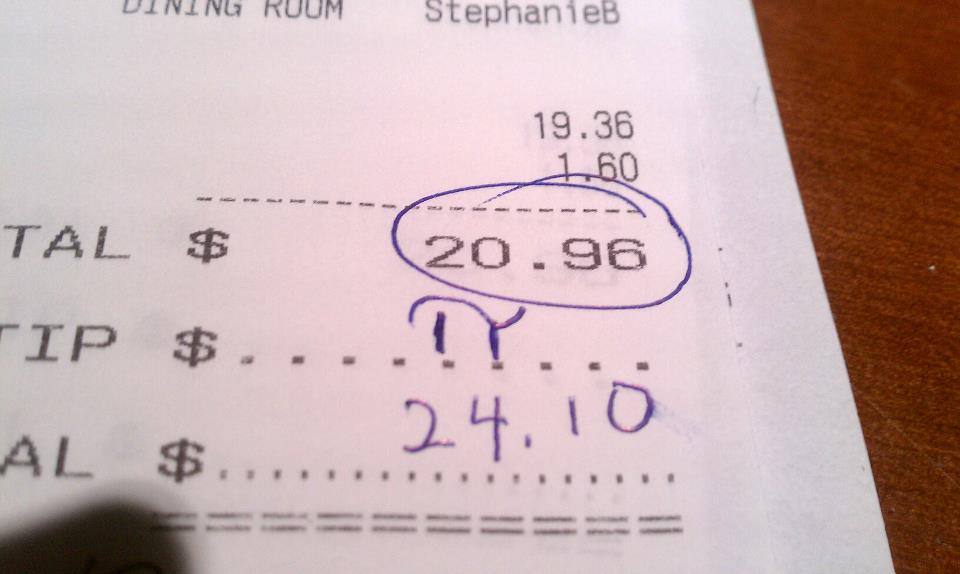
While I am opposed to drinking and driving, it helps your court case if you can say you drank something reasonable and innocent sounding. “I had a Grasshopper.” Grasshopper. How threatening does that sound? “I had two Sidecars.” Nice, mellow, classic drink. Gentlemen drink Sidecars. Even “I had two Manhattans” or “I had three Negronis” doesn’t sound too bad.

But when the testimony in court is that you ordered eight of something called a “Mind Eraser”, that doesn’t look so good. Just a suggestion. If you plan to get your s–t f–ked up, you should consider a designated driver and something that doesn’t sound threatening. A nice Long Island Iced Tea or eight, perhaps.

John Carter, John Carter, Malkovich.

Wednesday, March 14th, 2012

Actually, no Malkovich.

John Scalzi’s column at filmcritic.com this week is about “studio math”. Specifically, why a movie that cost $250 million to make has to bring in at least $600 million at the box office in order to turn a profit. Much of this was stuff I already knew (the movie studios take most of the first week’s box office gross, declining in subsequent weeks, distribution cuts, gross profit cuts, cocaine cuts, etc.) But I note it here because it is a handy reference for folks not familiar with show business, especially the kids.

Meanwhile, back at the House, I’m sure you’ve all been asking yourself: What does John Carter (the member of Congress from Round Rock) think of “John Carter” (the motion picture)?

He kind of liked it. I guess that’s the one thing they’ve got.

Happy Pi Day!

Wednesday, March 14th, 2012

I’m getting a slightly late start, due to work-related issues (which I haven’t decided whether I’m going to discuss or not), but the Pi Day celebration proceeds.


Courtesy of my great and good friend Commvault Bryan.

The lineup of pies for Pi Day 2012. We went a little over the top this year (thanks to generous co-sponsorships from my great and good friends Chris and Barry). Not pictured; the chocolate cream pie, which vanished before I got any. (But we had key lime, lemon meringue, a Kahlua cream pie, apple, cherry, no sugar added “razzleberry”, banana cream, coconut cream, and pecan. No shortage of pie here in the bunker.)

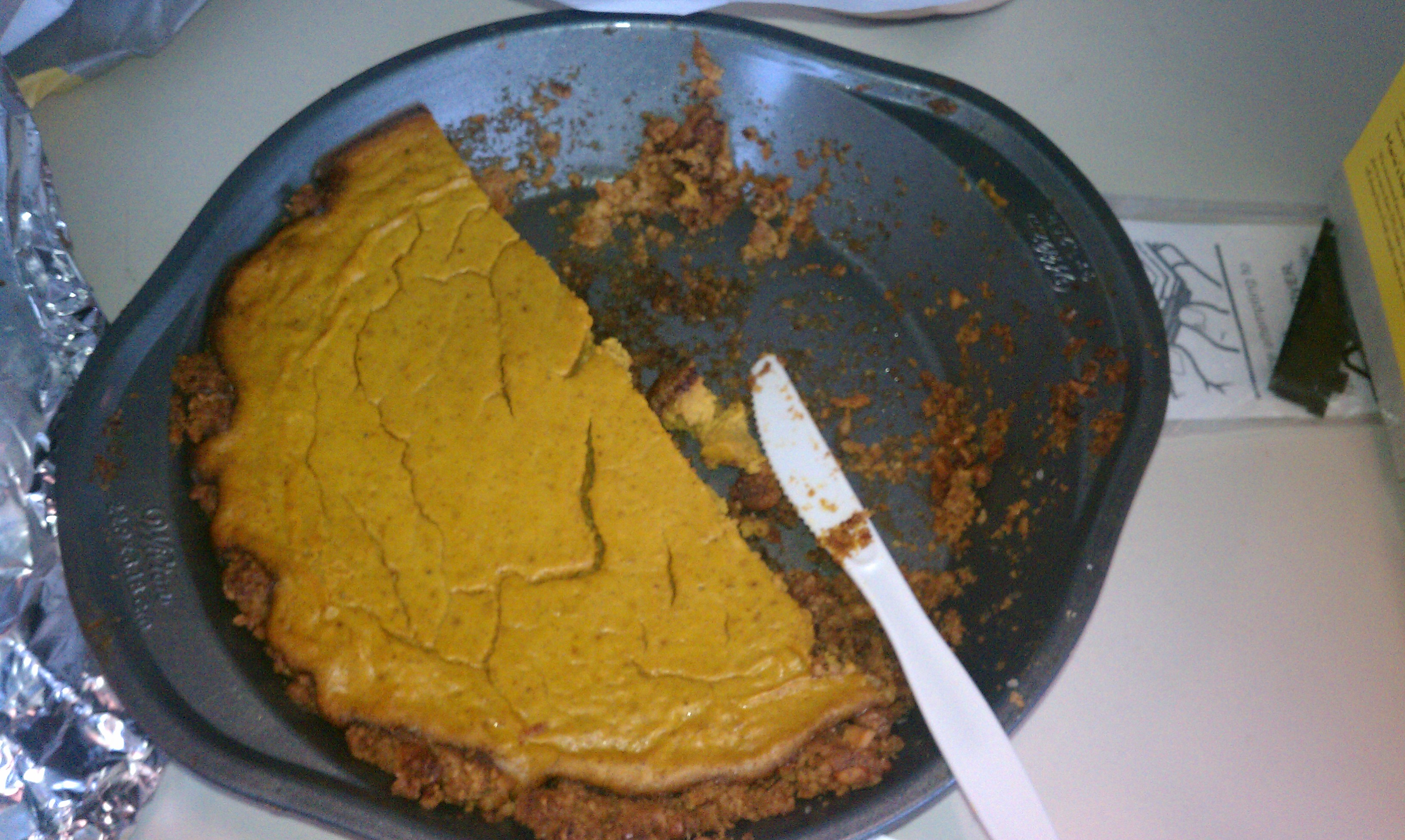
My great and good friend Nate brought in a paelo pie.  The crust is ground walnuts and organic, grass-fed butter. The filling is pumpkin, sweetened with natural maple syrup. If there’s general interest, I might try to pry the recipe out of him; it is a really good pie.

Edited to add: This is absolutely not a bookmark for the LAT‘s list of recipes for Pi Day.  (Crawfish spinach? Yum!)