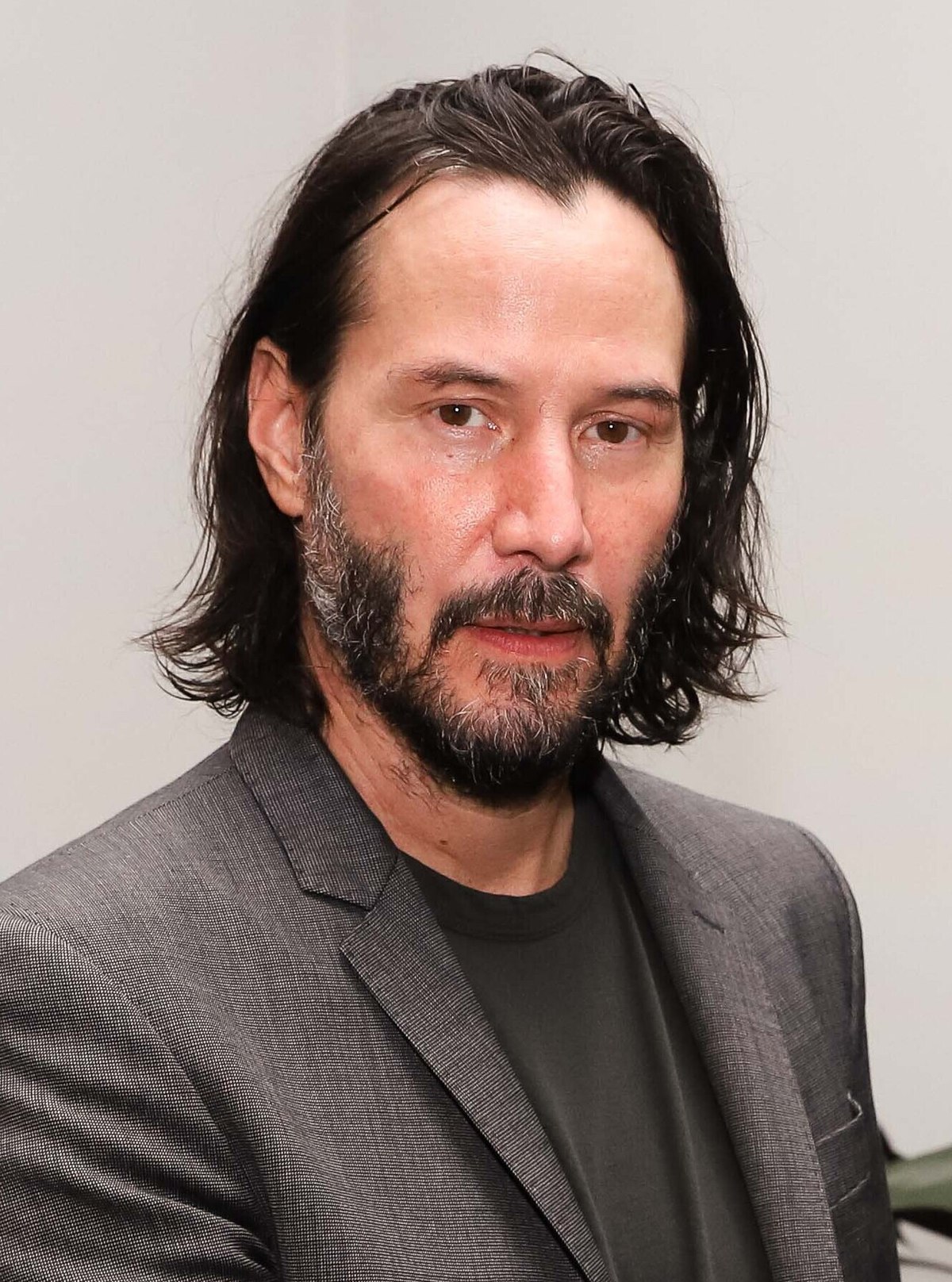
Chadwick Boseman. Variety. THR.
This is one of those cases where I don’t have much to say: his death at 43 is shocking and is being covered pretty much everywhere by everybody, and I really have nothing to add.
Chadwick Boseman. Variety. THR.
This is one of those cases where I don’t have much to say: his death at 43 is shocking and is being covered pretty much everywhere by everybody, and I really have nothing to add.
It seems to me that the C-130 is an underappreciated plane.
It isn’t sexy. But it can carry a lot of stuff:
It can carry a lot of troops.
It can land on a short field.
It can land and take off from an aircraft carrier.
Properly equipped versions even have a “frappe” setting.
Today’s feature: “Touchdown!” a 1960s vintage promo film for the C-130 from the Lockheed-Georgia Company.
Bonus, just for fun:
Gerald D. Hines, prominent developer.
At his death, Mr. Hines’s company had built 907 projects around the world, including more than 100 skyscrapers, many of them designed by architects like I.M. Pei, Harry Cobb, Philip Johnson and John Burgee, Cesar Pelli, Kevin Roche, Jean Nouvel, Frank Gehry, Robert A.M. Stern and the firm Kohn Pedersen Fox.
Hines built the Lipstick Building (officially 885 Third Avenue) in Manhattan and Pennzoil Place, Williams Tower and Bank of America Plaza in Houston, all designed by Mr. Johnson and Mr. Burgee. It was behind the Salesforce Tower, designed by Mr. Pelli, which is the tallest building in San Francisco; the DZ Bank in Berlin, designed by Mr. Gehry; the sprawling Porta Nuova complex in Milan; the Diagonal Mar project in Barcelona; and the Aspen Highlands ski area in Colorado, a favorite project of Mr. Hines’s. (He had a home in Aspen and continued to ski into his 90s.)
Architecture was his passion, although it would probably be more accurate to say that what he cared about most was fusing a point of intersection between serious design and profit-making real estate development. He took issue with colleagues who saw creative architects as dangerous to the bottom line. Spending a little more to create a better building would pay off in the end, he believed, because tenants would spend more to be in a better building that had a distinctive identity, and that would benefit both his tenants’ businesses and his own.
…
Ada Louise Huxtable, then the senior architecture critic of The New York Times, hailed Pennzoil in 1976 as a “rarity among large commercial structures: a dramatic and beautiful and important building.”
“It successfully marries art and architecture and the business of investment construction,” she added.Pennzoil was internationally acclaimed, and it led other developers to attempt the Hines formula of hiring celebrated architects and commissioning them to design one-of-a-kind towers that could be marketed as defining points of downtown skylines. (Not all of his peers were as good as Hines, however, in simultaneously encouraging creativity and controlling construction costs.)
The success of Pennzoil Place marked the beginning of a close and long relationship between Mr. Hines and the partners Mr. Johnson and Mr. Burgee. It would transform Mr. Johnson’s practice from a boutique firm designing mainly expensive civic and institutional projects into a major player in commercial architecture — one that would reshape skylines around the country. Hines also commissioned the Johnson firm to design Comerica Tower in Detroit, the Wells Fargo Center in Denver, 550 Boylston Street in Boston and 101 California Street and 580 California Street in San Francisco, among many others.
Mr. Johnson and Mr. Hines made an unlikely pair: the intellectual architect who rarely stopped talking and loved gossip and controversy, and the buttoned-up developer so averse to grandstanding that he would keep a slide rule in his pocket and take it out and pretend to use it during a meeting to avoid having to speak. But before his death in 2005, Mr. Johnson told the writer Hilary Lewis that he considered Mr. Hines his “first and greatest client.”
Walter Lure. Interesting story: Mr. Lure was the rhythm guitarist for the Hearbreakers (also known as Johnny Thunders and the Hearbreakers, as opposed to Tom Petty’s Hearbreakers) one of those legendary NYC punk bands.
The Heartbreakers were together for a brief three years and recorded only one studio album, “L.A.M.F.,” released in 1977 on the British label Track Records. But among the bands that clustered around downtown clubs like Max’s Kansas City and CBGB during the early punk years, the Heartbreakers had an outsize reputation.
“They were probably the best band besides the Ramones and the Dictators,” Legs McNeil, a co-founder of Punk magazine and the co-author of “Please Kill Me: The Uncensored Oral History of Punk” (1996), said in a phone interview. “But they’re kind of like mythical, you know, because no one ever saw them. And when they did, Johnny was usually too drugged out to perform.”
…
…
After the Hearbreakers, he went into product testing for the FDA (he had an English major and a chemistry minor from Fordham) and from there went into Wall Street.
…
He was also the last surviving member of the Heartbrakers (with the exception of Richard Hell, who was briefly the Heartbreakers bass player. Hell left/was fired from the band and formed Richard Hell and the Voidoids. Heartbreakers entry from Wikipedia.)
Travel Thursday!
Here’s something a little different: “To Catch a Dream”, a visit to Spain by way of Iberia Airlines. I could go for Spain right now. Sherry! Tapas!
Iberia merged with British Airways in 2010, according to Wikipedia, but both airlines still operate under their own names.
Bonus video, for two reasons: in keeping with the Spanish theme, “Morocco to Madrid by train & ferry”.
The other reason is that I like The Man In Seat 61. One of these days, if I can ever get the time and money together, I want to ride the Trans-Siberian Railroad, and his site has a lot of useful information on doing that (as well as other train travel).
The first two panels of today’s “Dinosaur Comics”. Having extensively studied listened to the first 112 or so episodes of “The History Of Rome”, I am confident in stating that the decline and fall of the Roman Empire began when the Empire proscribed setting off fireworks whenever you felt like it.
All of this Babylon Bee op-ed. (Hattip: MtM.) Yes, I am aware that they are a satire site, but everything in that piece is correct: everything did start going downhill when men stopped wearing hats.
“The best thing about kids’ soccer being canceled this year”. Although I quibble slightly with this: the best thing about kids soccer being cancelled isn’t the renewed socialization, it is the fact that kids aren’t playing soccer.
More history today. And again, I’m running a bit long. I know.
British Army Documentaries has posted a three part series: “Falklands: The Land Battle 1982”.
Here’s part 1: “The Landings”.
I understand if you don’t want to watch all 46 minutes of this. Not everybody is that interested in the Falklands War. But at least listen to the first 45 seconds or so: is that literally the most 1980s music you’ve ever heard?
Bonus video: if you’re interested, part 2: “Towards Stanley”.
Part 3, “The Final Countdown Battle”.
And part 4, “In the Light of Experience”.
For the historical record: Gail “Passages” Sheehy.
Justin Townes Earle, singer, songwriter, and son of Steve Earle. He was only 38.
Norman Carlson. He ran the Federal Bureau of Prisons from 1970 to 1987.
Starting in the early 1980s, government policies like the war on drugs and mandatory minimum sentencing had led to mass incarceration, swelling inmate populations in both state and federal systems. Aiming to ease the stress on penitentiary inmates and staff, Mr. Carlson favored building more prisons; during his tenure, he created 20 new facilities, nearly doubling the existing number.
And in Marion, Ill., he established a tough new system of solitary confinement that became the model on which future supermax penitentiaries were based. These included the United States Penitentiary Administrative Maximum Facility in Florence, Colo., known as the ADX; it is the toughest prison in the federal system, housing those who have been labeled the “worst of the worst.”
…
Mr. Carlson was credited with professionalizing the Bureau of Prisons. He disciplined officers who beat inmates, setting a policy of zero tolerance for prisoner abuse. Guards were to call themselves corrections officers, and assistant wardens were to wear suits and ties. He often ate with prisoners and brought along his wife and children, to show that prison food was good enough for his own family.
And he was a stickler for cleanliness.
“Mr. Carlson viewed a dirty prison as a sign of poor management; consequently floors were highly polished and walls kept painted,” Mr. Earley wrote. He said that one warden was so eager to please the director that when the snow outside had turned muddy and brown, the warden had his staff sprinkle flour on it to make it look whiter before Mr. Carlson arrived.
…
(Pete Earley’s The Hot House is a swell book about Leavenworth specifically, and to some extent about the Federal prison system in general. I enthusiastically recommend it if you’re interested in prisons or criminal justice issues.)
I’m going long again, I know. I’m sorry. But this is something I’ve actually looked for in the past, and only now just found on the ‘Tube.
One of the non-“Top Gear”/”Grand Tour” series that James May has done is “James May’s Toy Stories“, in which he did interesting things with children’s toys.
For example: launching “Action Man” (the licensed UK knockoff of “G.I. Joe”, which someone describes as “the most derided toy in Britain”) on a rocket to see if he can exceed the speed of sound.
Example #2: build a three mile long slot car track.
Just one more: a Lego house. A Lego full-sized house.
Sadly, the house no longer exists:
Great and good FotB Borepatch has lost his mother.
If you haven’t already, please head over there to extend your sympathies.
I thought today I would:
a) be a little self-indulgent again, and
II) do some real history this time.
I don’t think I’ve mentioned it here, but I know I’ve brought this up in other places: I’ve been listening to the back numbers of Mike Duncan’s “History of Rome” podcast, and enjoying them a great deal. Some other bloggers have been discussing history, and especially Roman history as well. So today’s entries are all Roman themed, for reasons.
I know these are long, and I apologize, but I think they are worthwhile.
First of all: this is a talk at Stanford University from 2011 by Dame Mary Beard: “Mistaken Identities: How to Identify a Roman Emperor”, in which she talks about various busts and statues, and why the identification of them with Romans like Julius Caesar probably isn’t true.
(You could probably fast forward to about the 7:00 mark if you want to skip the excessively long introduction.)
Bonus video: “The Accidental Suicide of the Roman Empire” by Michael Kulikowski. I have another reason for posting this: while Dr. Kulikowski is currently at Penn State, he gave this lecture in 2012 at Washington and Lee University, where he was formerly a professor of history. So this is basically bait for the Washington and Lee contingent out there.
Bonus #2: Dame Beard again, at the 92nd Street Y from 2015, talking about SPQR: The History of Rome.
I was going to write more about Dame Beard, but I find that pretty much everything I wanted to say, I wrote not long after reading SPQR in 2015.
Point of etiquette: if someone is both a PhD and an OBE, does the OBE title (Dame or Knight) take precedence over the “Dr.”? I would assume that it does, since I believe it is a lot harder to become an OBE than a PhD, but I’d like to establish that for certain.
Science Sunday!
This is something I’d vaguely heard of in the past, but only just stumbled across on the ‘Tube.
“Mr. Tompkins In Wonderland”.
Bonus video: I could sit here every Sunday and post videos of Richard Feynman from YouTube until the end of time. But I’m going to try to avoid doing that.
This one interests me, though: Feynman responds to the question “Do you think there will ever be a machine that will think like human beings and be more intelligent than human beings?”
I like that statement: “Intelligence is to be defined.”
One more. I’m going to assert something here: pseudoscience is science. At least, when you’re debunking it.
Orson Welles talks about “cold reading“.
This is another one of those days when I don’t have a real theme, so I hope you enjoy some things that amused me.
First up: Salvador Dali appears on “What’s My Line?” You’ve got to like the way he signs in.
Bonus: Orson Welles talks about Ernest Hemingway. That story about Welles and Hemingway attempting to trade punches and ultimately opening a bottle and toasting each other is also recounted in a neat little book, To Have and Have Another, about Hemingway and Hemingway’s cocktails. (Affiliate link.)
Last one, because this is a little longer.
“A Conversation with Igor Stravinsky” from 1957.
This isn’t exactly travel, but more a cross between business and aircraft.
“Tailspin”, which seems to be from something called “Enterprise” narrated by Eric Sevareid. This is a fairly short documentary about the history, and especially the fall, of Braniff. Warning: for some reason, the sound completely drops out at about the 24:30 mark, but most of what’s left at that point is shots of parked Braniff aircraft and the credits.
Bonus video #1: did you know Braniff flew the Concorde? Well, technically, they offered Concorde service between DFW and Dulles, with connecting flights to Paris and London (operated by Air France and British Airways: I think this is what we might call a “codeshare” today, but the US leg of the flights was operated by Braniff pilots.)
They started the service in early 1979.
Bonus video #2: a 1966 vintage (and mildly amusing) Braniff commercial.
Bonus video #3: another one from 1965 for “The End Of the Plain Plane“.
“We won’t get you where you’re going any faster, but it’ll seem that way.”
Bonus video #3: footage of “The Great Pumpkin”.
If I remember Splash of Colors correctly, the Great Pumpkin was the last Braniff plane in the air. I do remember a story about them being enroute to Hawaii: during the flight, the captain called the chief stewardess up to the flight deck.
Ben Cross. He was “Harold Abrahams”, one of the two runners in “Chariots of Fire”. He also had a part in the 2009 movie reboot of a second-rate SF TV series from the late 1960s.
Mary Hartline. My mother actually mentioned this to me the other day. She was one of the very early TV stars:
“Super Circus,” a live Sunday afternoon series on ABC, began in early 1949, when the television industry was still laying its coaxial cables. Ms. Hartline was a striking presence with her long, wavy hair, her majorette-style costumes — including her signature uniform, with musical notes on the thigh-high hemline — and white tasseled boots.
Between the show’s death-defying circus acts, she conducted the band’s lively musical numbers, performed comedy sketches with the clowns, guided young audience members through contest segments and delivered live commercials. (Everybody did it. The future newsman Mike Wallace, also a cast member, pushed peanut butter.)
Ms. Hartline, often called television’s first sex symbol (a lot of fathers, it seems, were watching, alongside their offspring), was a master of promotion. In addition to having her face on Kellogg’s cereal boxes, representing Canada Dry beverages and demonstrating the joys of the newest Dixie Cup dispenser, she had her own merchandise line.
Those three dozen products included the Mary Hartline doll (“all hard plastic with socket head, jointed arms and legs, sleep eyes, blond wig,” according to a recent auction-lot description), which can still bring hundreds of dollars at auction.
Dr. Jay Galst. Interesting sounding guy: he was professionally an ophthalmologist. But he grew up with a dad who brought bags of coins home from the grocery store for him to sift through (pulling out the rare ones), and he continued pursuing numismatics into his adulthood and professional career.
He specialized in coins and coin adjacent objects (“…tokens, medals and similar artifacts”) that were in some way related to eyes, and co-wrote a book on the subject with Peter van Alfen.
He also specialized in coins from ancient Judea.
Marvin Creamer, who sounds like another interesting guy, and died at 104. He:
…taught geography for many years at Glassboro State College, now Rowan University, in Glassboro, N.J.
His expertise helped him become a history-making mariner, the first recorded person to sail round the world without navigational instruments. His 30,000-mile odyssey, in a 36-foot cutter with a small crew, made headlines worldwide on its completion in 1984.
…
It is daunting enough to circumnavigate the Earth with the aid of modern global positioning technology, much less with medieval and Renaissance tools like a mariner’s compass and sextant.
But Professor Creamer, in the grip of an obsession that had held him for years, shunned even those newfangled contrivances, as well as a radio, a clock and a wristwatch. He chose instead to rely on his deep knowledge of the planet and its vagaries, and be guided by nothing more than wind, waves, the sun by day, and the moon and stars by night.
Under cloud-massed skies, he could divine his location from the color and temperature of the water, the presence of particular birds and insects and even, on one occasion, the song of a squeaky hatch.
…
…when the 66-year-old Professor Creamer set sail from Cape May, N.J., in his cutter, the Globe Star, in late 1982, he was widely considered unhinged: No mariner in recorded history had traversed the globe without at least a compass, used by sailors since the 12th century if not before, or a sextant, introduced in the 18th.
His 513-day journey would entail nearly a year on the sea, plus time in ports for repairs and reprovisioning. It would take the Globe Star to Capetown, South Africa; Hobart and Sydney, Australia; Whangara, New Zealand; and the Falkland Islands off Argentina before its triumphant return to Cape May on May 17, 1984 — an event that Professor Creamer gleefully described as “one small step back for mankind.”
Travel Thursday!
I thought I’d do something different today. Instead of planes for our first video, trains. And instead of visiting a relatively civilized country, a fifth world banana republic.
“The California Zephyr”! With VistaDome! And courteous waiters!
To be fair, this is from the 1950s, prior to the decline and fall. And somewhat interestingly, Amtrak still runs a train called “California Zephyr” over a similar route (According to Wikipedia, the original Western Pacific Railroad, Burlington Railroad and Rio Grande Railroad incarnation shown here was discontinued in 1970, and Amtrak began running their version in 1983.)
Bonus video #1: More trains, this time the Santa Fe railroad. “Southern California Holiday”. Both of these videos also include some footage of the happiest place on Earth.
“You may cross here from country to country, with no passport problems.” I remember those days. (Never been to Tijuana, but when I was young, my family walked across the border between Texas and Mexico more than once. And when I was older, I made a couple more cross-border trips with friends. Then Homeland Security.)
Bonus video #2: Okay, travel by air this time. “California: World In a Week”, from the 1960s and United Airlines.
It is almost like being there. Except you don’t have to step over the needles and feces. Marineland of the Pacific operated until 1987, when it was bought by the people who owned SeaWorld. The new owners promptly moved all of the animals to SeaWorld San Diego, shut down Marineland, and poured concrete into the drains.
(Also.)