I’m going to say “yes”.
I’ve seen rumblings that Cleveland plans to trade Bynum, but:
I’m going to say “yes”.
I’ve seen rumblings that Cleveland plans to trade Bynum, but:
Desert Hot Springs, California is in trouble.
Why? I’ll give you one guess.
Last week, the city cut all municipal salaries, including those of the police, by 22 percent. The city also capped “incentive pay” and cut back on holiday and vacation days. Naturally, the police officer’s association is stating these cuts are illegal.
Desert Hot Springs has a current population of around 27,000.
Oh, and by the way: Desert Hot Springs filed for bankruptcy in 2001, and is still making payments on a $10 million civil judgment against the city.
But, you know, the police aren’t the only people who get large salaries.
You don’t say.
That’s good money. I wonder when they can put in for retirement.
The paper of record seems to want readers to be shocked and appalled at how much stagehands are paid. Personally, I’m glad to hear that they’re making big money; I think they have every right to negotiate lucrative contracts with their employers, and I don’t see any reason to be indignant that “the four top stagehands at the Metropolitan Opera earned more than $500,000 each in total compensation (including retirement and other benefits), tax filings showed.“
The heck with it. After the jump, this week’s TMQ…
Here’s a nice little Christmas present – slightly late, but who cares? (I celebrate Christmas through January 6th, anyway.)
This is how Webster’s Unabridged Dictionary on Project Gutenberg defines the word “infamous”:
INFAMOUS
In”fa*mous, a. Etym: [Pref. in- not + famous: cf. L. infamis. See
Infamy.]1. Of very bad report; having a reputation of the worst kind; held in abhorrence; guilty of something that exposes to infamy; base; notoriously vile; detestable; as, an infamous traitor; an infamous perjurer. False errant knight, infamous, and forsworn. Spenser.
2. Causing or producing infamy; deserving detestation; scandalous to the last degree; as, an infamous act; infamous vices; infamous corruption. Macaulay.
3. (Law)
Defn: Branded with infamy by conviction of a crime; as, at common law, an infamous person can not be a witness.
4. Having a bad name as being the place where an odious crime was committed, or as being associated with something detestable; hence, unlucky; perilous; dangerous. “Infamous woods.” P. Fletcher. Infamous hills, and sandy perilous wilds. Milton. The piny shade More infamous by cursed Lycaon made. Dryden.
Syn. — Detestable; odious; scandalous; disgraceful; base; vile; shameful; ignominious.
I quote this here because it is in the public domain. More modern sources, such as the online Merriam-Webster dictionary, agree with the definition, especially the “having a reputation of the worst kind”.
So what?
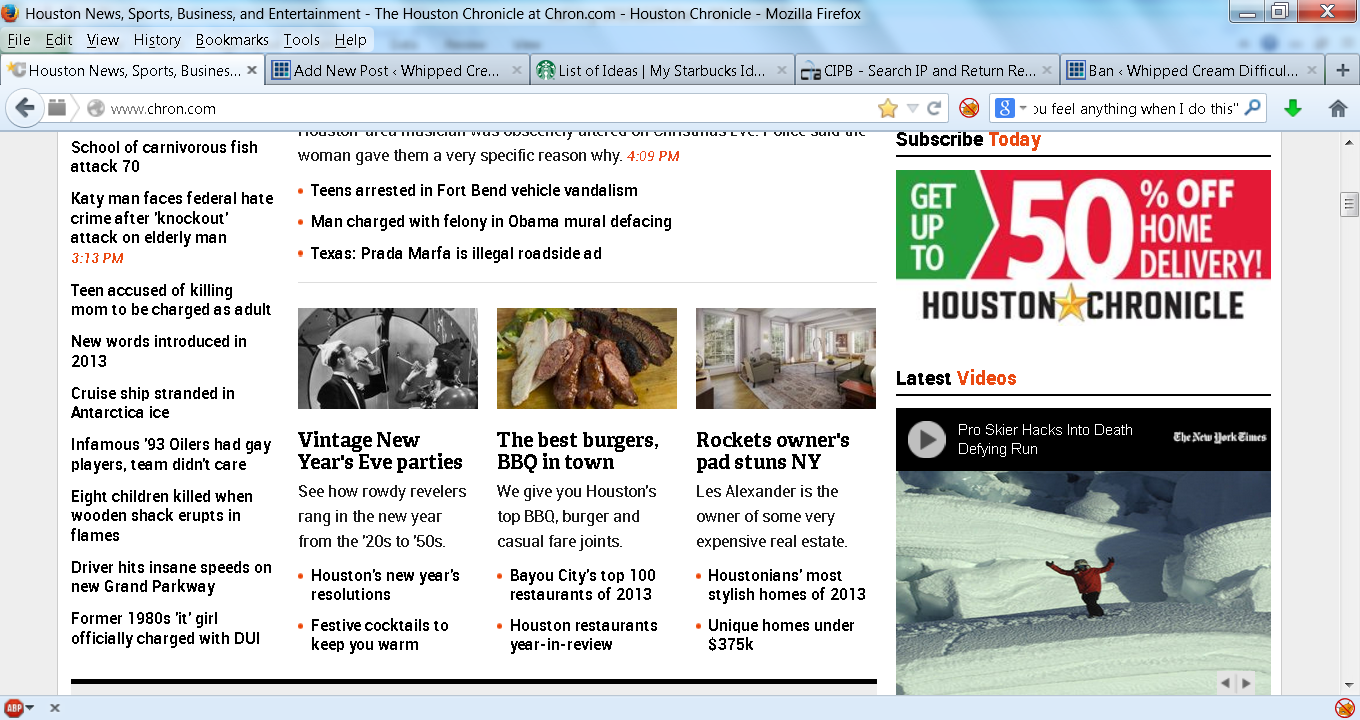
That’s part of the front page of today’s HouChron. The 1993 Houston Oilers had “a reputation of the worst kind”? They were “held in abhorrence”? They were “base; notoriously vile; detestable”? That’s really not how I remember things.
After a 28-3 halftime lead against the Buffalo Bills, the Oilers eventually lost 41-38 in one of the most infamous comebacks in NFL history.
Same thing here. Guys, “inflammable” and “flammable” mean the same thing, yes. But “infamous” and “famous” do not.
They may have been “dysfunctional”. But they went 12-4. I’d be more inclined to refer to the 2013 Houston Texans as “infamous” instead of the 1993 Oilers.
That is, if I was going to use the word to refer to a football team. Which I’m not, because I feel like I have a grasp of what the word means, unlike the HouChron headline writers. (Brian T. Smith, the author of the linked article, avoids using “infamous”. Kudos to him; I’d like to read the piece that’s coming on Sunday, but it looks like it will be behind the paywall.)
Mao Mao Mao, Mao Mao Mao, Mao Mao Mao Mao Mao Mao.
(Sorry. But when was I going to get another chance to do this?)

Blogger, with occasional reindeer.
(Why, yes, that reindeer’s nose is red.)
(Why, yes, as a matter of fact, you might even say it glows.)
If you’re like me, and just a wee bit tired of Virginia, here’s a Christmas story you might enjoy (reprinted: it originally ran on Christmas Day in 1986).
This is a story that has everything: a dying child, an impossible request, and a gruff but kind hearted hard-drinking city editor. It is almost as if someone took many of the cliches of 1950s journalism and rolled them into a single morality tale.
He listened to the problem and told me to telephone the Secretary of Agriculture and have him clear the peaches when they arrived.
“It’s close to midnight,” I argued. “His office is closed.”
“Take this number down,” Reck said. “It’s his home. Tell him I told you to call.”
“Shaming the Pets — Does It Work?“, from Larry Harnisch at The Daily Mirror. Featuring two cute doggies and a sworn enemy of WCD.
Yeah, he was asking for it.
It is the most celebrated letter to the editor and its reply the most celebrated editorial in American journalism.
Yes, that one.
In the summer of 1897, 8-year-old Virginia O’Hanlon sent a letter to The New York Sun asking if Santa Claus was real. An editorial writer named Frank Church was assigned the task of answering Virginia’s letter. Church’s response, published anonymously Sept. 21, is a Christmas classic.
Please, good sirs, do go on.
This story continues on our new premium website for subscribers, MyStatesman.com.
Oh.
Or you could read it on the Newseum website. On on the New York Daily News website. Or any number of other places where they don’t charge you to read something that (I strongly suspect, but you never know with US copyright law) is in the public domain.
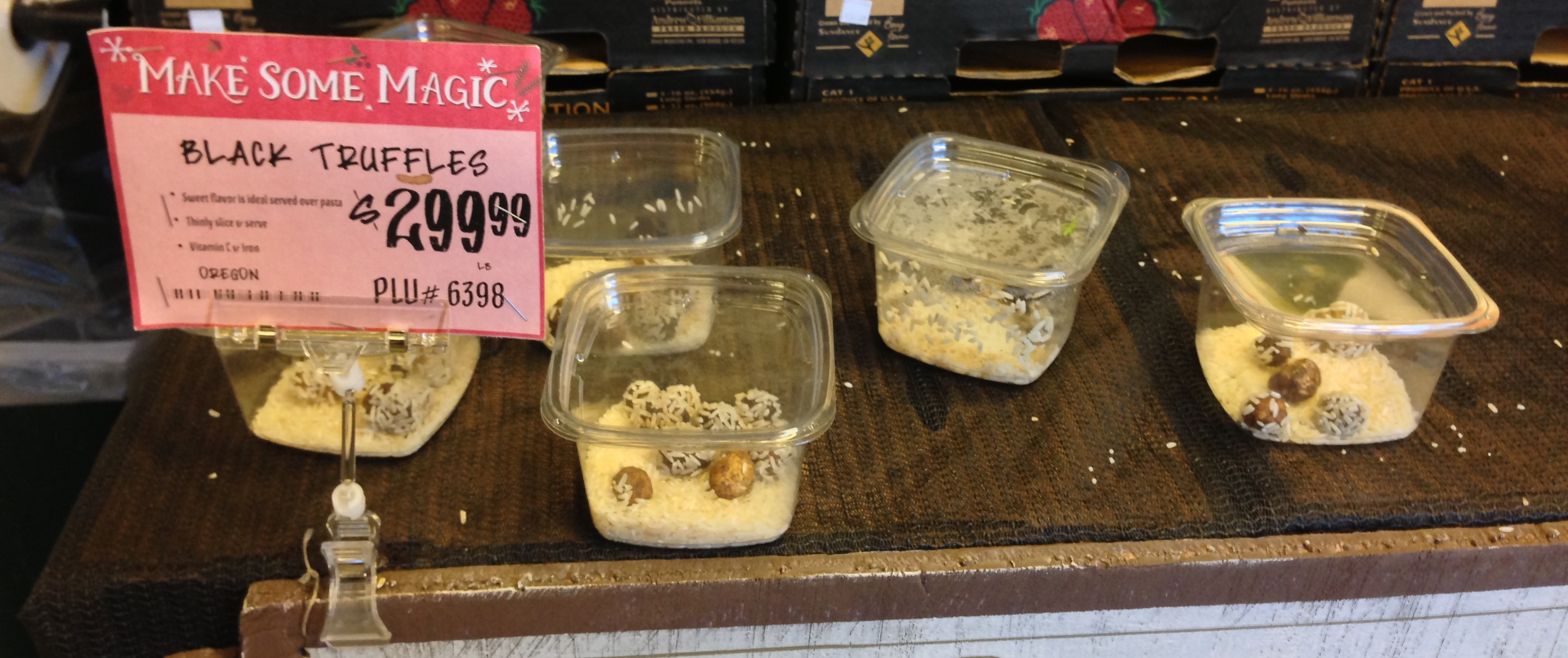
You don’t often see $300 items at the supermarket. Especially in the produce section, as opposed to behind a locked cabinet in the wine department. (I’m not sure, but I don’t think even the highest-end champagne HEB stocks hits the $300 mark.)