Obit watch: July 24, 2019.

July 24th, 2019

Art Neville, of the Neville Brothers.

Among those announcing the death was Louisiana’s governor, John Bel Edwards, who said in a statement that Mr. Neville “took the unique sound of New Orleans and played it for the world to enjoy.” Mr. Neville’s brother Aaron, in a post on his Facebook page, called him “the patriarch of the Neville tribe, big chief, a legend from way way back, my first inspiration.”

David Hedison, who had an interesting career. He played Felix Leiter in two Bond films, was pretty fly for a white guy in the 1958 “The Fly”, was in “The Lost World”, and turned down Robert Reed’s role in “The Brady Bunch”.

He was most famous as the submarine captain (opposite Richard Basehart’s admiral) in “Voyage to the Bottom of the Sea” (which you can still catch very early Sunday morning on ME TV). He also did some soaps, “Love Boat”, and “Fantasy Island”.

Oddly, from my point of view, he apparently never did a “Mannix”, though he did do other 70s cop shows. Both Mr. Hedison and Mike Connors were of Armenian descent: I’m sure he didn’t directly control the casting, but you’d figure Mr. Connors would want to help a brother out.

I don’t want to seem obsessed, but I thought this tribute from Stephen Wolfram to the late Mitchell Feigenbaum was worth sharing, especially since it gives a good explanation of the math behind his work.
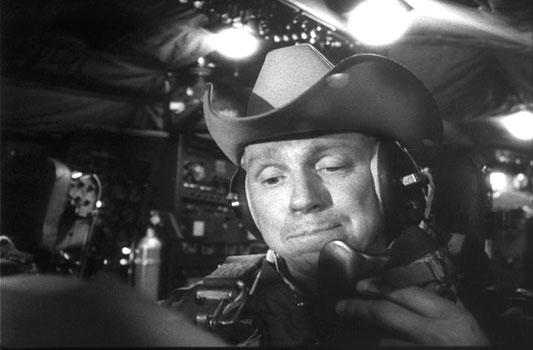
It’s Baltimore, gentlemen.

July 23rd, 2019

The gods will not save you from being mugged. Even if you are a police.

(Hattip: Dean Bradley on the Twitters.)

Obit watch: July 23, 2019.

July 23rd, 2019

Christopher Kraft, NASA flight director and legend.

For 25 years, from the dawn of the space age in the 1950s to the threshold of almost routine launchings in the 1980s, Mr. Kraft played crucial roles in the space program. He devised the protocols for exploration beyond the Earth’s atmosphere, orchestrated early orbital missions and spacewalks, and developed projects that put astronauts on the moon and into the first reusable space shuttles.
Aside from the astronauts who made history — including Alan B. Shepard Jr., with his suborbital flight; John Glenn, in orbiting the Earth; and Neil Armstrong and Buzz Aldrin, the first to land on the lunar surface — Mr. Kraft was the most familiar face of the National Aeronautics and Space Administration’s early years, the steady ground commander who often explained missions to a rapt world at news conferences.
In an era of perilous experiments hastened by the Soviet success of Sputnik, the first artificial satellite, Mr. Kraft presided over triumphal breakthroughs in the Mercury, Gemini and Apollo projects. He also stood by helplessly when a fire killed three astronauts on a launchpad in 1967, but he helped devise the ingenious plan that saved the Apollo 13 crew after an explosion crippled their spacecraft en route to the moon in 1970.
At a time when there were no rules or procedures for space travel, Mr. Kraft, a brilliant aeronautical engineer, virtually wrote the book for NASA. He originated the concept of mission control, with authority vested in a ground-based flight director, not in a pilot-astronaut soaring through space at 7 miles a second who might be overwhelmed by pressures, especially during launch or re-entry.

NASA. I think this is a great story:

With the advent of the jet age of the 1950s, he was assigned as project engineer on flight tests of the Navy’s high-priority Vought F8U Crusader, which was exhibiting numerous birthing problems in its earliest versions. The problems uncovered by Langley flight tests included unacceptable g-force control behavior during maneuvers, which was determined to result from unintentional pivoting of the unique movable wing used by the configuration. Working with Langley test pilot Jack Reeder, Kraft identified the structural source of the problem, and took on the unpleasant job of telling the Navy that its new first-line aircraft was potentially dangerous. His warnings were heeded by Navy management, resulting in grounding of the F8U fleet, much to the chagrin of many operators of the new aircraft. He then encountered one of the most contentious members of the Navy’s Bureau of Aeronautics, who questioned the Langley results and doubted the conclusions drawn by the NACA. That Marine Major was named John Glenn. Following a detailed examination of the Langley study results with Kraft and Reeder, and interviews with Navy pilots who flew the aircraft, Glenn was convinced and became a believer. The F8U was subsequently redesigned, as recommended by Kraft and his associates at Langley, and served the nation as an outstanding fighter during the Vietnam War.

Houston Chronicle.

In an interview in February with the Houston Chronicle, Kraft said he never wanted to be an astronaut.
“I liked my job better than theirs,” he said. “I got to go on every flight, and besides that, I got to tell them what to do.”

Edited to add: I don’t like linking to Ars Technica, but I’m making an exception in this case: Eric Berger, the author of their Chris Kraft obit, was also a personal friend of Mr. Kraft.

Every few months, I would make a pilgrimage to Kraft’s home, and we fell into a routine. We’d be seated upstairs in reclining leather chairs. Kraft would ask what I had been hearing about the space program. Then it was open season: I could ask anything I wanted, from his experiences at Virginia Tech and his early years of NASA, about which astronauts he had liked—and which he hadn’t—to his thoughts on current affairs at NASA. Somewhere along the way, Betty Anne would bring us glasses of Coca-Cola with ice.

Pop quiz, hotshot.

July 22nd, 2019

Is this headline from The Babylon Bee or the New York Times?

How ‘The Lion King’ Gets Real-Life Lion Family Dynamics Wrong

Answer after the jump. No fair playing if you already know the answer…

Read the rest of this entry »

Obit watch: July 22, 2019.

July 22nd, 2019

Paul Krassner, Yippee.

…so naturally irreverent was Mr. Krassner that when People magazine labeled him the “father of the underground press,” he demanded a paternity test.

Mr. Krassner was writing freelance pieces for Mad magazine in 1958 when he realized that there was no equivalent satirical publication for adults; Mad, he could see, was largely targeted at teenagers. So he started The Realist out of the Mad offices, and it began regular monthly publication. By 1967 its circulation had peaked at 100,000.
“I had no role models and no competition, just an open field mined with taboos waiting to be exploded,” Mr. Krassner wrote in his autobiography.
The magazine’s most famous cartoon was one, drawn in 1967 by the Mad artist Wally Wood, of an orgy featuring Snow White, Donald Duck and a bevy of Disney characters enjoying a variety of sexual positions. (Mickey Mouse is shown shooting heroin.) Later, digitally colored by a former Disney artist, it became a hot-selling poster that supplied Mr. Krassner with modest royalties into old age.

Robert M. Morgenthau, former Manhattan DA and federal prosecutor.

Noted:

Mr. Morgenthau had been in the Naval Reserve in college, and after graduation he went on active duty as an ensign. He passed his physical exam by concealing the near-deafness in his right ear from a boyhood mastoid infection. An officer aboard three destroyers and a minesweeper during World War II, he survived enemy attacks and won decorations for bravery under fire.
His destroyer, the U.S.S. Lansdale, was attacked by Nazi torpedo bombers in the Mediterranean off Algiers on April 20, 1944. Cut by explosions, the ship went down with a heavy loss of life. Lieutenant Morgenthau, the executive officer, saved several shipmates, leapt into the water and swam for three hours in the darkness until he and others were picked up by an American warship. In 1945 his ship, the U.S.S. Harry F. Bauer, was hit by a Japanese kamikaze plane off Iwo Jima, but its 550-pound bomb did not explode.

Obit watch: July 20, 2019.

July 20th, 2019

NYT obit for Dr. Mitchell Feigenbaum. (Previously.)

L. Bruce Laingen. He was the senior diplomat in Iran during the 1979 hostage crisis, and was taken hostage.

Mr. Laingen and two aides who had been with him at the ministry remained separated from the other hostages during the long ordeal, Mr. Laingen having the odd role of continuing to act as a diplomat while being a hostage. He was a point of contact to the outside world, sometimes meeting with diplomats from other countries and even occasionally being allowed a phone call with the West.
But if he had a somewhat easier time than the hostages at the embassy, he in no way soft-pedaled his experience. In 2001, when a conservative faction in Iran set up an anti-American exhibition on the grounds of the former embassy, Mr. Laingen, in a letter to the editor printed in The Times, suggested that the site needed a plaque. He proposed this wording:
“Here is the former American Embassy in Tehran, where occurred the most egregious violation in recorded history of all standards and precepts of diplomacy: the seizure of an embassy and its staff by student terrorists, an act endorsed by their government, the hostages used as pawns for 444 days to further the political purposes of the Islamic Republic.”

“We are there to find out how people are thinking and why they are thinking that way and behaving that way,” he said in the oral history. “And if we get too comfortable in believing something that sort of fits our purposes, well, we are in hellish trouble.”

Non historical note, not suitable for use in schools.

July 20th, 2019

I bow to nobody as far as my interest in the space program goes.

But I don’t have a darn thing to say about Apollo 11, or the 50th anniversary of same. This just feels like one of those big round number anniversaries where everybody is on top of it, everything that can be said has already been said, and there’s nothing left.

If you want something, go over to Lawrence’s.

I am large, I contain multitudes.

July 19th, 2019

This year’s S&WCA Symposium made me realize that I’m dealing with a contradiction.

On the one hand, I’m fond of big-bore revolvers. I’m especially drawn these days to blued 4″ guns, like the Wolf and Klar revolvers, mostly because I have several 6″ examples. But I wouldn’t turn my nose up at something like this, either. (The gunshop near me had a 4″ Mountain Gun in .45 Colt for a long while that I was seriously considering pulling the trigger on. But I think it finally got sold to someone who wasn’t me.)

I think a nice blued big bore 4″ gun, with a good looking holster, would make a fine barbecue gun. Put some good looking grips on it (perhaps real vintage ivory if I can find it), maybe get some tasteful engraving done when I can afford it…

On the other hand, I’m also developing a fetish for small-bore handguns. I’m not talking .22 rimfire here: first off, I already have more than a few of those, and secondly, no man needs to apologize for or defend his collection of .22 rimfire handguns. There are very few things better than a nice .22 pistol: I think if I was limited to one revolver, I’d keep my Kit Gun.

No, what I’m talking about is the weird centerfire smallbore stuff. The XP-100 in .221 Remington Fireball. The .224 Harvey Kay-Chuck. And yes, I want to pick up a Model 53 in .22 Jet, even though I realize how impractical the Jet cartridge is, and I’d have to start handloading if I wanted to shoot it. (Though there is someone who makes the rounds of the gunshows selling remanufactured .22 Jet ammo.)

(And I probably need to start handloading anyway. For reasons.)

Even though I’m a Smith guy, the idea of a Blackhawk in .256 Winchester Magnum appeals, too.

If I ever win the lottery, I have a plan to commission the S&W Performance Center to build some Kit Guns based on the Model 51 frame, but chambered in .17 HMR. I just need to figure out if you can put enough of a twist in a 4″ barrel to stabilize the .17 round. If that works out, my next project would be to commission some X-frame revolvers in .221 Fireball. I wouldn’t do a whole lot of them: maybe ask them to build about 10 of each, give some to the family, and donate the others to the S&WCA auction.

I’m sure you’re all hoping I don’t win the lottery now.

(Subject line hattip.)

Disappointment.

July 17th, 2019

I saw a post about the Kickstarter for Papillon and said to myself, “Man! What a cool idea!”

I’m not really into MMORPGs, but the idea of one where you could play a prisoner in a penal colony in French Guyana, dodging guards, forming alliances with other prisoners, struggling to survive solitary confinement, and plotting escape? I could get behind that.

Then I clicked through to the link. Apparently it has something to do with butterflies.

I like my idea better.

Not quite an obit…

July 17th, 2019

…not in the conventional sense, anyway. But I’ve been reading more James Lileks the past few days because…reasons.

Start here.

Obit watch: July 17, 2019.

July 17th, 2019

John Paul Stevens. WP.

For the historical record, one of the most unambiguously incorrect statements ever made by a Supreme Court justice (sitting or former):

District of Columbia v. Heller, which recognized an individual right to possess a firearm under the Constitution, is unquestionably the most clearly incorrect decision that the Supreme Court announced during my tenure on the bench.

Edited to add: Reason 1. Reason 2.

Charles Levin. Apparently he was most famous for playing a mohel on an episode of “Seinfeld”, but he knocked around TV quite a bit before that. Never did a “Mannix”, but he did some other cop shows, was a regular on “Alice”, and was also in “This Is Spinal Tap”.

Obit watch: July 16, 2019.

July 16th, 2019

Pernell Whitaker, champion boxer.

Whitaker lost his first chance at a championship in 1988, but he rebounded the next year to win the International Boxing Federation world lightweight title from Greg Haugen. He then beat Rafael Pineda for the I.B.F. super lightweight title in 1992 and Buddy McGirt for the World Boxing Council welterweight belt in early 1993.

He fought Julio Cesar Chavez to a draw, though “many observers” believed he’d won outright. He also fought Oscar De La Hoya, but lost the decision (even though he scored the only knockdown of the fight, and even though, again, most observers thought he outpunched De La Hoya).

ESPN.

Michael Seidenberg. This is one of those interesting obits for an otherwise obscure person: Mr. Seidenberg ran a “clandestine bookshop”.

No, not one that specialized in espionage and spy books:

Mr. Seidenberg plied his trade at book fairs and on sidewalks for some years. But around 2008, with the help of George Bisacca, a conservator at the Metropolitan Museum of Art, he turned the book-stuffed apartment into a secret bookstore, open at select times or by appointment to friends and admirers. Sometimes a visitor might actually buy a book, but the place was more like a salon, with literary figures and book lovers mingling and sharing a drink at a bar stocked mostly with liquor contributed by patrons.

Mr. Seidenberg often described himself as a good book collector but a lousy bookseller.

Sorry.

July 15th, 2019

I totally missed Bastille Day. But Borepatch put up a nice post.

(And he’s right. I think that is one of the best scenes from “Casablanca”.)

In my defense, it was a hectic weekend. I was at an event most of the day on Saturday (from early in the morning to late in the afternoon), went from there to Half-Price Books, from there straight to the dining conspiracy, from there to Lawrence‘s for movies, and from there home around 2 AM.

Sunday afternoon, Mom and I went out for lunch: after that, I went to the gun show in Dripping Springs, came home, picked up Mom, and we went over to the big Half-Price on North Lamar.

The thing is, I noticed on the way over to Half-Price that I was really tired: I found myself starting to doze off in the car, which worried me. I got a bottle of water while we were there, which helped some, but when I came home, I went upstairs to lay down and slept from about 5 PM to 5 AM this morning.

Either I’m getting old, or something’s wrong.

Anyway, in case you haven’t guessed what with all the trips to Half-Price, this week was another coupon sale. Unfortunately, the pickings were really slim:

Especially when it came to gun books. The only really worthwhile thing I found was a copy of Helmer’s The Gun That Made the Twenties Roar for $12 (after 40% off coupon) plus tax.

Other than that: a blu-ray of “The Revenant”, which I missed in theaters and kind of wanted to see, for roughly $8 with a 20% off coupon, a copy of Boessenecker’s biography of Frank Hamer (which I’d been trying to find for a while, and got for $6), and Ben Macintyre’s book about Kim Philby. (I believe that was also about $6.)

Maybe next weekend I can catch up on sleep. And I have some gun porn I want to post, but I have to take the photos first.

Historical note, suitable for use in schools.

July 12th, 2019

In keeping with our baseball theme, some lazy stupid blogging.

Actually, I wanted to pull together a longer post, but I’m all out of energy this week, plus I’ve posted on this subject before, so:

Ladies and Germans, today is the 40th anniversary of Disco Demolition Night.

“I thought these fans in Chicago were the best because they’re saying `Let’s go Sox! Let’s go Sox!’ ” Petry recalled last weekend at Comerica Park. “They were really chanting `Disco sucks! Disco sucks! Disco sucks!’”

There’s a book (co-written by Steve Dahl).

And the Sox commemorated the occasion before last night’s game, with Steve Dahl throwing out the first pitch.

Enough time has passed for the Sox to come to terms with Disco Demolition’s place in the team’s annals. They showed highlights of that night on the video board, including video of fans storming the field and damaging it so much the Sox had to forfeit the second game of that day’s doubleheader against the Tigers.
“It’s absolutely cool that it’s just part of the history, and not a shameful part of the history,” Dahl said. ‘It’s just something that happened, and honestly, it was just about the music.”

Obit watch: July 11, 2019.

July 11th, 2019

I am not a musician or a musicologist. I have no talent for music, and I try to leave the musicology to Mike.

But there’s something about the obit for Vivian Perlis that I find touching and interesting. Back in the day, she was a research librarian at the Yale School of Music. She went to pick up some archival material from one of Charles Ives’s business partners.

Thinking that he might have some recollections to share, Ms. Perlis brought along a portable tape recorder. She was fascinated by the stories that Mr. Myrick, an elderly, hard-of-hearing former Southerner, told about the iconoclastic, curmudgeonly Ives.
This led her to conduct a series of more than 60 interviews over several years with people who had known and worked with Ives. A nephew in Danbury, Conn., Ives’s hometown, recounted playing baseball with “Uncle Charlie.” The composer Lehman Engel recalled hearing Ives talk about the “old days,” when the “sissies,” meaning timidly conservative performers, refused to play Ives’s flinty music.

This was the seed crystal from which grew the Yale University Oral History of American Music.

The oral history project includes some 3,000 recordings of interviews with composers and other major musical figures, from Aaron Copland to Elliott Carter, from Duke Ellington to John Adams. The eminent musicologist H. Wiley Hitchcock described it as an “incomparable resource.”

“Most composers are part of a neglected minority and are very grateful to have the opportunity to speak,” she told The Times in 2005. “They don’t have another chance to answer critics and say what they think and feel.”

Also among the dead: Jim Bouton. WP (and a tip of the hat to Borepatch for the heads-up.) He was a pitcher with several teams (Yankees, Seattle Pilots, and even the Astros). Apparently, he was not an outstanding pitcher (the paper of record uses the phrase “a pitcher of modest achievement but a celebrated iconoclast”).
He went on to greater fame as the author of Ball Four, one of the early “inside baseball” books.

When it was published in 1970, “Ball Four,” which reported on the selfishness, dopiness, childishness and meanspiritedness of young men often lionized for playing a boy’s game very well, was viewed by many readers, either approvingly or not, as a scandalous betrayal of the so-called sanctity of the clubhouse.

In Bouton’s telling, players routinely cheated on their wives on road trips, devised intricate plans to peek under women’s skirts or spy on them through hotel windows, spoke in casual vulgarities, drank to excess and swallowed amphetamines as if they were M&Ms.
Mickey Mantle played hung over and was cruel to children seeking his autograph, he wrote. Carl Yastrzemski was a loafer. Whitey Ford illicitly scuffed or muddied the baseball and his catcher, Elston Howard, helped him do it. Most coaches were knotheads who dispensed the obvious as wisdom when they weren’t contradicting themselves, and general managers were astonishingly penurious and dishonest in dealing with players over their contracts.

“Ball Four” is “arguably the most influential baseball book ever written,” baseball historian Terry Cannon told the San Diego Union-Tribune in 2005, “and one which changed the face of sportswriting and our conception of what it means to be a professional athlete.”
Sports Illustrated named it the third-best book written on sports, after A.J. Liebling’s “The Sweet Science,” about boxing, and Roger Kahn’s elegy to the Brooklyn Dodgers, “The Boys of Summer.”

I’ve never read Ball Four, though I’ve heard it described as sceamingly funny. But the obits make it sound like the book is as much about a man struggling to hold on to his dream of being a major league pitcher as much as it is a tell-all about the wild antics of players in the late 60s – early 70s.

“I feel sorry for Jim Bouton,” Dick Young wrote in The Daily News. “He is a social leper. His collaborator on the book, Leonard Shecter, is a social leper. People like this, embittered people, sit down in their time of deepest rejection and write. They write, oh hell, everybody stinks, everybody but me, and it makes them feel much better.”

As a side note, Mr. Bouton has a limited career as an actor: there was apparently a short-lived “Ball Four” TV series in 1976 that I don’t remember. He was also “Terry Lennox” in Robert Altman’s “The Long Goodbye“, a movie you do not want to get me started on.

Edited to add 7/12: Wow. Neil deMause over at “Field of Schemes” has a really nice tribute to Mr. Bouton up.

The image I’ll always retain of Jim, though, was of getting ice cream with him near his home in Great Barrington, Massachusetts, and him looking at my cup and exclaiming, “Sprinkles! That’s a great idea!” and then sprinting back into the shop to get some added to his as well. To the end, Jim Bouton remained boyishly intense about things that were truly important, whether fighting General Electric to save an old ballpark or eating ice cream, and that’s a rare and precious gift.