Sort of a break today. These are kind of police-related videos, but they’re also directly relevant to my interests, and I hope to the interests of at least some of my readers.
First up: “The Fundamentals Of Double Action Revolver Shooting”. This has Air Force/DoD tags on it, but it looks like it was produced by the FBI and dates to 1961.
Bonus video #1: “Shooting for Survival”, a FBI video from sometime in the 1970s, back when they were still using revolvers.
Bonus video #2: Sometimes the short ones are the best. “Training With the Speedloader”, a 1988 Indiana State Police video on how to use the revolver speedloader. Those are Safariland speedloaders, which happen to be the ones I prefer.
Some people might find that the scenario at the start of this video reminds them of something else.
Fifty years ago today, just before midnight on April 5, 1970, two California Highway Patrol officers, Walt Frago and Roger Gore, stopped a car with two men in it. There had been reports that a similar vehicle had been involved in a road rage incident a short time before.
The two men in the car, Jack Twinning and Bobby Davis, were heavily armed criminals. They had been planning the theft of explosives from a construction site near where they were stopped. Davis had dropped Twinning off earlier in the evening to scope out the construction site (other sources say that they were testing walkie-talkies they planned to use in the robbery, and that Twinning was taking some target practice), made an illegal U-turn across a highway median, and brandished a firearm at a driver he nearly hit. The display of the firearm was what prompted the call to CHP: the responding officers had no knowledge of Twinning and Davis’s criminal past, their plan to steal explosives, or of the weapons they had in the car. As a matter of fact, the initial report stated that there was only one occupant in the car.
When they were stopped, the two men initially refused to exit the vehicle. Gore managed to clear Davis from the car and started to frisk him. But before they could get Twinning out of the car, he shot and killed Officer Frago. Officer Gore shot back at Twinning, but was shot by Davis at close range.
Two other officers, James Pence and George Alleyn, were nearby and responded as backup for Gore and Frago. They got to the scene just after Office Gore was killed and immediately came under fire from Twinning and Davis. Alleyn fired on Davis with his issue shotgun, but was unable to score an incapacitating hit before running out of rounds. He then drew his issue sidearm and continued to fire on Davis, but was hit with multiple rounds of 00 buckshot from Davis’s sawed-off shotgun and killed.
A nearby citizen, Gary Kness, tried to help the officers, returning fire with Alleyn’s service revolver, but was also unable to score an incapacitating hit before running out of ammo.
Officer Pence emptied his revolver at Twinning and had to reload. CHP did not issue speed loaders at the time. He loaded six rounds and was closing the cylinder on his revolver when Twinning snuck up behind him and killed him.
Twinning and Davis fled as a third CHP unit arrived. Davis broke into a camper, pistol-whipped the occupant, and stole the vehicle. CHP was informed, stopped the camper, and Davis (who at this point had no loaded guns) surrendered. He was sentenced to death, but that was commuted to life in prison. He apparently committed suicide in his cell in August of 2009.
Twinning broke into a house and took an occupant hostage. The house was surrounded by police, and after a several hour standoff, they deployed tear gas and stormed the house. Twinning killed himself with a shotgun he had taken from Officer Frago.
None of the officers had been with CHP for more than two years. Three out of the four probably would have survived if they had been wearing soft body armor, but this was 1970: bulletproof vests at the time were heavy and bulky, and Richard Davis didn’t design the first Second Chance vest until 1976.
This is one of those moments in history that justifies the use of the phrase “agonizing reappraisal”. After the incident, CHP authorized, and then started issuing, speed loaders. CHP also reevaluated their training, and shared their investigative findings widely. Ultimately, the Newhall incident was one of the events that kicked off the “officer survival” movement in the US.
Mr. Ayoob’s followup, “New Info On Newhall“, is available online at the AH website, as is a third article focusing on Gary Kness and Daniel Schwartz (the camper owner): “The Armed Citizens Of Newhall”.
I’ve been looking at California newspapers thinking there would be a retrospective, but I haven’t found one. If I do, I’ll add it here.
As best as I’ve been able to determine, Gary Kness is still alive (he’d be around 82 today). He was honored by CHP for his efforts to save the officers, and is regarded as a hero by the California Highway Patrol to this day.
If anybody has anything to add about this incident (hi, Karl!) please feel welcome to leave a comment. I’ve tried to be as accurate as possible, but some of the information out there is contradictory, incomplete, or inaccurate.
Back to real police work. While it wasn’t on my radar when I started this last week, it turns out that I am building up to a post tomorrow. (I’m not going to stop after tomorrow, though.)
Interestingly, there are two major events that took place in different years, but within a week of each other in April, that I want to make note of. There’s also a third event that took place in early May 40 years ago that I plan to note as well.
Bonus video #1: great and good FOTB (and official firearms trainer of WCD) Karl Rehn sent me this one, and I already had it on the list. I’ve been a little hesitant to post it, because the quality isn’t all that great, but it has two things I can’t resist:
Bonus video #2: “Shotgun or Sidearm?”, another police training film explaining when it is appropriate to use each weapon. This might be educational for some of my readers who are not people of the gun.
Last night, I realized that we are coming up on the 50th anniversary of a historic (and awful) event. I’m working on a post that will go up on that date, which is a few days away.
In the meantime, I thought maybe I’d post some things that are thematically appropriate for the anniversary of that event.
Have you ever said to yourself, “Self, what’s the right way to do a felony vehicle stop?”
Well, now you know. Or at least, now you know what the recommended procedure was in 1973.
I would ordinarily say, “Don’t try this at home”, but if your home life is such that you’re thinking about doing felony vehicle stops there, nothing I can say is really going to make any difference.
…I’m gonna go have me some fun!
And what do you consider fun?
Fun, natural fun!”
–Tom Tom Club, “Genius of Love”
Now that I’m on indefinite home confinement (like the rest of Travis County) I’ve found myself not just reading more, but also watching more crap on YouTube.
“Crap” may not actually be fair. I’ve enjoyed the USCSB videos for a while now. AOPA’s Air Safety Institute videos are educational as well. And, yes, I’ve been watching my share of Ian’s videos in these times of struggle. Shamefully, I’ve also been watching clips from “Bar Rescue”.
My point, and I do have one, is: some interesting things have been showing up in my YouTube recommendations, and I thought I’d start highlighting those. At least, until the crisis passes.
Rules: I want to keep them short, and ideally want to pick ones that people haven’t heard of. So no “Surviving Edged Weapons”, because that’s close to an hour and half and has been highlighted on Red Letter Media. But I think at least some of these will be vintage police training videos…
…let’s start with this one, “Vehicle Ambush: Counterattacks”. If for no other reason than that awesome 1970’s wakka jawakka opening soundtrack.
Tomorrow: I’m trying to decide if I want to go with Jack Webb (although I don’t think the video quality is all that great) or possibly a vintage US Navy training film. (Nothing about VD, though.)
I keep hoping for a gunpoint standoff between some Federal law enforcement agency and some local government: pot, guns, it doesn’t matter to me what causes the standoff. I just like the idea of two law enforcement agencies pointing guns at each other: “Let’s settle this Federalism question once and for all, mofo!”
I’ve written before about the 1991 yogurt shop murders and the impact they had on the Austin psyche. Almost 30 years later, this something that’s still talked about, debated (was it crooked cops?), and cited as a defining moment for the city. I think part of what makes this the case is that there’s been no solution.
But there’s a new DNA technology called Y-STR. Apparently, with this technology, it’s possible to narrow down recovered DNA to just the male only component of the sample. So APD sent DNA samples to a lab and got a Y-STR profile, which doesn’t match any of the existing suspects or their family members. So they expanded their search:
And they got a hit. But there’s a problem: the owners of the database, and the FBI, won’t release the data on who submitted the sample. (The FBI is involved because the sample was submitted by one of their forensic analysts.)
Why would you put a law like that in place? Well, the DNA in the database can’t be used for a unique identification: at best, it would narrow the field down to “thousands of men” who have the same profile. APD seems to be fine with that: after all, cutting down the possible number of matches from about half of the people who lived in Austin in 1991 to a thousand or so might be useful. But the FBI and the people who run the database seem to be afraid of the possibility that innocent people might become suspects.
I totally missed this story until I went over to Derek Lowe’s blog. In fairness, I think a lot of other folks have, too, and the NYT headline didn’t help much:
U.S. Accuses Harvard Scientist of Concealing Chinese Funding
It wasn’t just a “Harvard Scientist”. It was the chairman of the chemistry department. And he got taken away in handcuffs.
(Subject line hattip: supposedly said by Oliver Wendell Holmes Sr. to someone who introduced himself as a Harvard professor, referring to the Parkman-Webster murder case.)
He also played “Captain Joe” in a Japanese TV series called “Star Wolf“. And if that rings a faint (or even not-so-faint) bell for you, I’m so, so sorry: “Star Wolf” was later cut together and dubbed into two movies: “Fugitive Alien” and “Fugitive Alien II“, which, in turn, became MST3K episodes.
At the time, this was a record seizure. And speaking of bells ringing, yes, this was the “French Connection” case. Mr. Grosso’s character was “Buddy Russo” (played by Roy Scheider). (Eddie Egan was, of course, renamed “Popeye Doyle” and played by Gene Hackman, just in case you haven’t seen the movie.)
I’ve written before about VonTrey Clark, the APD officer who hired thugs to kill his pregnant mistress (Samantha Dean, a victim services coordinator with the Kyle Police Department) then fled to Indonesia when his plot unraveled.
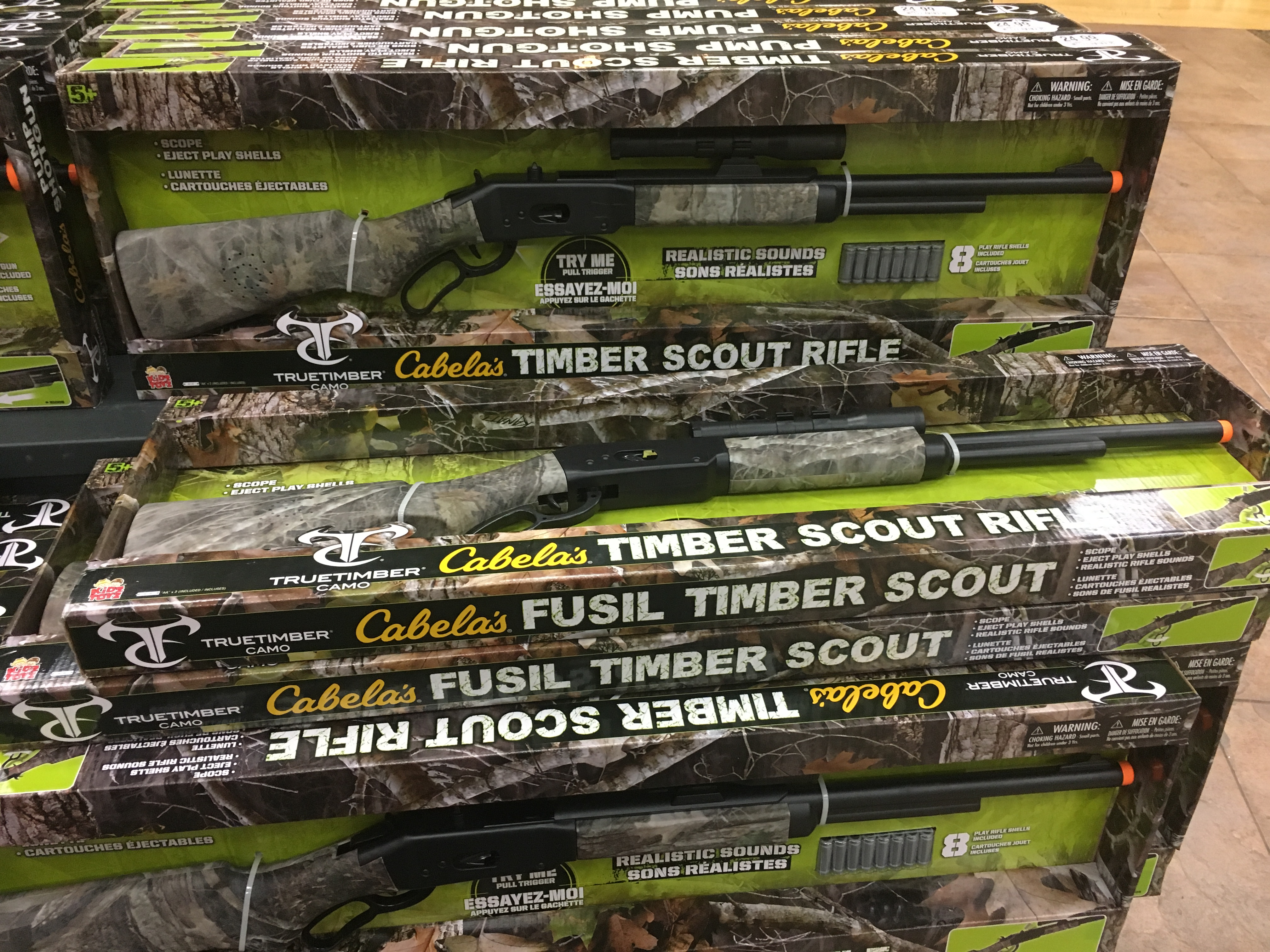
(Okay, technically, it isn’t a true Scout rifle. Beyond the fact that it is a toy gun, it is also lever action, while a true Scout would be a bolt gun. Cooper discussed the possibility of a lever action Scout, but I believe he considered that a pseudo-Scout. Also, I’m not clear what “caliber” it is “chambered” in. On the other hand, it probably does make weight and length for a Scout, and it does have the Scout style “scope” and mount…)
Speaking of semi-related stupid, I could spend a lot of time and effort, and increase my blood pressure, by going after the latest stupid statement about guns from Art “Dammit” Acevedo.
Hey fuckface, you know what might have saved your Sgt.? Putting this piece of shit away before it came to this. But nope, you’re gonna bloviate on tv about how this turd ignored allllllllll the other laws but DEFINITELY would have obeyed one more gun law. Mmmmk. pic.twitter.com/OviDEfPKS7
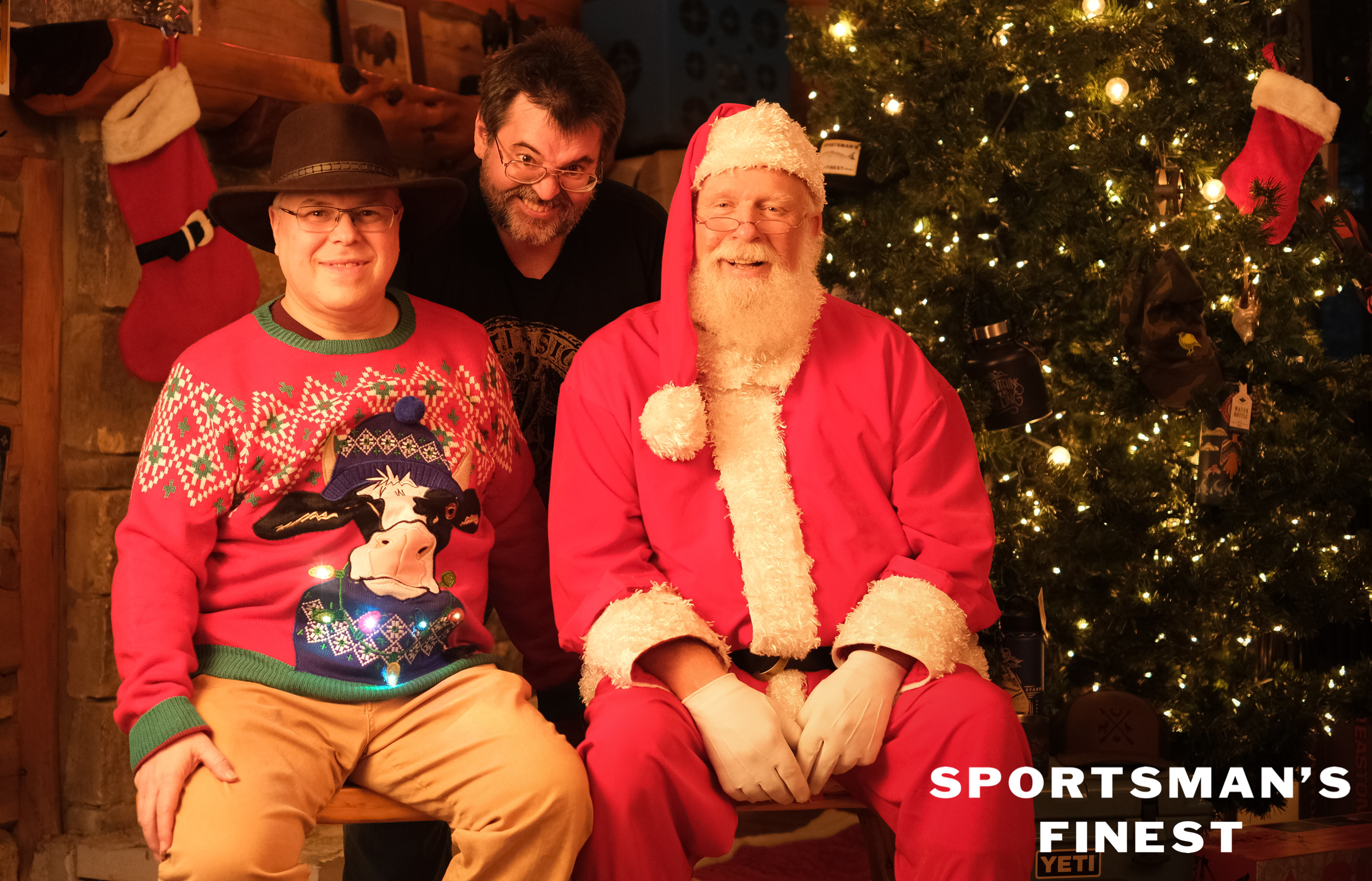
I wanted to title this “The Hat Squad”, but I got the picture back, and…where’s my hat? Obviously, I had it on in the other photo, but why wasn’t I wearing it in this one? And what did I do with it?
In other news, which I didn’t get a chance to note yesterday: the former DA of Suffolk County, NY, is on trial. One of his deputies is also being tried. I’ve written about this before: guy stole a bag of “cigars, sex toys, and pornographic DVDs” out of the police chief’s car, police chief arrested him, handcuffed him to the floor of an interrogation room, and assaulted him, and the DA and his deputy are charged with helping to cover up the chief’s actions.
Some of you probably remember that name, either because you’re true crime buffs or else you’re regular readers of this blog.
For those who don’t recall the name, Eppolito was one of the “Mafia Cops“: two NYPD officers who made deals with the Mob to provide confidential information and even whack guys.
Stephen Caracappa, Mr. Eppolito’s partner in crime, died in 2017: somehow I missed hearing about this.
The good book on this case is The Good Rat by the late great Jimmy Breslin. I’m not recommending or endorsing it, but Eppolito’s Mafia Cop is still widely available: you can even purchase a Kindle edition. (Yeah, that is an affiliate link: it’s not like Eppolito is going to benefit from sales now, and I’m pretty sure anything he earned while alive went towards compensating the families of his victims.)
Christopher Rouse, Pulitzer prize winning contemporary composer. I confess that I don’t know very much about his work, but he was a favorite of several close friends of mine.
Davo Karnicar, a man who skied down Everest. He wasn’t “The Man Who Skied Down Everest” in the documentary (that was Yūichirō Miura, who is still alive at 86), but he skied non-stop from the summit to base camp – a 12,000 foot descent in four hours and 40 minutes. (Mr. Miura only descended 4,000 feet.)
According to the NYT obit, Mr. Karnicar was killed in a tree cutting accident at his home.
John L. Keenan, chief of detectives with the NYPD. He was most famous for leading the manhunt for the “Son of Sam”. There’s also an interesting historical side note:
Two stories from HoustonChronicle.com (not chron.com, which is basically imitation Buzzfeed these days):
Gerald Goines, the Houston Police Department officer at the center of the botched drug raid scandal, has been charged with two counts of felony murder. His partner, Steven Bryant, has been charged with tampering. (Apparently, that’s “tampering with a government record”, though I saw some early reports claim it was “witness tampering”.)
Lawrence has been on the botched drug raid story like flies on a severed cow’s head at a Damien Hirst exhibition, so I’m going to direct you over there for coverage and background. If the HouChron is too obnoxious for you (in terms of subscriptions and ad-blockers) here’s coverage from KHOU (with equally obnoxious auto-play video).
The paper apparently found two – yes, two – M4 rifles for sale on “online gun forums” “recently”. That’s two out of “over 1,000” sold since September of 2016. DPS has also sold “over 2,000 SIG Sauer P226 pistols”, and a total of 5,254 guns during that time. So it looks like there’s about 2,000 guns not accounted for in this count. Shotguns? “high-powered rifles equipped with accessories worth thousands of dollars”?
Does this mean you can buy more after you retire? That’s how I read it: it sounds kind of like how my Dad got an old Ford F100 pickup, by signing up for the waitlist at Brown and Root and paying $800. Except for guns.
Also according to the paper: the SIGs were going to DPS troopers for $350 each, and the Bushies were going for “$401-$601 each”. It’s not clear what the difference is between the $400 and the $600 Bushies, but: Mike and I have spent the past few weekends at gun shows, and you can get a pretty nice Smith and Wesson M&P-15 (not the M&P15-22, but the .223/5.56 one) for under $600 if you shop carefully. Right now, CDNN will sell you a SIG P320 for $350, and they have P226s with a factory optic for “too low to print – call”. (I would, but they’re closed now.) At least one DPS guy who was selling his Bushie (the ad’s been taken down now, according to the paper) was asking $975 for his.
I only note this story because it seems like a giant nothing burger, except for (maybe) the question of whether the state is getting a good deal by letting retired troopers buy these guns, instead of selling them to licensed gun dealers for credit towards replacements. But if CDNN is selling AR pattern rifles to the public for $600, and SIGs for $350, I doubt DPS is going to get anything close to that on a wholesale deal with any vendor.