First off, a matter of somewhat pecuniary interest, since I’d like to keep good relations with Jacob and the Widener’s blog folks.
Jacob was kind enough to send over a link to a recent post: “1986 VS 2026: Guns And Ammo Pricing“.
Jacob goes through and compares prices between 1986 and 2026, and does some historical and cultural analysis of the changes during that period (the rise of the Internet, regulatory factors, panic buying after certain events, etc.)
In 1986, a box of 9mm cost $22.50, or about $0.45 per round.
In 2026, it averages $10.00 per box, or $0.20 per round.
Even without adjusting for inflation, that’s a dramatic decrease. When adjusted for inflation, 9mm is significantly cheaper today than it was in the 1980s.
My main quibble with Jacob here is: that’s really the only place where he mentions “adjusted for inflation”. Though he does say:
Firearms: Moderately more expensive, but roughly in line with inflation
I would have liked to see more of a breakdown of this.
The two inflation calculators I use are: the US Inflation Calculator and the CPI Inflation Calculator from the Bureau of Labor Statistics.
If we plug some of Jacob’s numbers into those calculators and compare 1986 to 2026 dollars:
- The $249 in 1986 Glock 17 would be $758.63 in 2026. A veritable bargain, since Jacob has it for $649!
- The $79 Ruger 10/22 would be $240.69 today. MSRP on the cheapest 10/22 I could find on Ruger’s site is $339, Jacob has it for $349 (which is also correct: Ruger has various models with various prices, of course.)
- The Colt AR-15 Carbine that was $499 would go for $1,520.30 adjusted for inflation today. I find it hard to do a direct comparison, because so much depends on configuration, but MidwayUSA lists a Colt AR15A4 for $1136.41. Another bargain! (Jacob has it for $1,099.)
- Your $5.49 .22 LR ammo would come out to $16.73 in 2026 dollars.
That’s probably enough examples. I’ll leave additional analysis as an exercise for the reader. I’ll note that both of the calculators I use gave exactly the same numbers for the 1986-2026 comparisons: I suspect they draw from the same source. Generally, $1 in 1986 is equal to $3.05 today, so you can use that as a factor when doing your math.
I like Jacob’s post. I just think it would be worthwhile to do a direct 1986-2026 dollar value comparison as part of the analysis. Jacob (or anyone else, for that matter) is welcome to flame me in comments if they think I’m wrong.
After the jump, a couple of books, mostly because I’m done with them and would like to move them from the downstairs stack to the upstairs shelves.
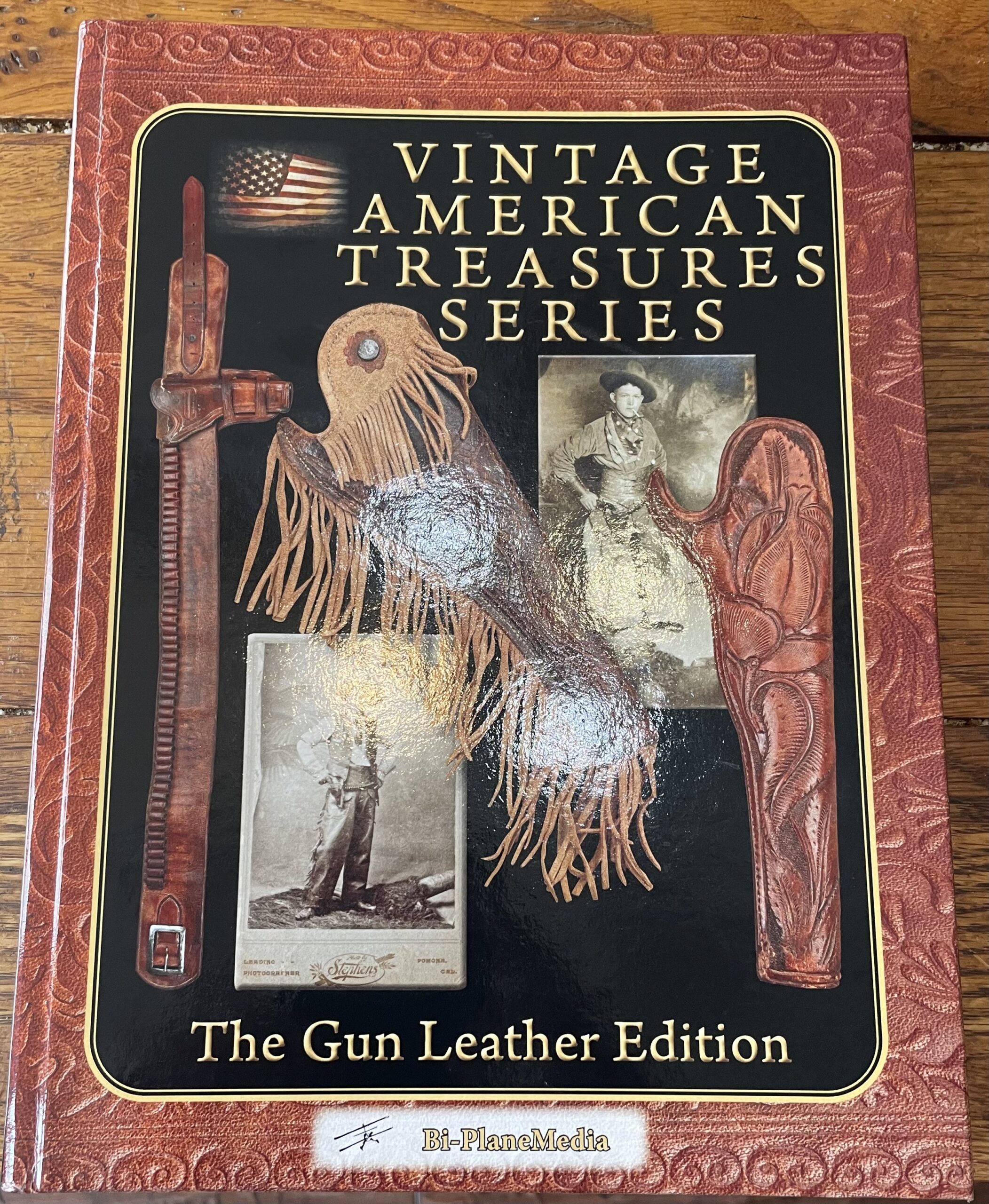
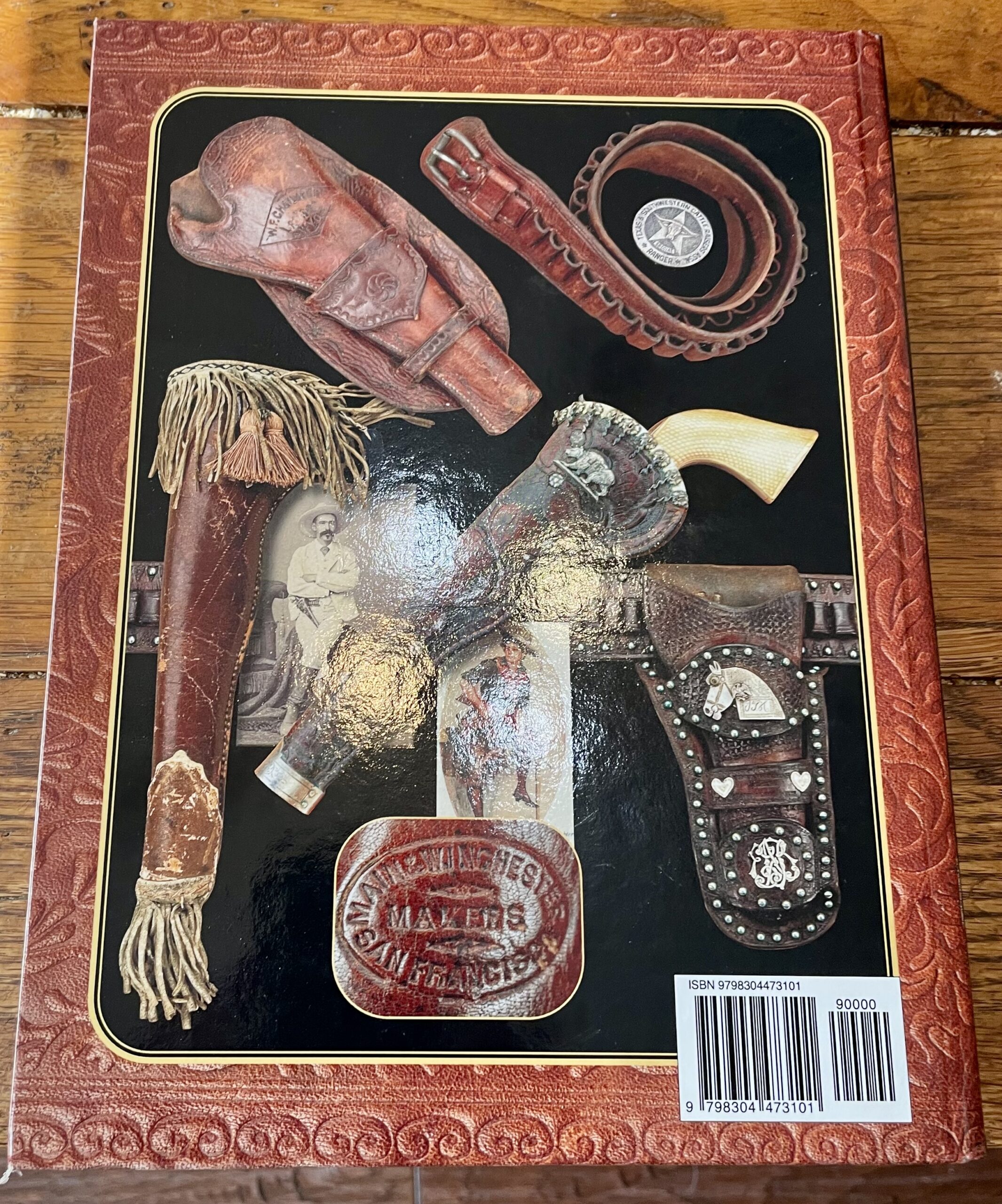
Vintage American Treasures Series: The Gun Leather Edition: Fine Historic Artifacts from the Goodwin Photo Archives, Paul Goodwin. Bi-PlaneMedia, no place, 2025.
This is a new-ish book that you can still purchase from Amazon (and it is cheaper than Curtain, Gong, Steam: Wagnerian Technologies of Nineteenth-Century Opera. Not that I’m bitter or anything.) It is also from the same people who brought you Vintage American Treasure Series: The Smith & Wesson Magnum Edition (previously in this space).
163 pages, mostly photos of vintage gun leather from various makers. It is generally organized by maker when known, but there are some pages that are more collections of styles by unidentified makers. The book is pretty to look at and leaf through, and if you like looking at good pictures of old holsters, I recommend it. As a study of holster history though, there’s really not a whole lot of information in it. I don’t know what I can recommend as a study of holster history, as I believe Holstory is officially out of print, along with pretty much every other book about holsters and holster history.
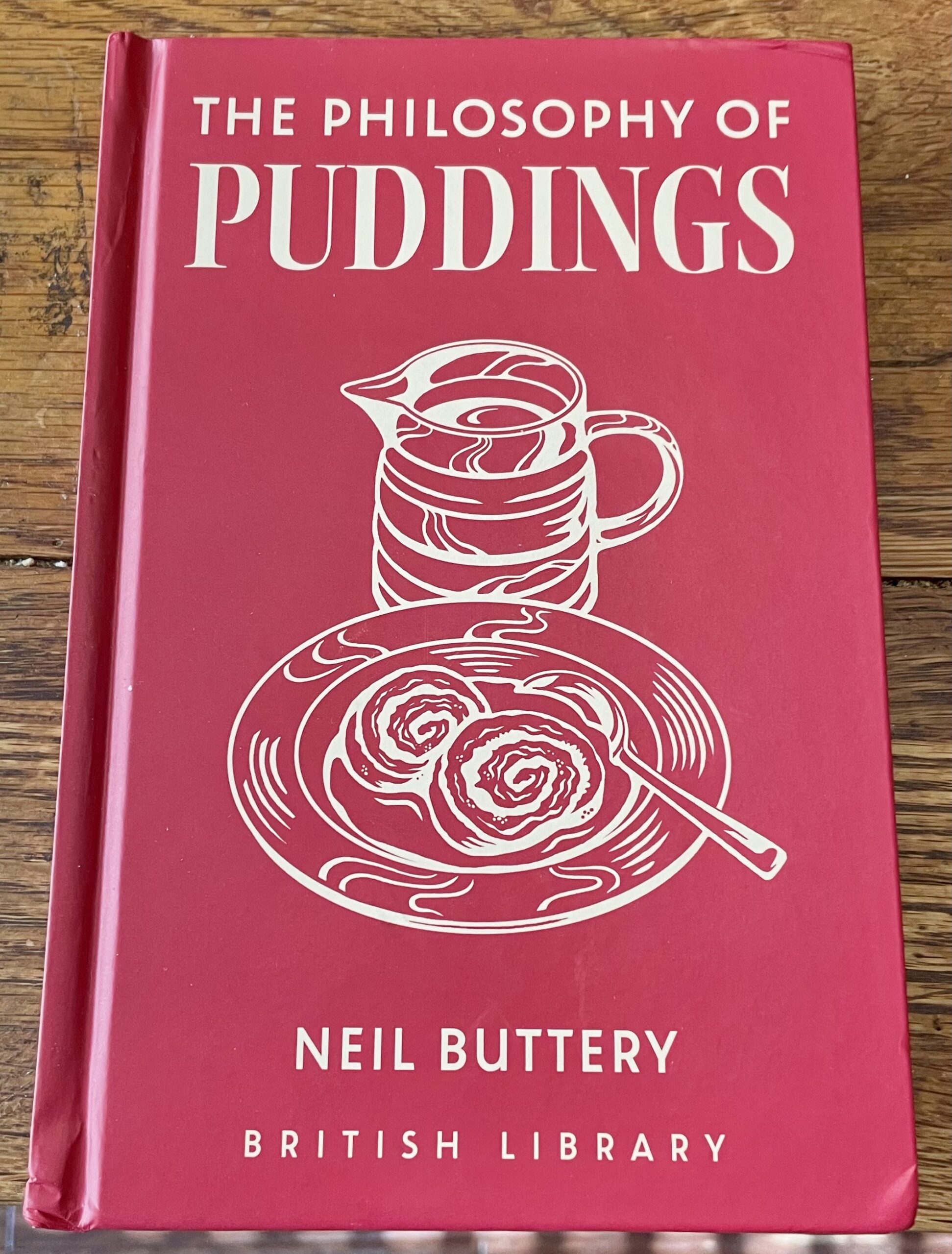
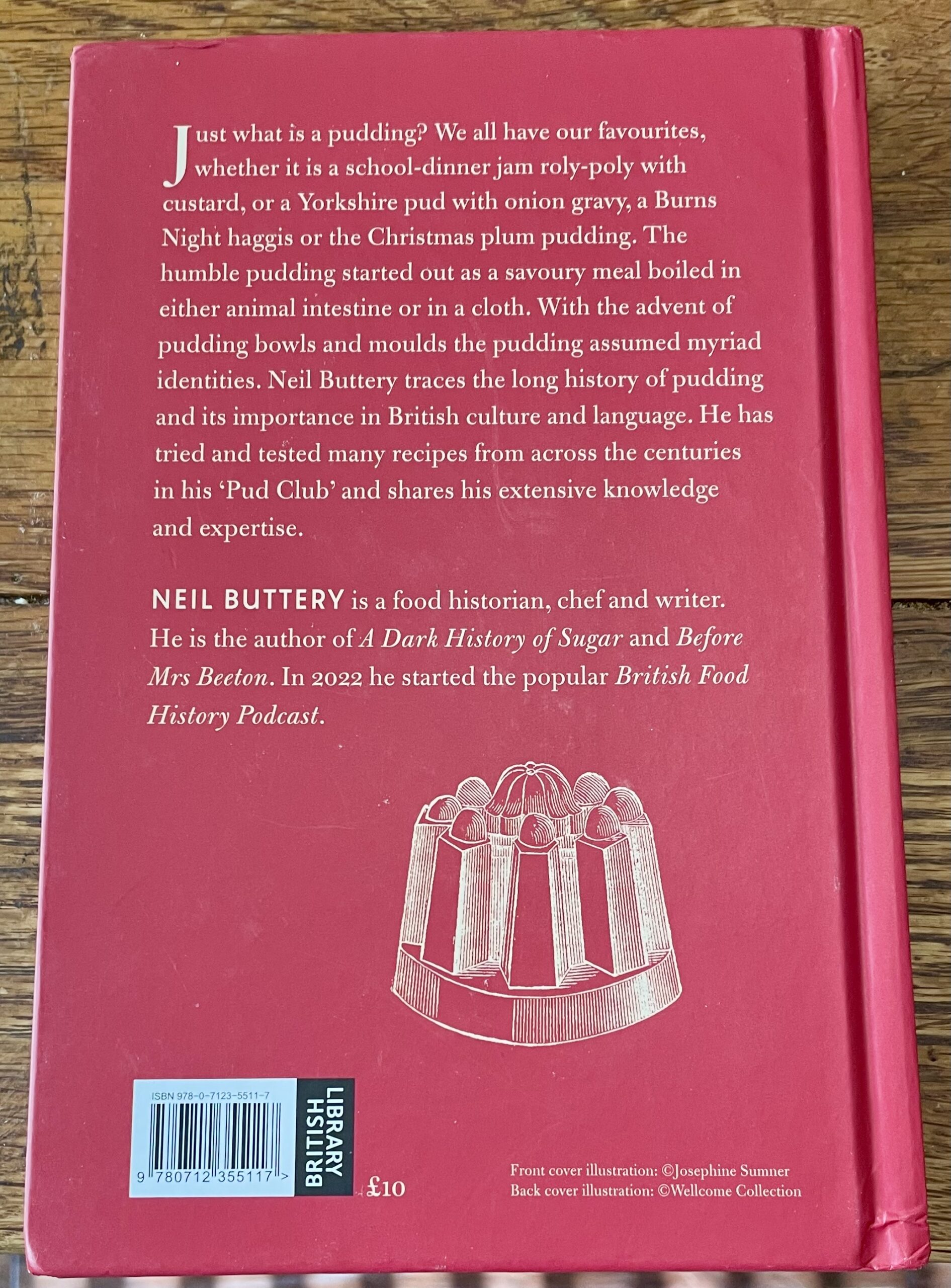
The Philosophy of Puddings, Neil Buttery. The British Library, London, 2024.
This is about “puddings” in the British sense of the word, not as we Americans would typically think of “pudding”.

Hey, I did put this behind a jump, didn’t I?
This is also part of a series: other entries in “The Philosophy of” include wine, whisky, gin, cheese, “cocktails”, and etc. Puddings and the other books are available new from Amazon in the US.
I did enjoy this. I’ve heard Neil Buttery on podcasts before, but hadn’t read any of their work. It was short enough to get through in an afternoon, but long enough to (in my opinion) comprehensively cover the subject. And I didn’t think of haggis as a “pudding” until now. Makes sense, though.
I did not actually pay for this book, sort of. One of the podcasts I listen to and support, “The Delicious Legacy“, was given four signed copies of Neil Buttery’s books, and held a drawing among Patreon supporters to give them away. I was fortunate enough to be picked, and Thom Ntinas (the host) was kind enough to send me a copy from the UK. (The “sort of” qualifier above is because I felt guilty about him sending a book from overseas – the shipping cost was horrible – and I kicked him back some money on Ko-Fi.)
Edited to add: FotB cm smith pointed out in comments that you can still get Holstory, but as a PoD book from BookBaby, and the link is apparently not obvious.
Mr. Smith also mentioned (we had not seen it yet) that Mike Wood recently posted a review of the Third Edition over at the RevolverGuy blog, including the purchase link from BookBaby. I deliberately didn’t include that here, as I would like for you to go over to RevolverGuy, read Mr. Wood’s review, and use that purchase link. Because that’s just the kind of hairball I am.
Holstory is available as print on demand at the publisher Book Baby, according to author Red Nichols, although it does not pop up in their basic search system.
He has continued the analysis in the third edition to conclude that most of the 19th century holsters came from the Wyeth company in Missouri even when marked with private label names. He is persuasive.
Thanks, Mr. Smith. I have all three editions, but I haven’t read the third edition yet.
I had thought it was OOP because his website and ordering page are no longer up, and I remembered Mr. Nichols saying he was going to retire from the holster history/book publishing business. Glad to know that you can get it, even if it is POD.
Good stuff as always!