It has been a difficult week. I thought it might cheer me up some to catalog more gun books for the library. As the saying goes, “I’ve suffered for my art. Now it’s your turn.”
This time, though, I have one that’s only sort of tangentially a gun book, and one that’s not a gun book at all. I’ll get into the reason for that one later.
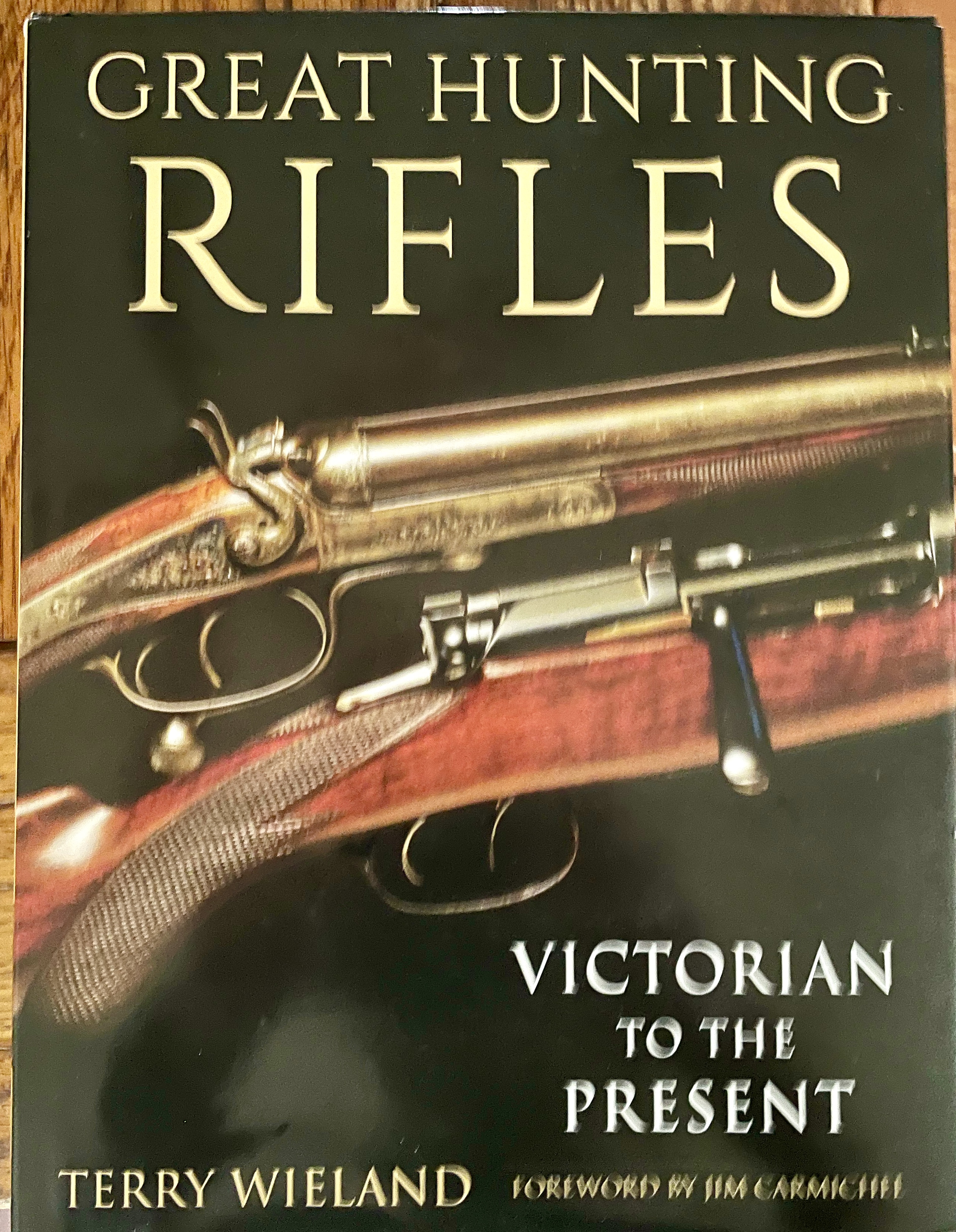
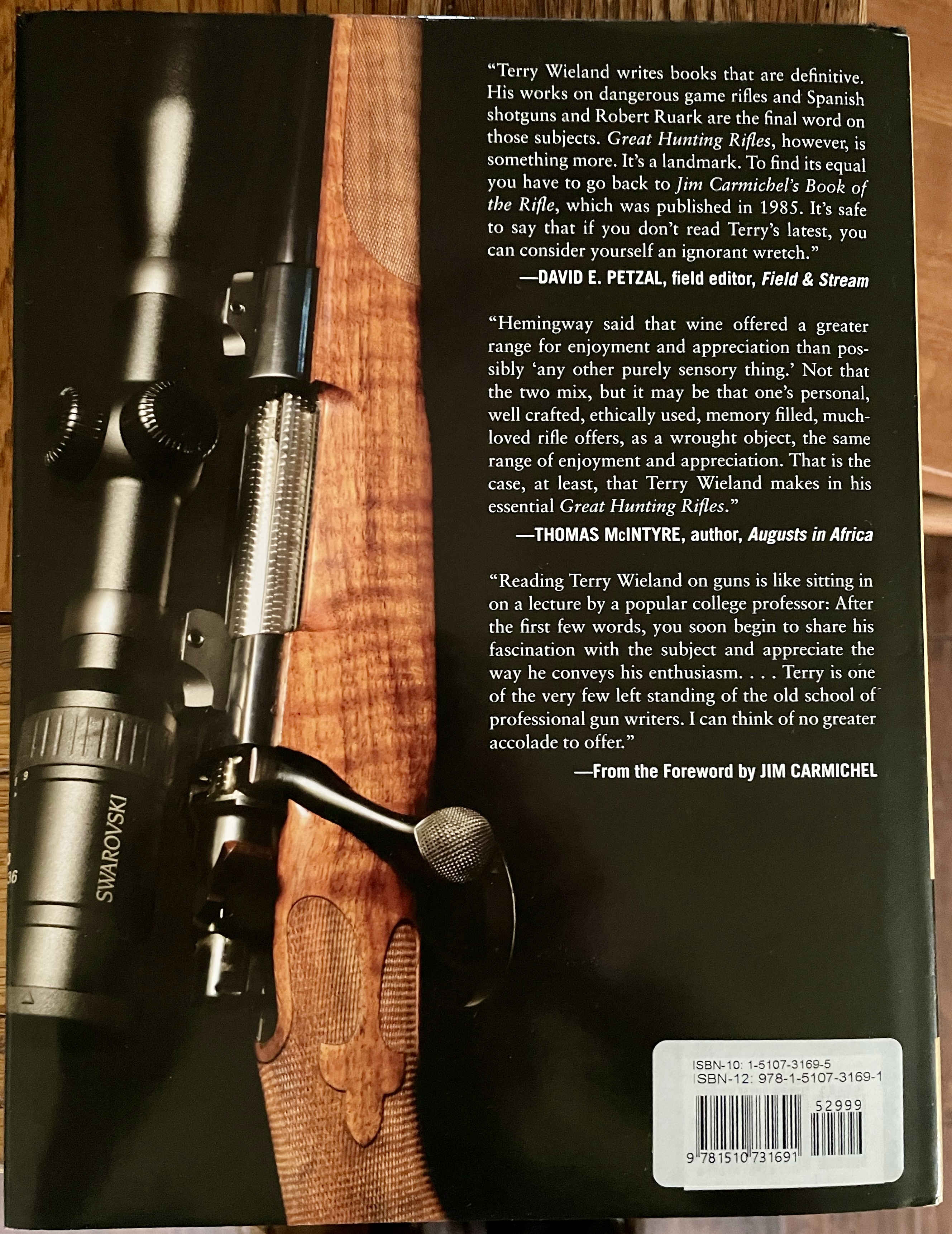
Great Hunting Rifles: Victorian to the Present, Terry Wieland. Skyhorse Publishing, New York, 2019. This is a relatively new book that you can still purchase from Amazon. It is also too recent for Riling or Biscotti.
I’ve written before about Terry Wieland and his writing. I got some funny money from a cow-orker and decided to spend it at Amazon. This had been on my wishlist, so…
…I’m about 150 pages into this 260 page book, and I’m delighted with it. There is a lot of great color photography in it (how did they hold the price down to $30?) and it would make a nice coffee table book. Except, to me, coffee table books tend to sacrifice context for pictures.
Not Great Hunting Rifles. This benefits as much from Mr. Wieland’s writing as it does from the photos. It seems to me like he’s kind of a polymath. Chapters in this book talk about German and European politics during the 19th century (in the context of the Commission 88), Canadian and British politics (in the context of the Ross rifle and WWI: speaking of the Ross rifle, that’s a real rabbit hole. Mr. Wieland covers it as much as he can within his limitied space, but if you really want to dig into this (and I kind of do)…expect to shell out some cash.) and (yes, Mike) the Winchester Model 70. I think Mr. Wieland would make a good history professor, perhaps at some smallish school in Idaho or Montana where the hunting is good. Or maybe at Sul Ross State University, though the Texas heat might be a bit much for him.
One of the things I like about this book is Mr. Wieland’s point that “great hunting rifles” are very specific. You can’t just say, for example, that the pre-war pre-64 Winchester Model 70 is a “great hunting rifle”. Greatness in a hunting rifle depends on a large number of factors: intended use (I have a new-to-me .22 that I think might be a great hunting rifle. I don’t know, I haven’t shot it yet. But it’d be great for squirrels, not for elk.), caliber, barrel length, barrel twist rate, action, sights, stock, and many many other factors. Mr. Wieland gives many examples of hunting rifles that failed, or were not as successful as they could have been, because one or more of these factors was off. You could almost read this book as the text for a class taught by Mr. Wieland: Firearms Design 101, perhaps.
I am deeply impressed with this book, with Mr. Wieland’s erudition, and with his ability to convey that on the page. I commend this to your attention, and I hope to meet the gentleman one day and shake his hand.
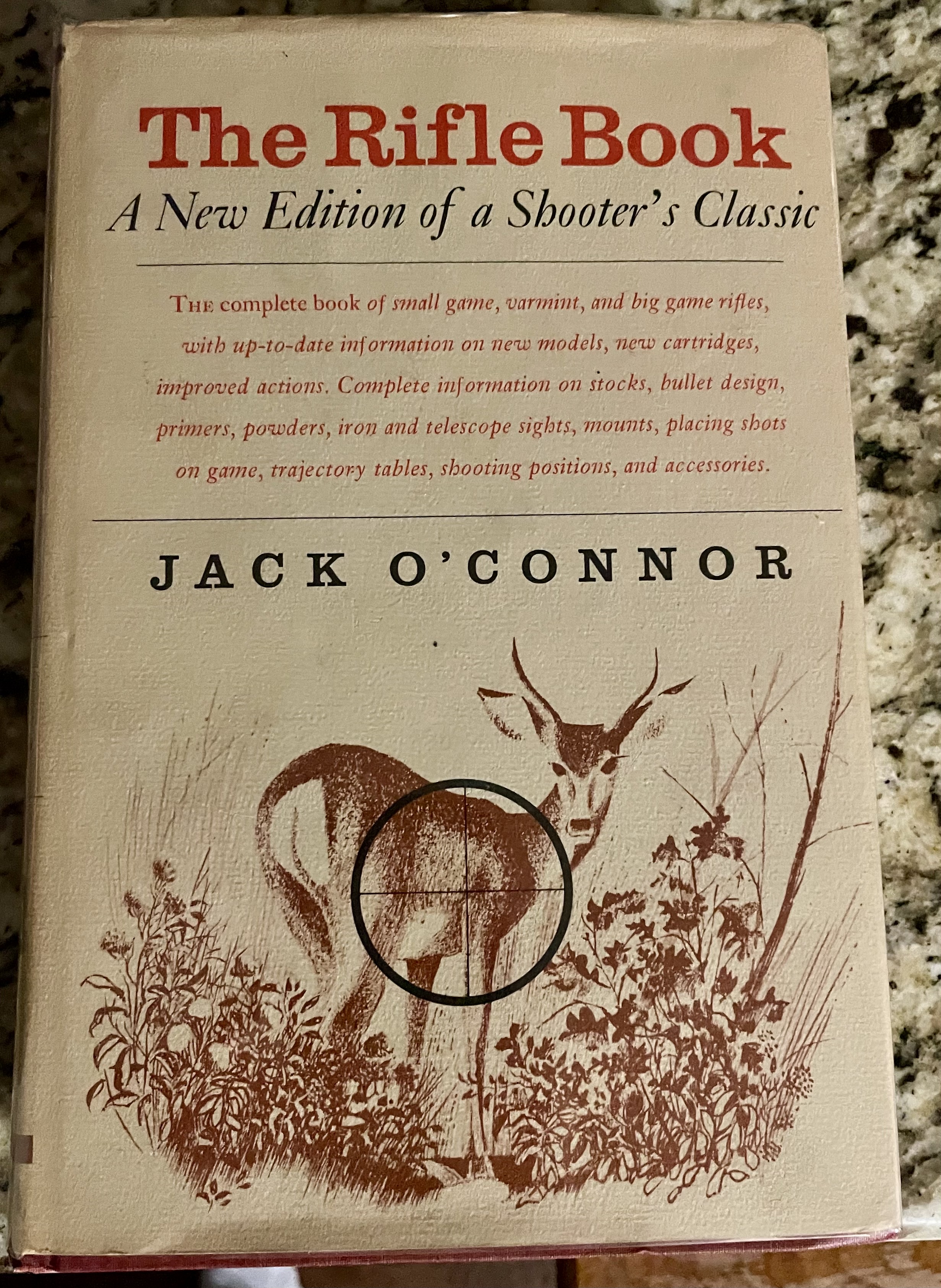
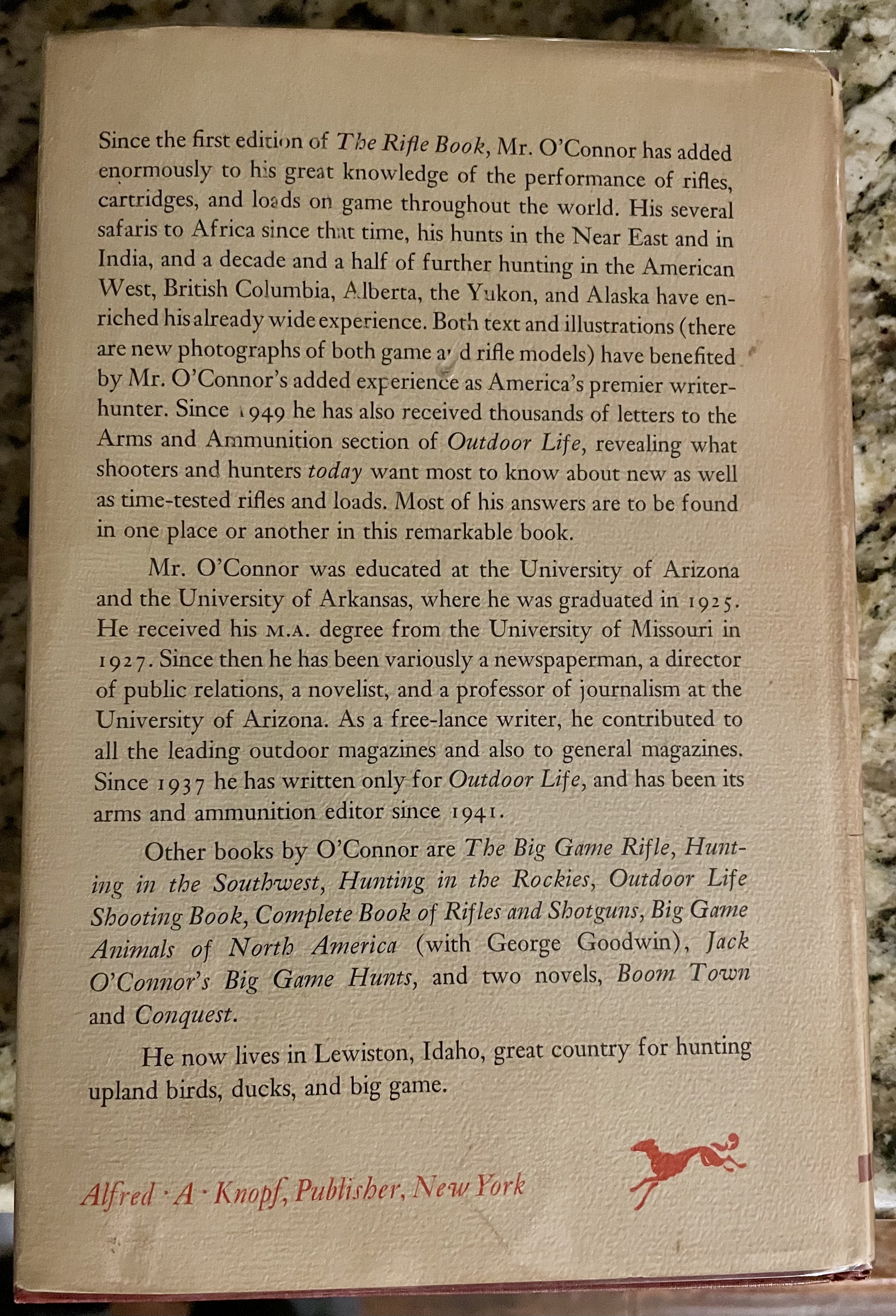

The Rifle Book, Jack O’Connor. Alfred A. Knopf/Borzoi Books, New York, 1964. Riling 2687 (but see below). Also in both Biscotti bibliographies, but see below.
Speaking of Sul Ross State…
I’ve written plenty about Jack O’Connor. The Rifle Book is what you’d expect: his guide to rifles and rifle shooting. Everything from actions, sights, and cartridges to shot placement and accessories. Summarizing Biscotti’s entry, this was the first serious rifle book published after WWII and all the advancements in ballistics and optics that brought about, and who better to write it than O’Connor.
Callahan and Company offered this to me for $30 postpaid (it was on my want list with them) and I jumped at the offer.
The first printing of The Rifle Book was published in 1949, and that is how it is listed in Biscotti and Riling’s bibliographies. This edition, however, is the revised second edition which came out in 1964. Biscotti notes this edition in his Borzoi bibliography entry (B-27-A). There was a third edition in 1979 as well. That first edition went through four printings before the second came out, which makes me think it was one of the more popular Borzoi books.
I think this is in excellent shape. There are a couple of little dings at the top of the spine, but not much else wrong with it. The jacket is uncliped. I feel like this was an eminently reasonable purchase, though I would like to find a copy of the first edition first printing (just to compare).
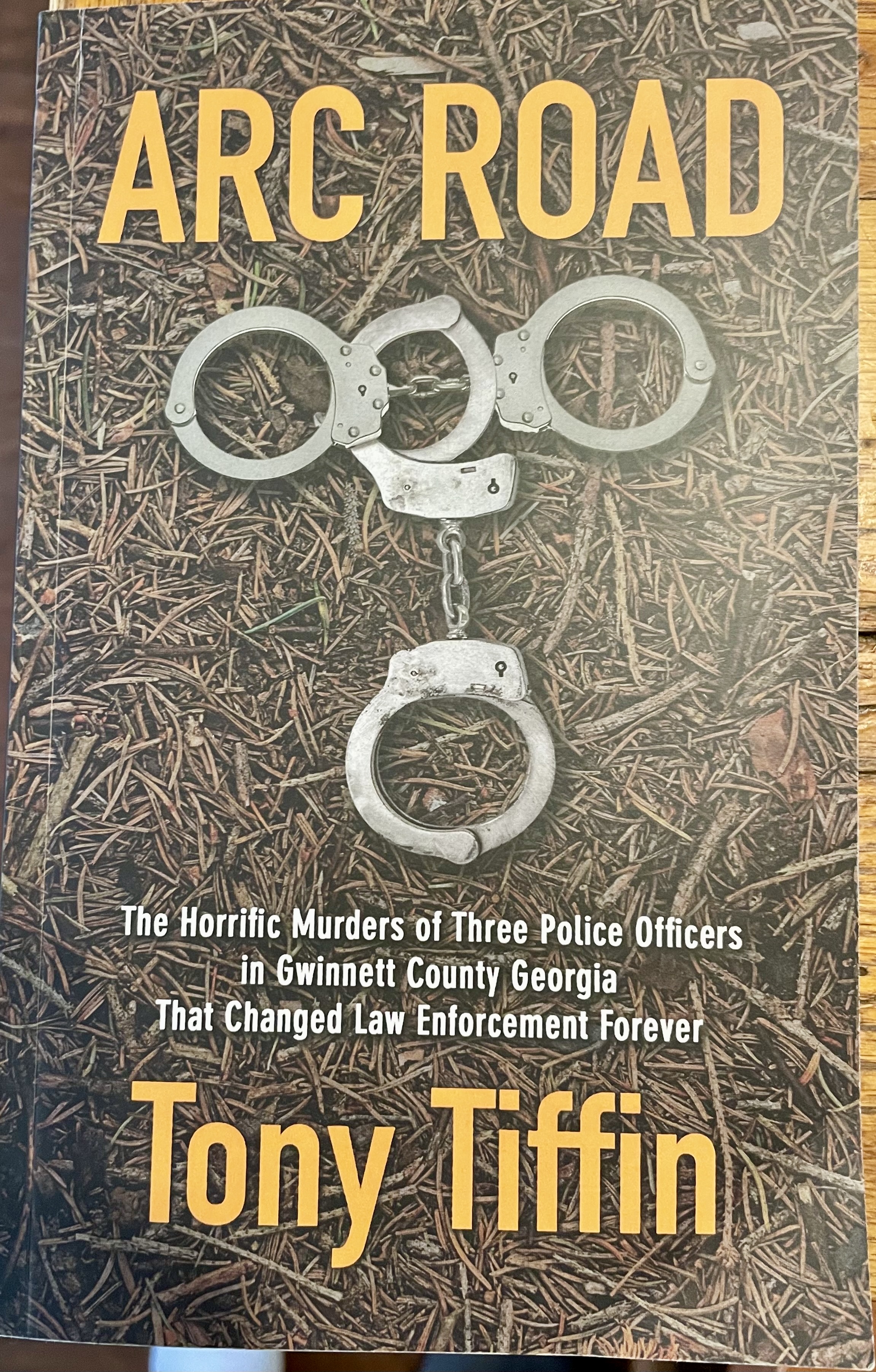
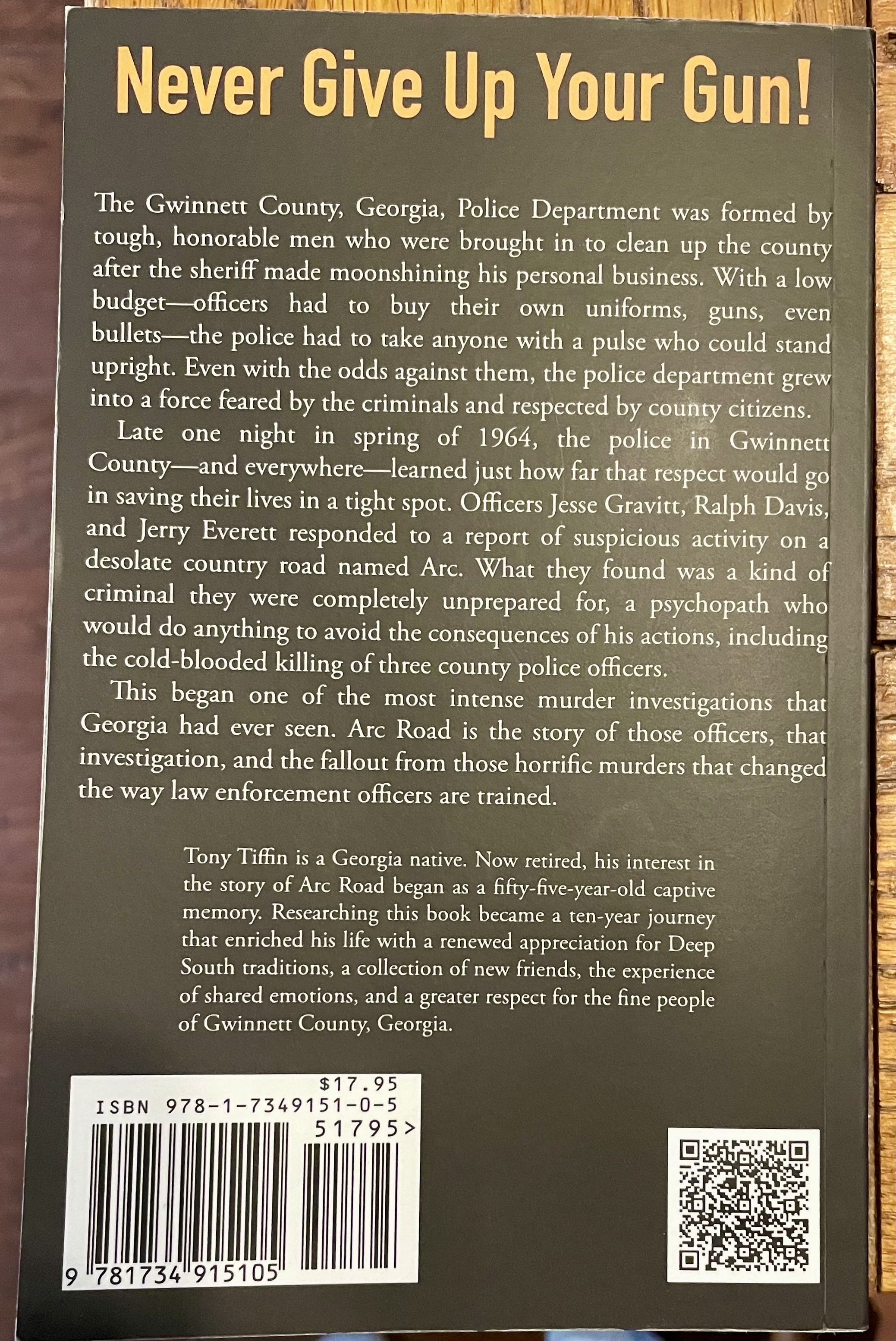
Arc Road: The Horrific Murders of Three Police Officers in Gwinnett County Georgia That Changed Law Enforcement Forever, Tony Tiffin. Arc Road Media, Peachtree, GA, 2019. Also a relatively new book available from Amazon, and purchased in the same order as Great Hunting Rifles. Greg Ellifritz called this one of the best books he read in 2024, so it seemed like something worth taking a flyer on (especially since he also liked Front Sight).
Arc Road is really sort of gun book adjacent. It is more of a true crime book. On the night of April 17, 1964, three officers with the Gwinnett County Police Department were murdered. Arc Road is the story of the crime, the investigation, and the trial.
Gwinnett County was a hardscrabble place, and the police were hard men. The department was established after the sheriff turned out to be the worst crook in the county. They didn’t have an academy or much training, other than riding with veteran officers. Most of them didn’t have much law enforcement experience, and were chosen on the basis of being able to hold their own in a fight. They had to buy all their own gear, including guns. There were only eight of them, including the chief. But it seems like they were honest stand-up guys, and losing three of them at once was a massive blow to the department and the community.
Mr. Tiffin remembered this case from when he was younger. He spent ten years researching before he wrote this book. I think it is a good one, and I’d recommend it, but I don’t feel as enthusiastic about it as Mr. Ellifritz was. (Or, for that matter, as enthusiastic as I am about Great Hunting Rifles.) I think part of my problem with it was the extensive use of dialog: while Mr. Tiffin says that the dialog is taken from court transcripts and interviews, it seems like there’s just a lot of it, and I wonder how person A remembers so well what he said to person B 40 years ago. I believe the sense of what was said is there, but the extensive use of quotes just pulled me out of the book a little.
That’s a small quibble. The larger one to me is the emphasis on “lessons learned”. More specifically, the main “lesson learned” here is: “Don’t give up your gun!” Okay, great. I am not a police officer. The closest I have come to being one is citizen’s police academies. That may be sound tactical doctrine that they teach cadets today. I don’t know. But when I hear the dogmatic “Never give up your gun!” all I can think of is The Onion Field and Wambaugh’s grizzed beat cop. “…you fuckin well leave it up to the man on the spot.”
Which is a shame, because there’s some other good tactical advice in here. For example: situational awareness. And don’t trust anyone. (The first officer was taken prisoner and disarmed by a man he “knew”, but had good reason not to trust. With him as a hostage, the car thieves were able to disarm the other two officers and handcuff them together.) Carry a backup gun. (One of the officers had what’s described as a single-shot derringer on him. Not much, but he could have stuck it in someone’s ear and pulled the trigger. Except that he unloaded it while showing it off to a friend right before the call…and didn’t reload it when he went out with the others to respond.)
The crime was carried out by three men. One turned state’s evidence and testified against the other two. Both were found guilty. One was paroled after 25 years. The other one – the one who is generally believed to be the instigator – died in prison at the age of 91.
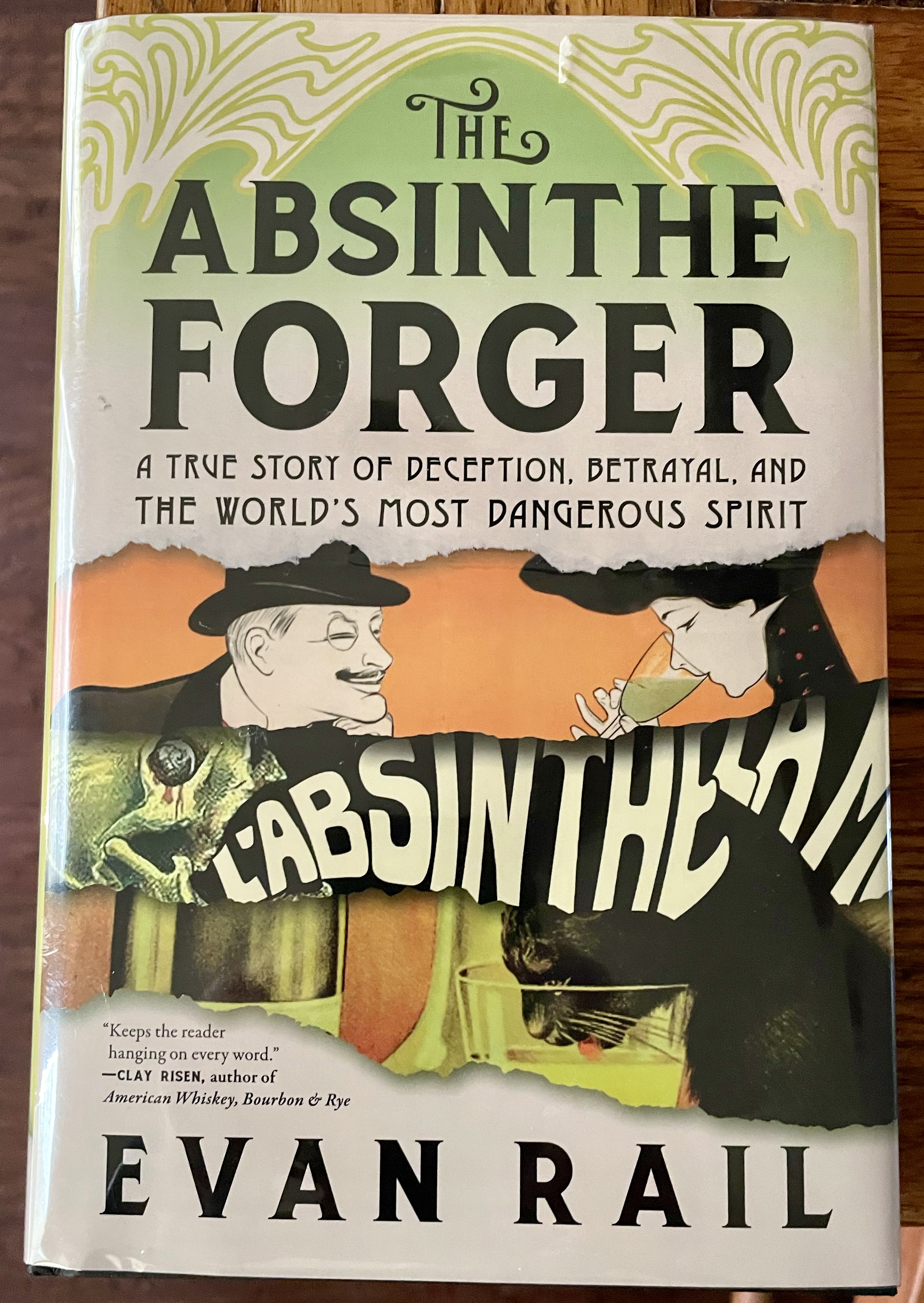
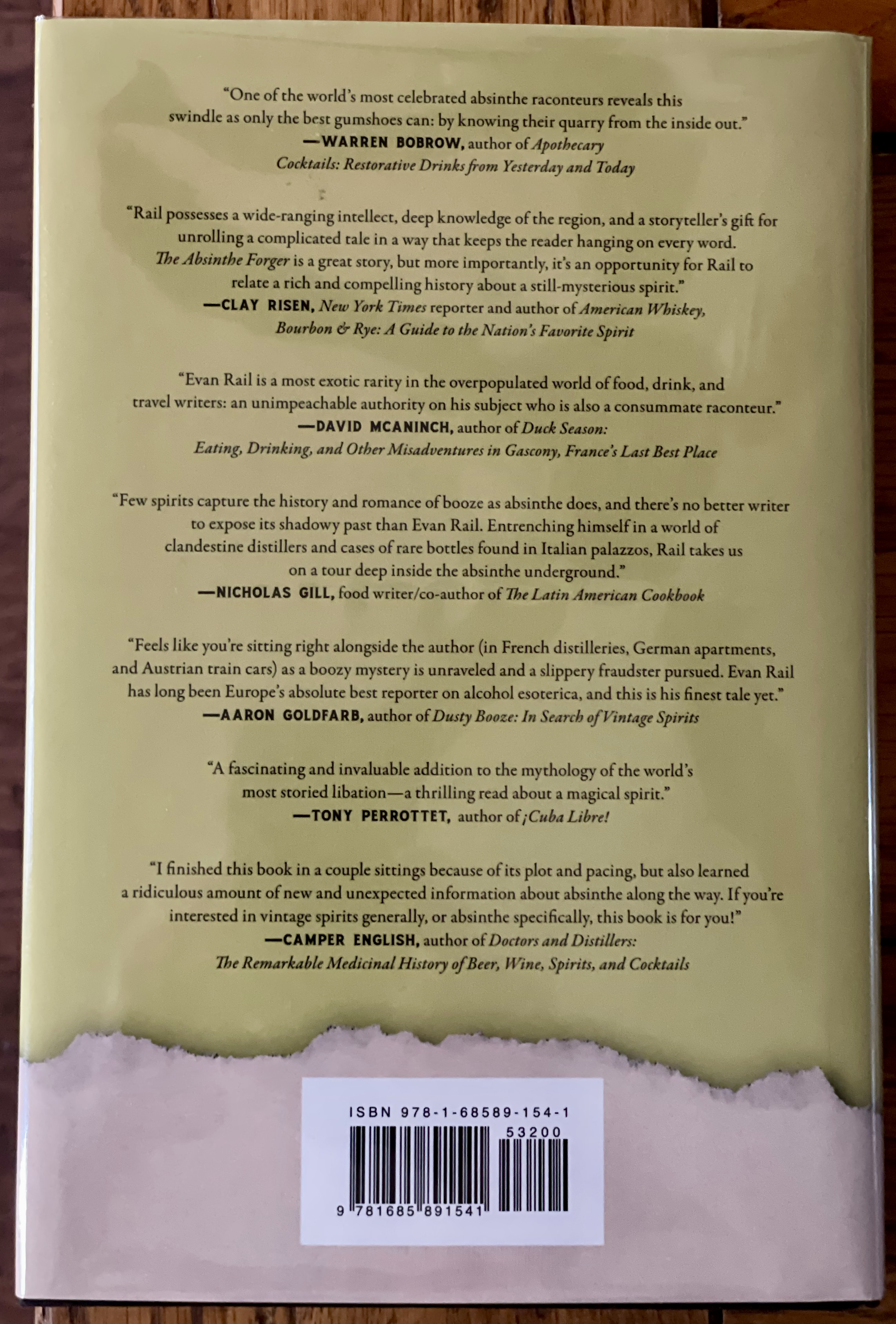

The Absinthe Forger: A True Story of Deception, Betrayal, and the World’s Most Dangerous Spirit, Evan Rail. Melville House, Brooklyn/London, 2024.
My non-gun book for this entry. This is also a new one that you can get from Amazon. I found my copy at Half-Price Books, and wasn’t even aware it existed until I saw it on the shelf. I paid $27 plus tax, which is more than the market is asking, but I believe my copy is signed. I haven’t read it yet, but it is pretty close to the top of the stack. (Probably next after Great Hunting Rifles.)
I’ve had a long standing interest in cocktails, booze in general, and mixology. I trace that back to Barnaby Conrad III and his Absinthe: History in a Bottle. I think that was the book that triggered my interest, especially in absinthe, and set me on my current path. I still have a fascination with absinthe.
I’ve also written before about “dusty hunters“, people who seek out vintage bottles of alcohol. There are “dusty hunters” who are really into pre-ban absinthe. As you can imagine, there’s not much pre-ban absinthe around, so we’re talking about a lot of money for a bottle.
And where there’s money, there’s crime. Sometimes I see people chuckling at things like “bass tournament fraud”. Well, guess what? Prizes in some of those events can reach $100,000. That’s a lot of incentive for fraud. Booze fraud is not unheard of: see l’affair Rodenstock.
The Absinthe Forger is, as far as I can tell from the jacket copy, about a guy who forged pre-ban absinthe and sold it to collectors, claiming to have a secret private cache. And about how some of those collectors banded together and exposed him as a fraud. This seems like another book that is scientifically designed to appeal to me, and I look forward to reading it.
Next time: a new to me Samworth. Lawrence asked me a while back what the most I’d ever paid for a gun book was, and I now have a new answer for him. (Not the Samworth. And not The Ross Rifle.) And: sniper! No sniping!