I started the post months ago, but couldn’t do anything with it before now because of image uploading issues and Bluehost’s refusal to assist with those.
Bluehost upgraded my WordPress instance for this blog a few days ago, and image uploading seems to be working slightly better, so I think I can post this now and see what happens.
My intent when I started this was to dangle some stinky old bait in the water to see if a specific person took the bait.
Jump goes here.
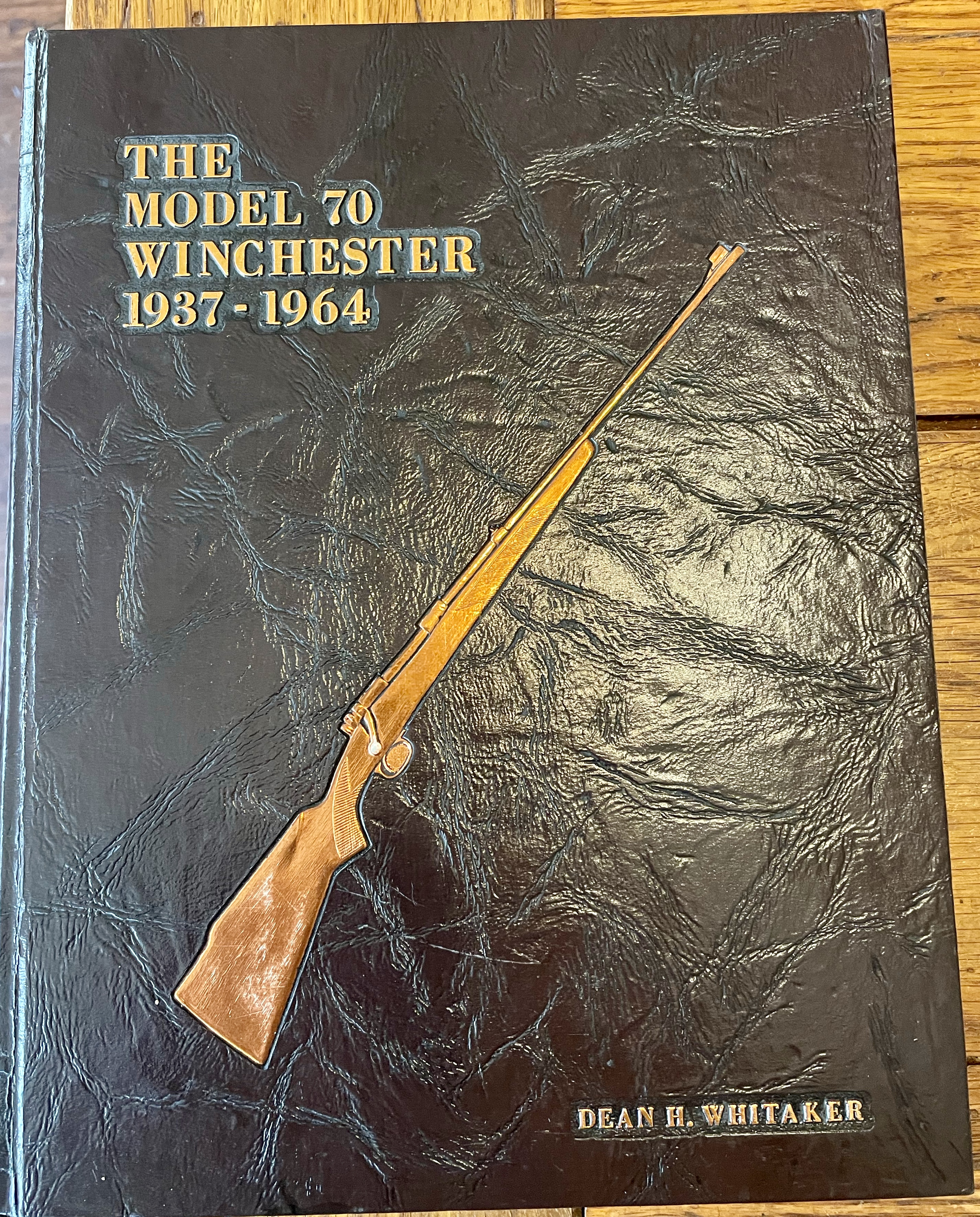
The Model 70 Winchester 1937-1964. Whitaker, Dean H. Taylor Publishing Company, Dallas, 1978. Too late for Riling, and not listed in Biscotti. The copyright page says this is a “First Edition”, but I can’t tell if there was ever a second. It does not look like this had a dust jacket, but the bibliographical information isn’t there for me to say for sure.
Flipping through it, this looks very much like a predecessor to Rule’s The Rifleman’s Rifle (and Rule cites this in his bibliography). Perhaps not everything you wanted to know about the pre-64 Model 70 (I’d go to Rule as my first source for that) but a lot. And plenty of pictures. There’s even a chapter showing the caliber markings on the barrel for various Model 70 chamberings. Just in case you want to see what the .257 Bob stamping looks like.
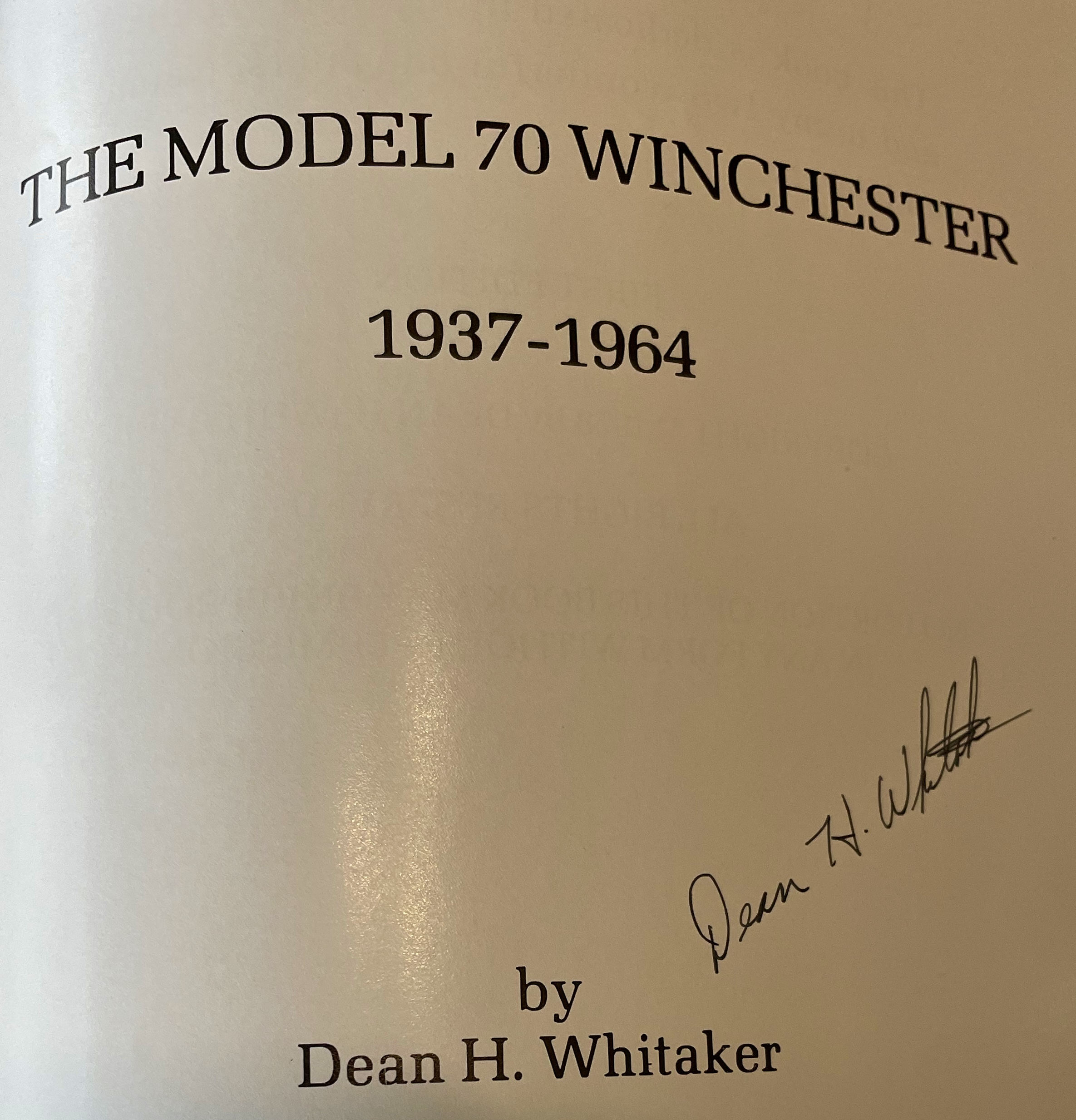
This copy is signed by Mr. Whitaker.
And the previous owner, interestingly, pasted a table of serial numbers by year into the front cover.
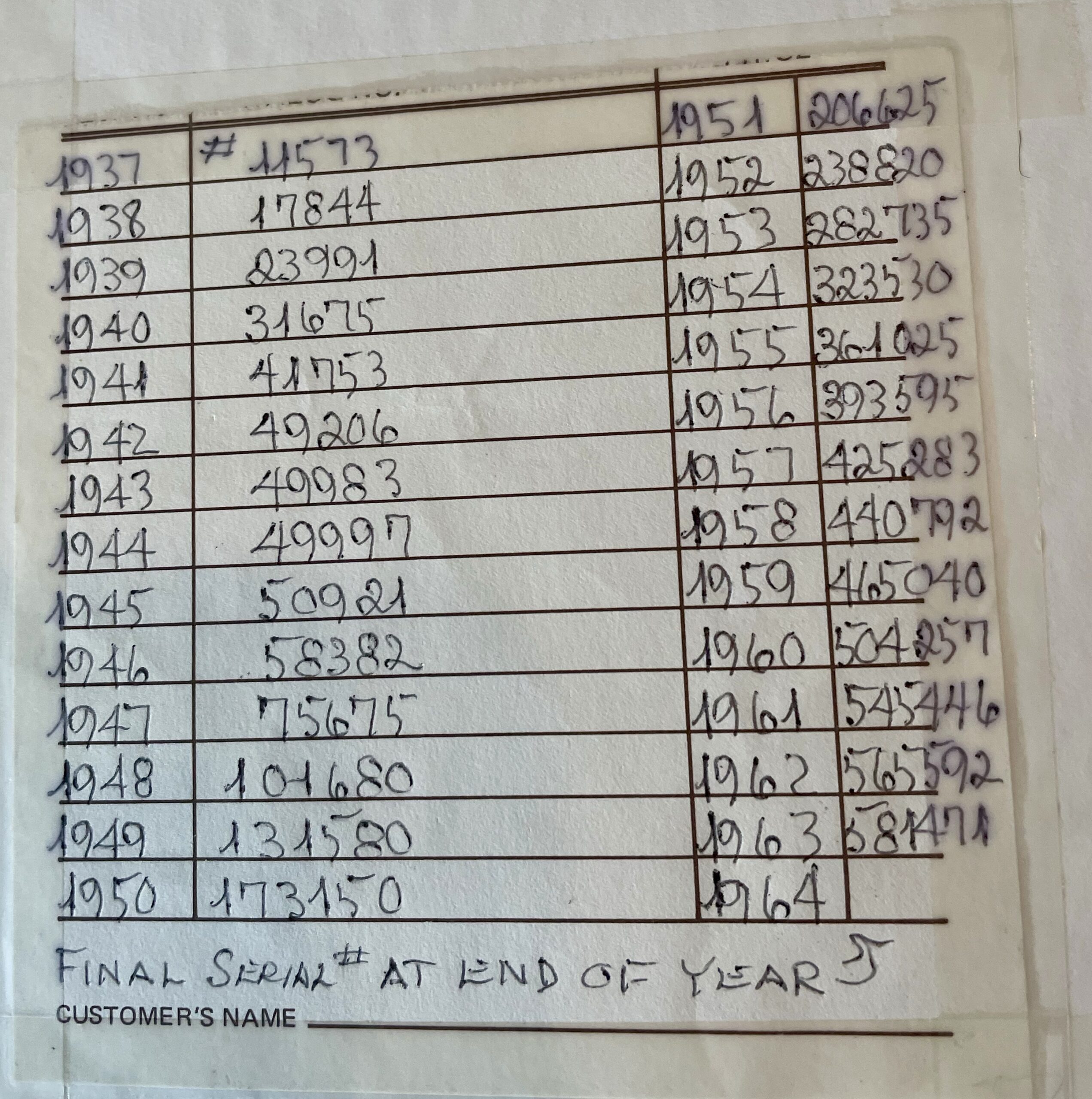
(Here’s what I guess is the “official” table from Winchester. This includes post-1963 guns up through 1992.)
Other than that, and the owner’s name written inside the front cover, I can’t find a flaw in this book. I’d call it “as new” unless I find out it was issued with a dust jacket.
This had a $150 price tag on it at the Southpark Meadows Half Price. I had a 10% off coupon, so I only paid $135 plus tax. There are two copies currently listed on ABEBooks: one at $400 and one at $500, both signed.
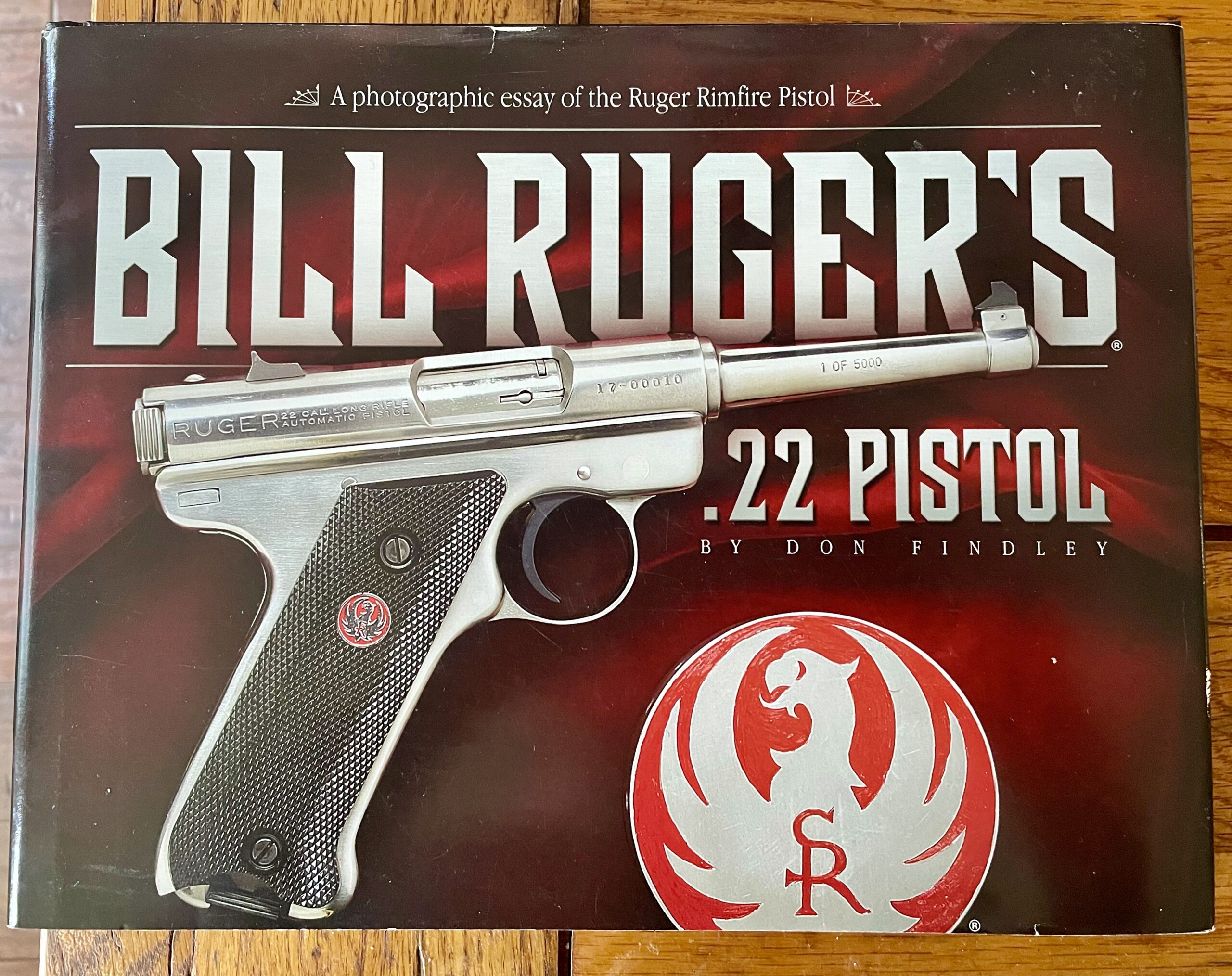
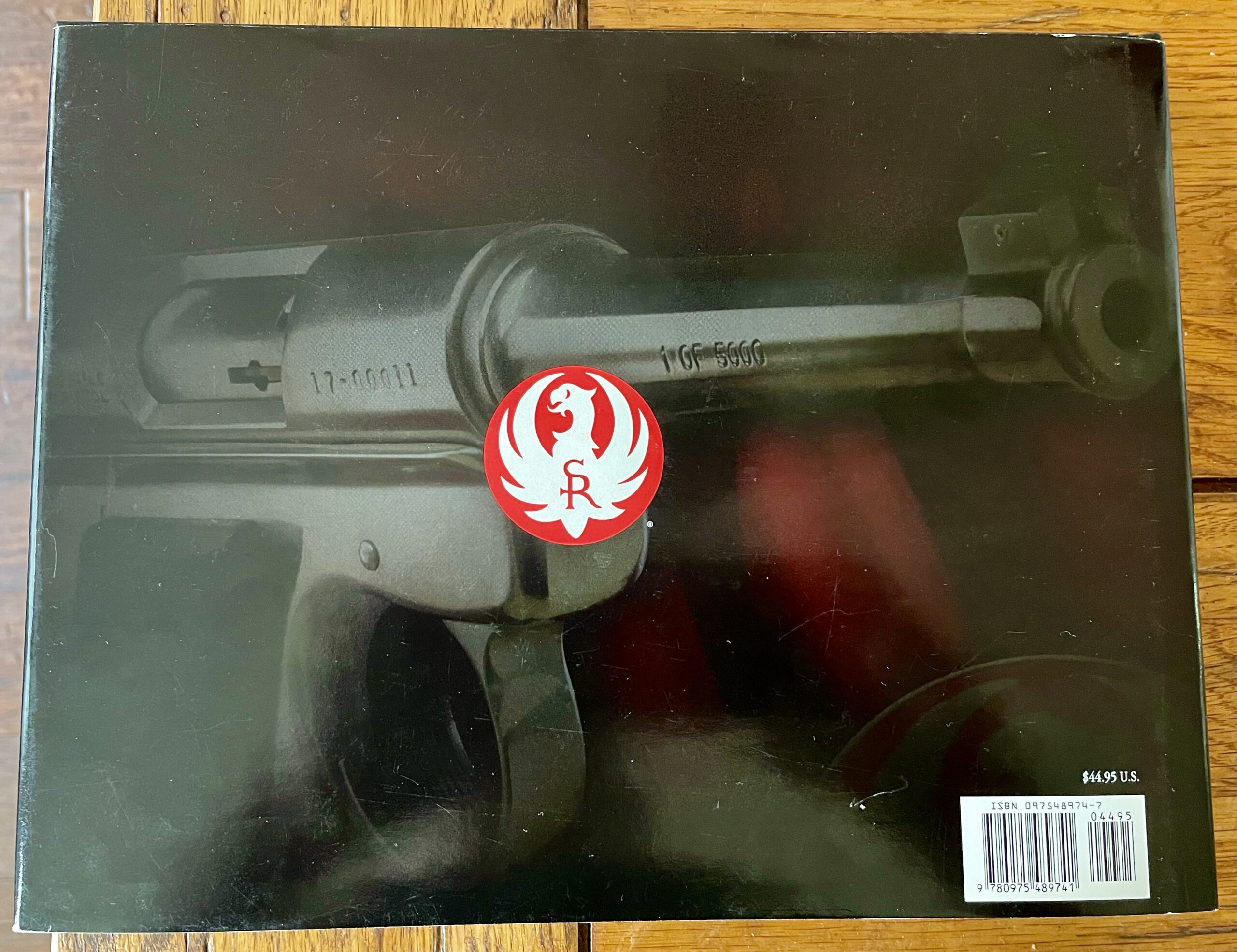
Bill Ruger’s .22 Pistol, Findley, Don. ProPrinting, Dallas, 2004. Too late for Riling, and not listed in Biscotti.
I think everyone knows that I love me some Rugers, in addition to my Smiths. I’m particularly fond of the little Ruger .22 pistols. Dad had one – I think his is a Mark I, but it’s in the safe and I don’t want to check right now. I’ve got a .22/45 with a bull barrel that I really enjoy shooting. These are just pure fun guns. You could do a lot worse than buy a Ruger rimfire pistol and put in some practice time with it. When they show up used, the prices seem pretty reasonable: the last one I bought was just under $300 with tax, and was in pretty nice shape.
The headline across the top calls this a “photographic essay of the Ruger Rimfire Pistol” which seems fair. This is kind of short on specifics about manufacturing dates and such, but it concentrates more on photos of guns owned by prominent people, or that are interesting in some other way. For example, there’s a nice photo of a silenced Ruger Mark I with a Randall fighting knife, used in Vietnam by a Special Forces member. There’s photos of the early Ruger pistols (as in, single digit serial numbers) and even of the Ruger hand drills.
(“Serial number 8. 4 3/4” barrel. Original owner Warren Page, editor of Field and Stream magazine. No external serial number. Hand stamped 8 internally. Delivered by Sturm and Ruger in person, September 1949.”)
My one quibble is that most of the book is in black and white (though there is a small section of color photos in the back). But a whole book of color photos would probably have been even more expensive than the $44.95 cover price on this one.
This is a fairly nice copy. There’s a small tear in about the top middle of the front cover (maybe 1/4″, hardly visible), an even smaller one (less than 1/8″) towards the bottom front, and some scuff marks along the front cover edge. Nothing really dramatic or distracting.
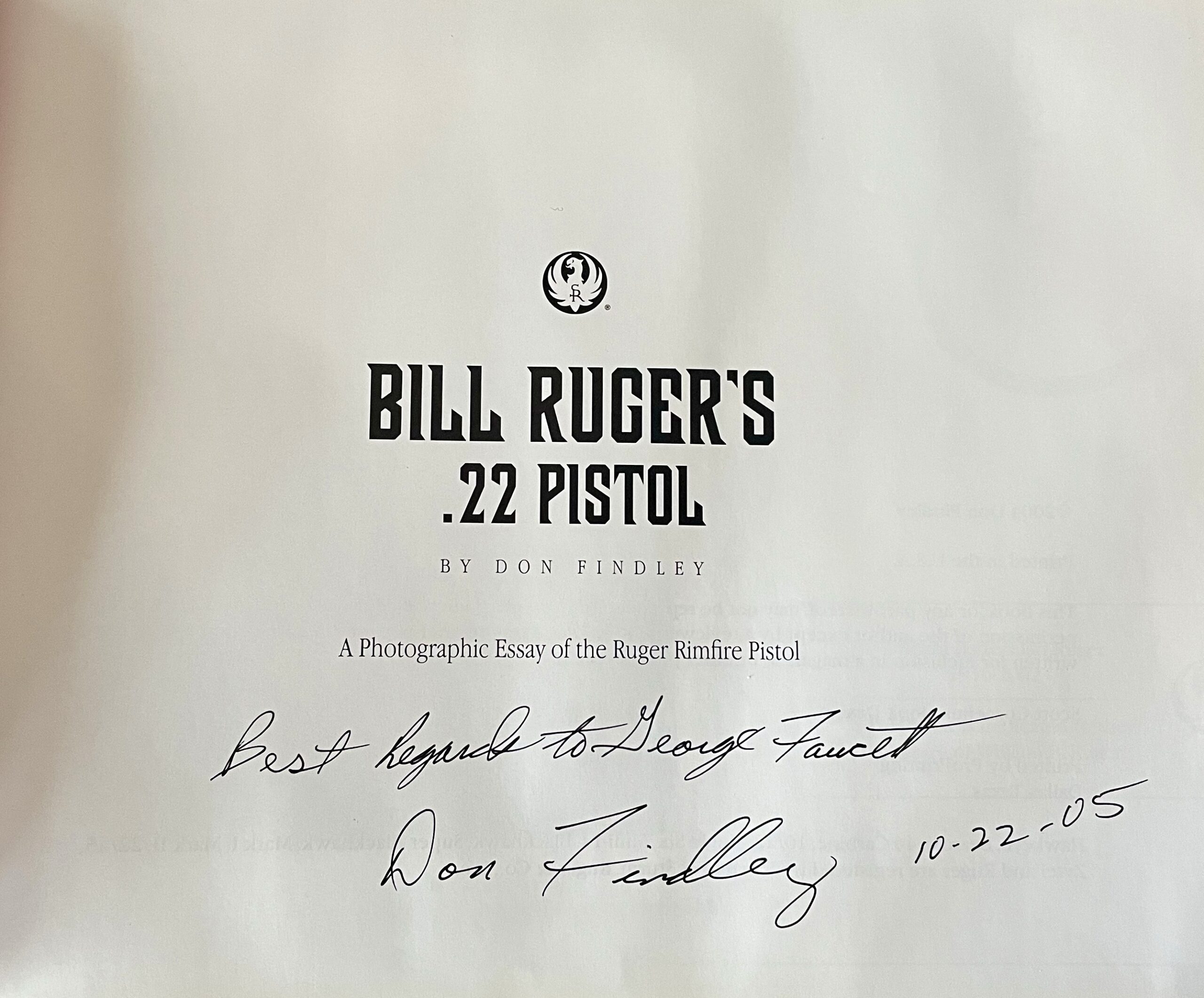
And it is signed by Mr. Findley to George Fawcett, the same guy who owned the Model 70 book. I don’t know the gentleman, or anything about him (except an address is written inside the Model 70 book), but I hope he’s had a nice life, and (if he’s still out there) would be happy to know his books are in good hands.
Bought for $60 less 10% with the coupon, so $54 plus tax, also at that same Half Price Books. There are two copies listed on ABEBooks right now, both “very good”, both signed: one with no jacket for $50, and one with the jacket for $110.
So, yes, I would say it was a fairly good day at that Half Price Books. Except for the struggle getting down there in Austin traffic on a Sunday, but that’s hardly their fault.
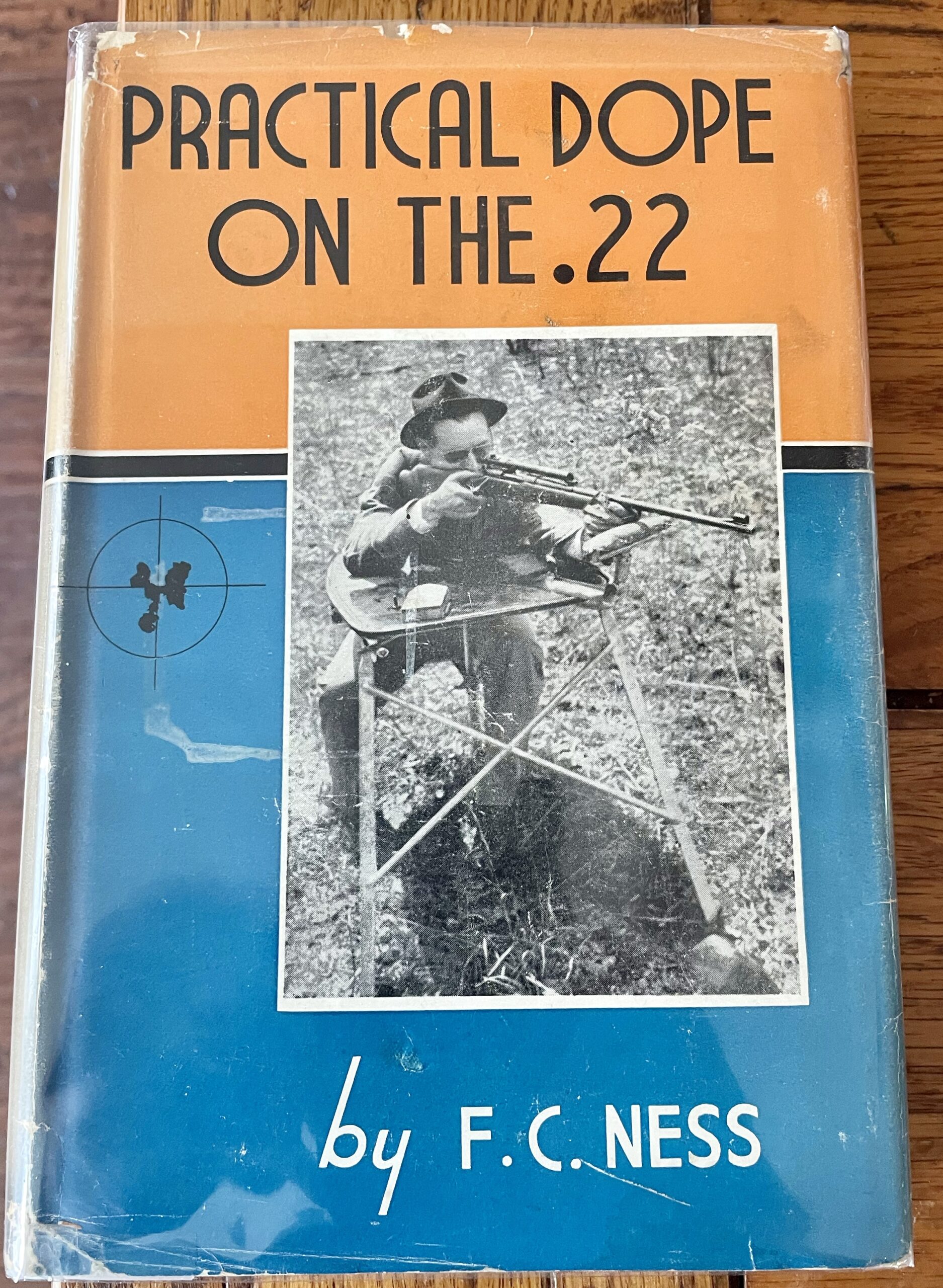

Practical Dope on the .22, Ness, F.C. Military Service Publishing Company, Harrisburg, PA, 1947. Riling 2606. Also in Biscotti.
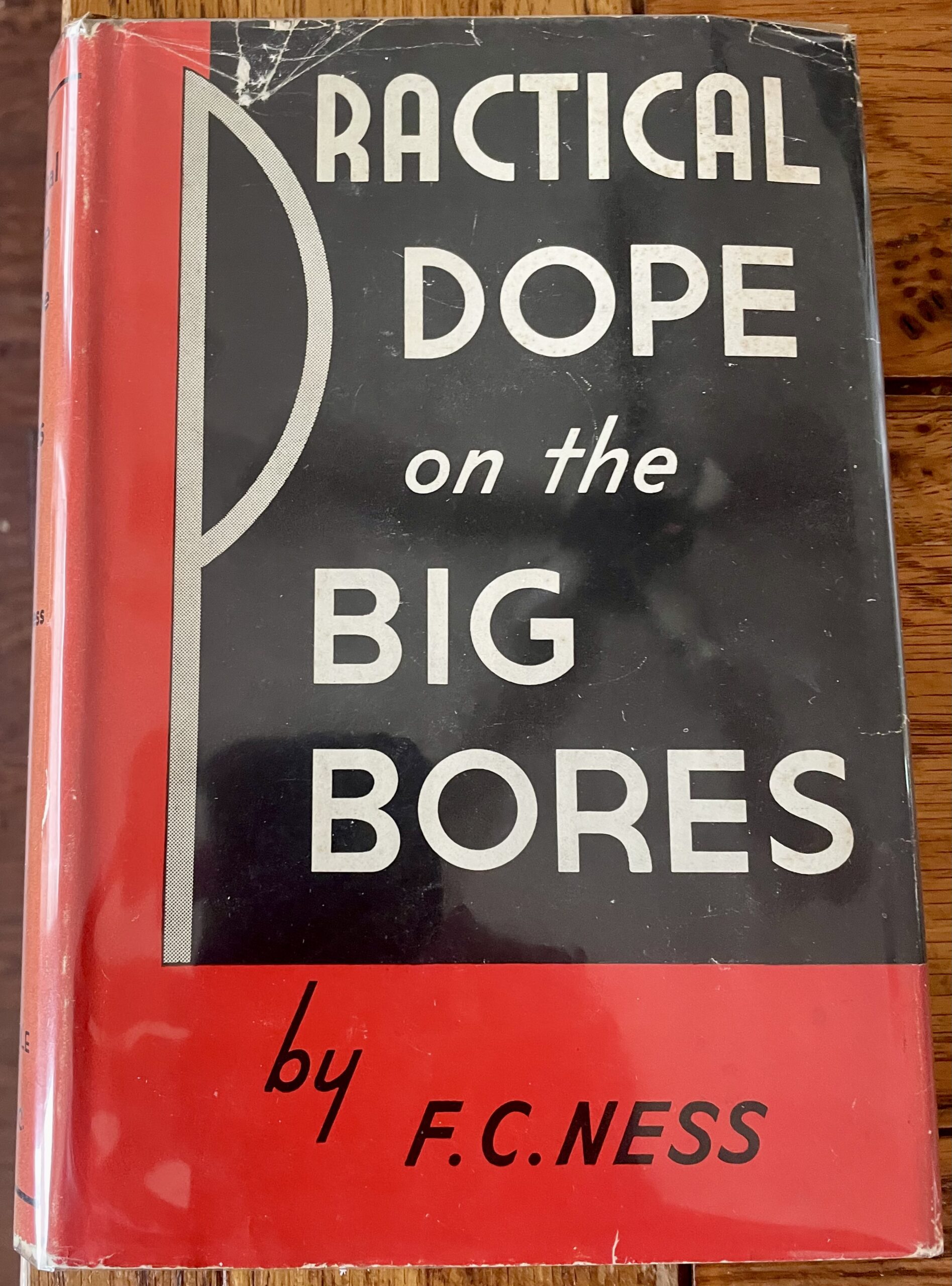

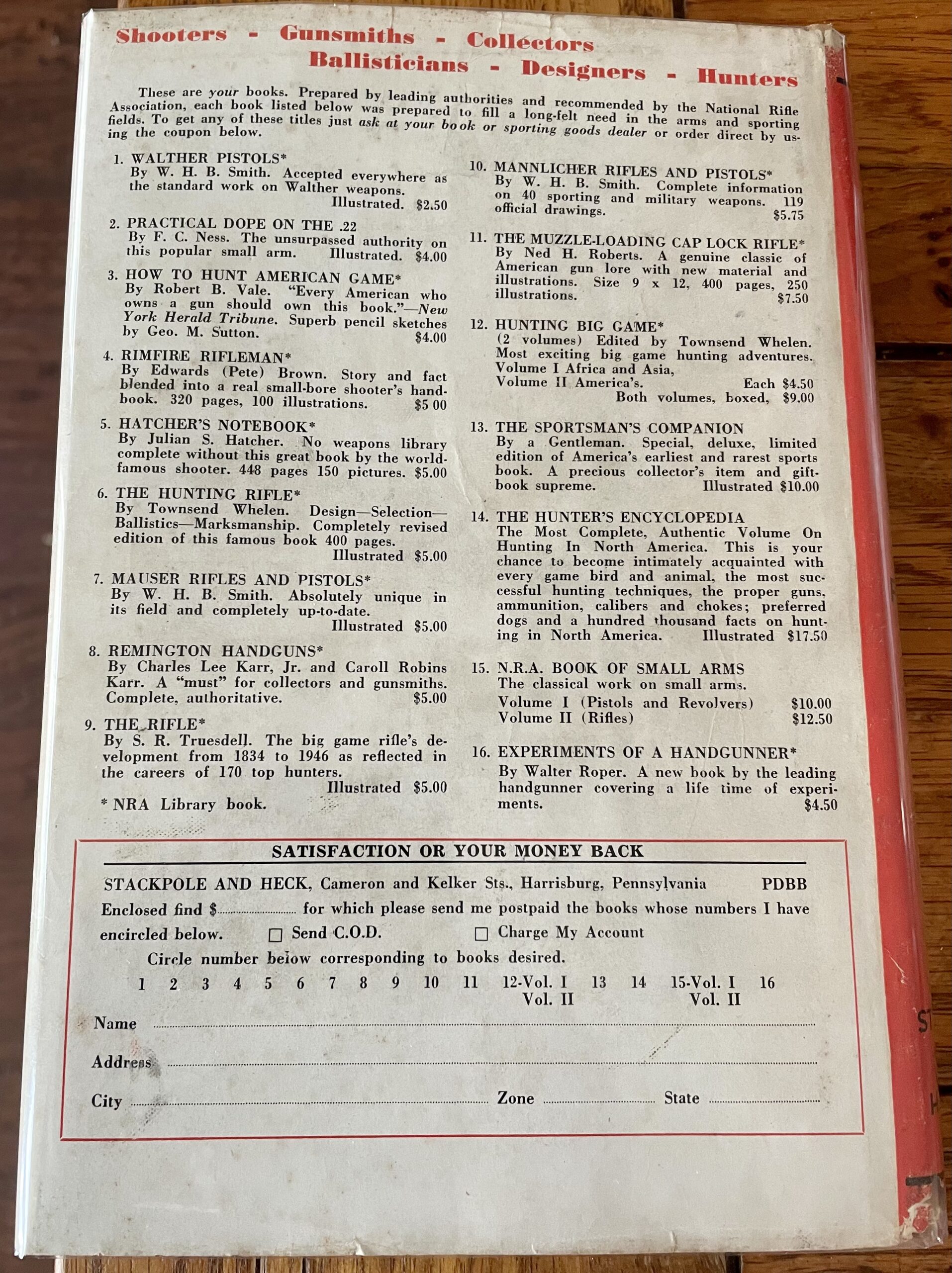
Practical Dope on the Big Bores, Ness, F.C. Stackpole and Heck Inc., New York and Harrisburg, 1948. Riling 2654. Also in Biscotti.
For some reason, I got a wild hair a while back and decided I was going to order both of these Ness books. I think it was motivated by reading a reference to the .22 book somewhere in my studies of the .22 Hornet, and deciding as long as I was going to order one, might as well get the other.
I know very little about Fred Ness (as Biscotti refers to him), but there’s a short author biography in the rear jacket of Big Bores. He worked for the NRA for some years, including editing the “Dope Bag” column in “American Rifleman” and heading the technical department. (“He has always been the confidant and advisor of cartridge makers; the official tester and reporter of the results.”)
I haven’t sat down to read these yet. But I have flipped through them. .22 does have some material on .22 rimfire cartridges, but the main focus seems to be centerfire .22 cartridges, such as the Hornet, the Bee, the .220 Swift, and various wildcats. Big Bores starts out with the “.25 Stevens Rim Fire and .32 Long Rim Fire” and works up to “.300 Magnum Wildcats” and “Big Bore Big Game Loads”. (The index lists “.577 and .600 Nitro Express” but it doesn’t look like these get much more than a single page.)
I think both of these are pretty decent for 70+ year old books. Big Bores has a tear/chip to the top front cover, some more smaller tears in the same place, and some worn spots on the corners. There are some small chips on the spine edges, but the back cover looks good. .22 has some small chips on the top front and a small tear on the bottom front, some larger chips out of the top and bottom spine, one large chip at the rear top and one more smaller chip at the rear bottom.
Each of these were $50 plus tax and shipping: Big Bores came from Appledore Books, while .22 came from Fireside Angler. Both were a pleasure to deal with: I have no complaints.
Next time, whenever that is (but I hope soon): Good guns, some cooking, maybe some weird Australian mammals, and Americans, fark yeah! Possibly also: have you read a Ford lately?
