And I’d like to talk about Spring…fields. Or at least books about Springfields. Plus some sniping content after the jump…
My local gun shop has an Enfield No. 4 Mk I. I saw it on the rack and was thinking to myself, “Hey, maybe I could make that over into a No. 4 MK I (T) sniper rifle and shoot vintage sniper rifle matches! How hard can it be to find a replica No. 32 telescopic sight and mount it?”
Then I had a smarter thought. “Maybe I should read The Matchless Enfield .303 No. 4 MK I (T) Sniper first.”
This is why we have gun books, people. Someone once said you should buy two or three books for every gun you buy. Mr. John has a chapter in his book on building a replica No. 4 MK I (T), and it turns out to be much more complicated than I expected. First, you have to find a scope: Numrich used to sell replica scopes and mounting hardware, but discontinued the scopes a while back. (They still have some of the other parts.) Then you have to find a gunsmith who can do the mounting, which involves machining the receiver (to “true it up” and make the sides perfectly flat) and attaching mounting blocks for the scope. This is the kind of thing that only a very specialized gunsmith who likes working on old guns will do. And when you start adding up the costs, you also start wondering, “Why don’t I just buy a non-replica No. 4 MK I (T) with the No. 32 telescopic sight?”
So, yeah, gun books saved me a few dollars. But I did go down a bit of a rabbit hole on sniping history, again, thanks to also refreshing my memory of Sniper’s Honor (speaking of the No. 4 MK I (T) with the No. 32 telescopic sight).
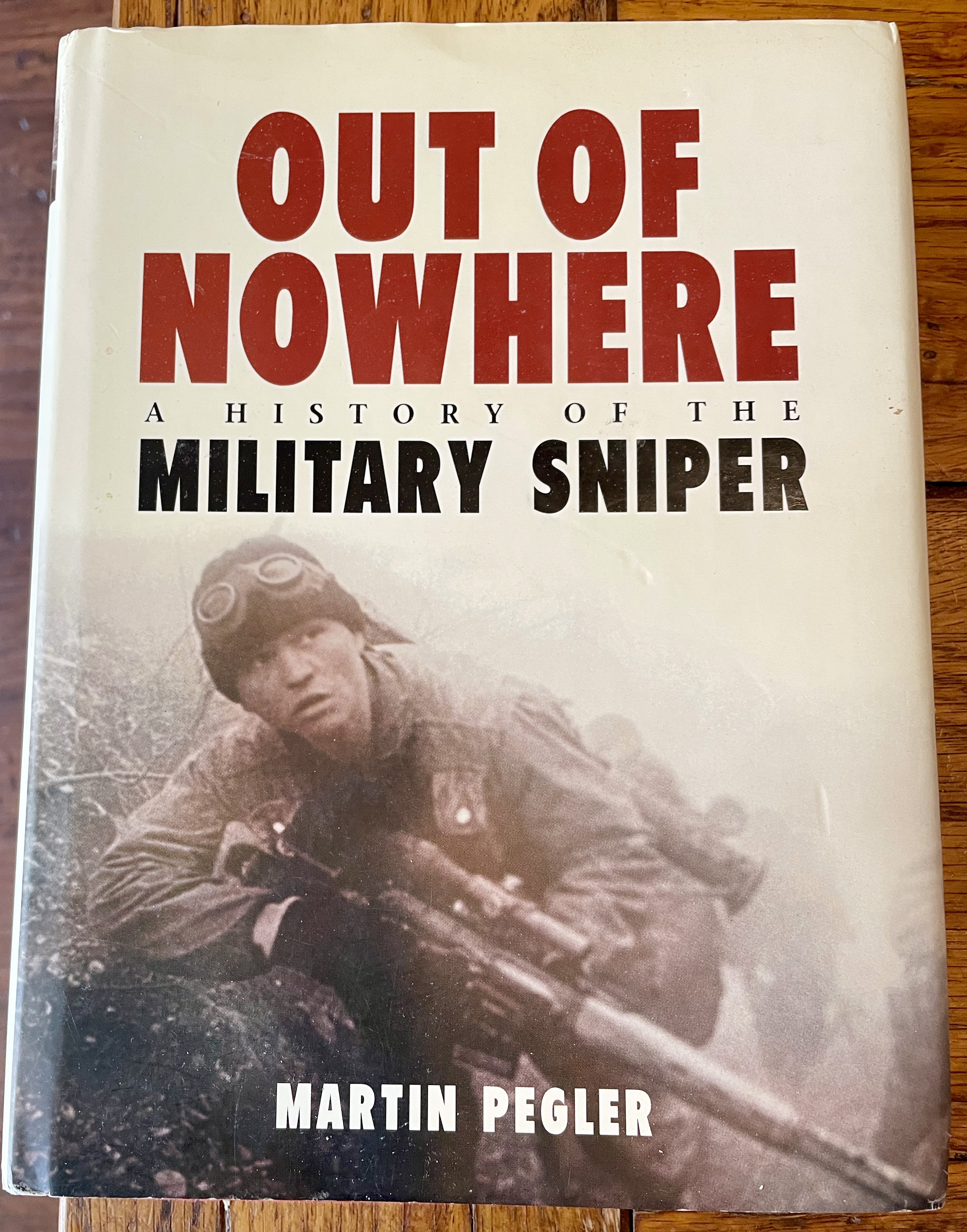
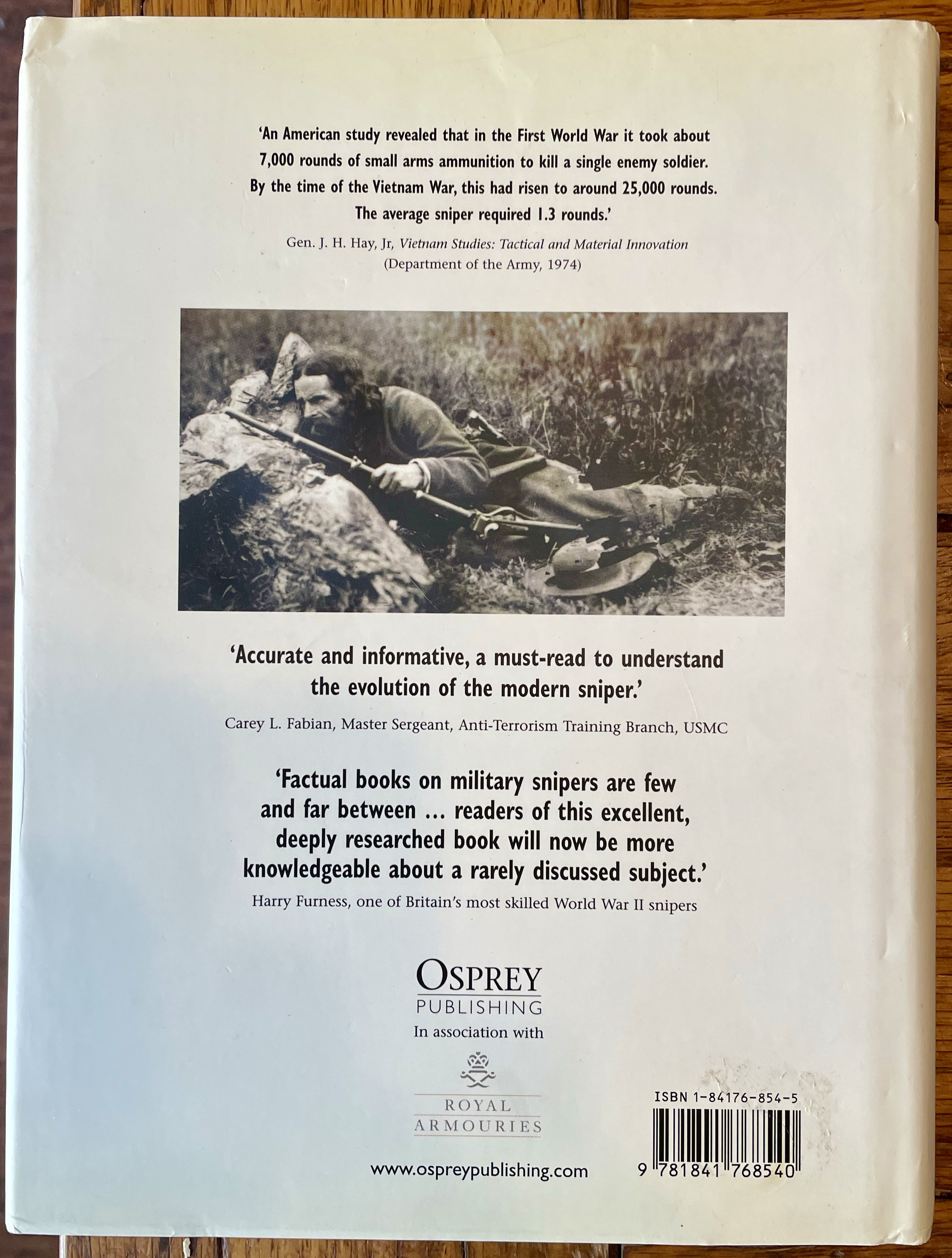
Out of Nowhere: A history of the Military Sniper, Martin Pegler. Osprey Publishing, Oxford, UK, 2006.
You can get new copies of this off Amazon, and Hunter cites this as one of his sources for Sniper’s Honor. I’ve flipped through it, but haven’t read it yet. However, I did notice that Mr. Pegler talks a little about Clifford Shore, also known as “Captain C. Shore”. Which led me to…
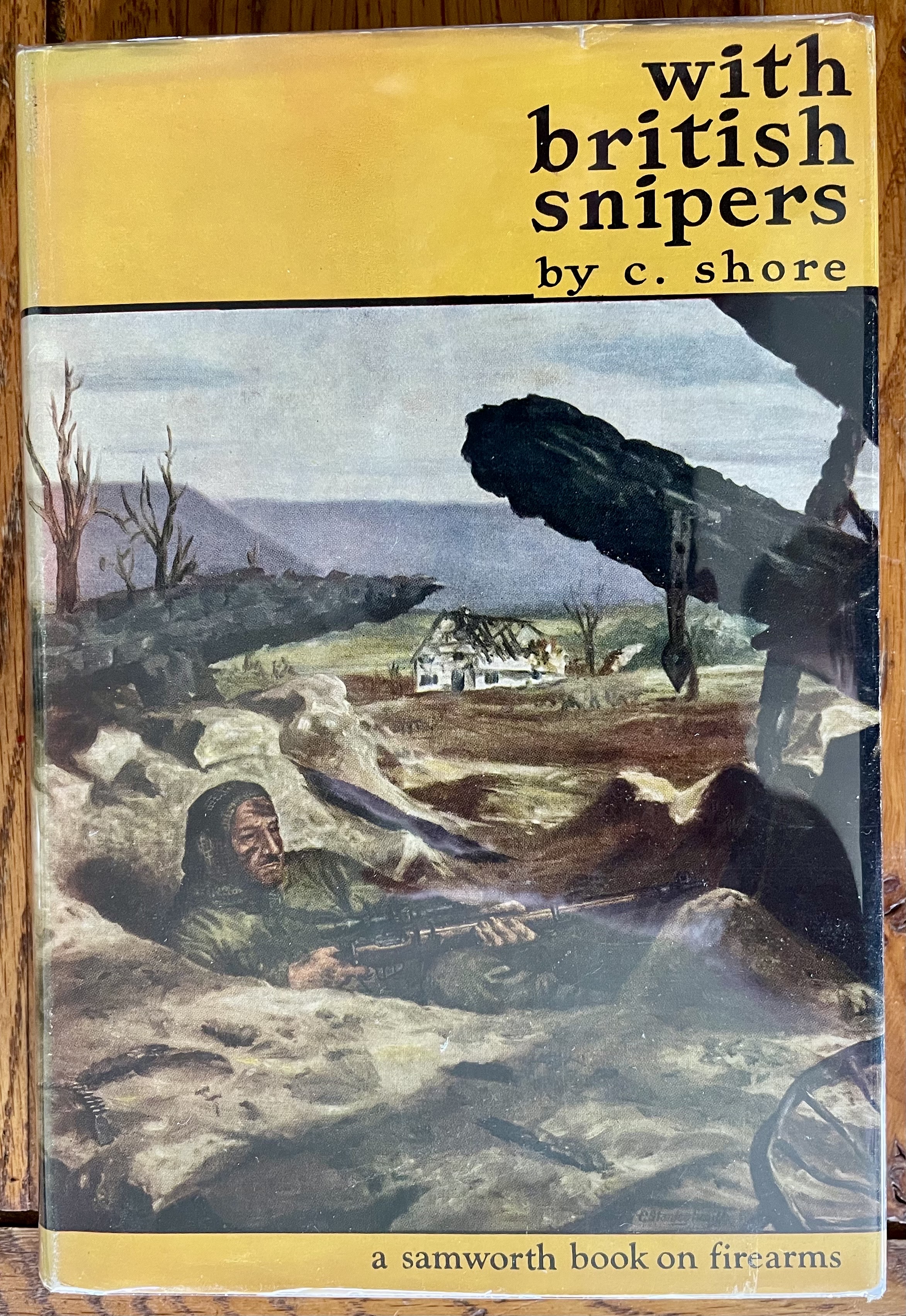
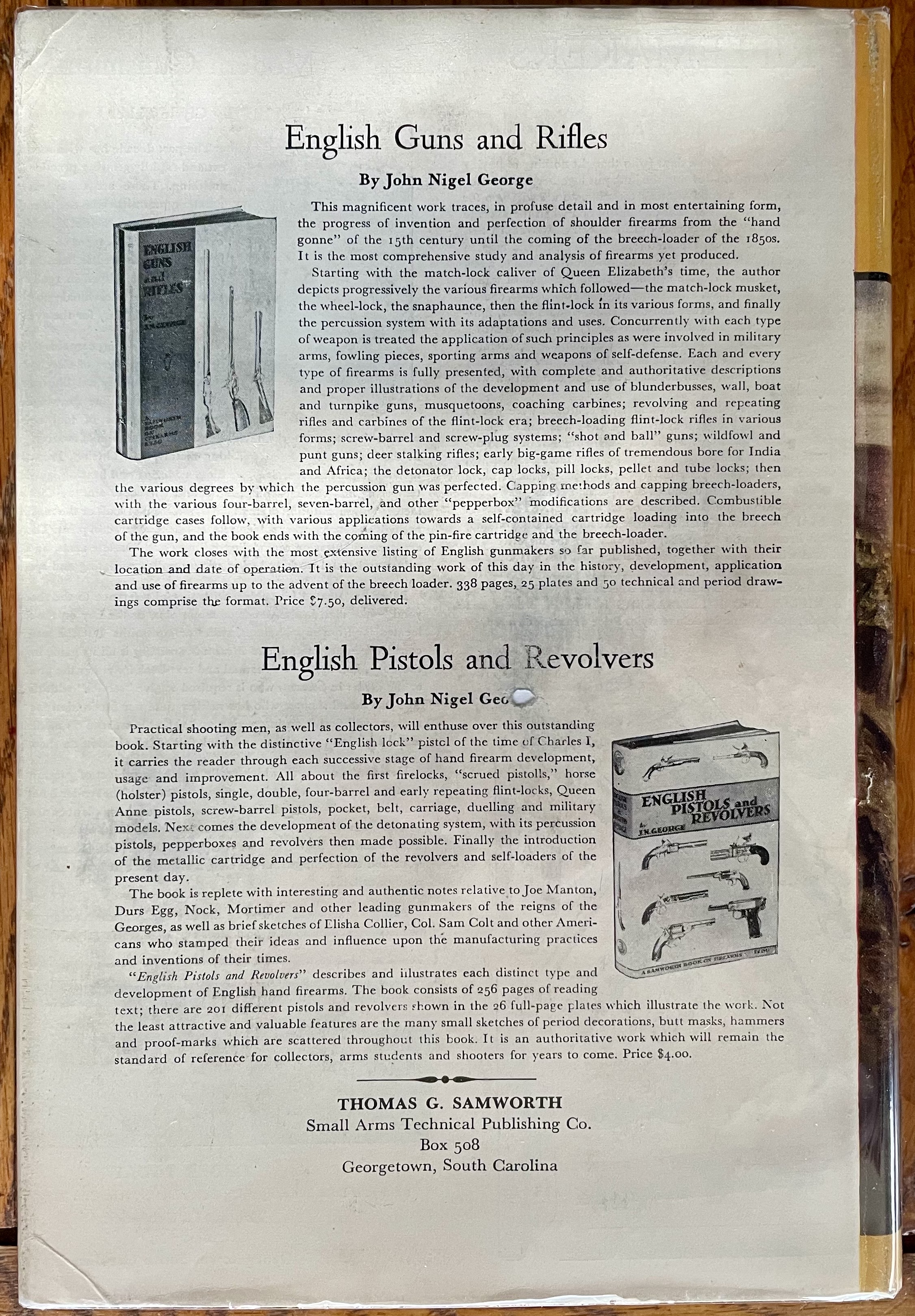

With British Snipers to the Reich, Captain C. Shore. Small Arms Technical Publishing Company, Georgetown, SC, 1948. Riling 2662. Not in Biscotti, probably because this is more military history than sporting arms.
This replaces a Firearms Classics Library reprint, which I am looking to adopt out to a loving home. Smith says there was only one state of this, with a 1948 advertising page date. This matches up with my copy.
With British Snipers is considered one of the classic works on sniping, I think in part because it concentrates more on philosophy and tactics rather than equipment. I think this is a darn nice copy. I’d call it “fine”. There’s a little bit of edge wear to the lower right front corner, but you can just barely see it. The rest of the book looks fantastic, except for a very small hole roughly in the middle of the back cover. It does have a sticker in the back from one of the previous sellers…Ray Riling Arms Books.
$116.96 (with tax and shipping) from Stacks Abound Books on ABE.
The British used the No. 4 MK I (T) as their sniper rifle for a long time – I’ve seen 25 years mentioned in various places. And the United States used the 1903 Springfield as a sniper rifle for a long time, starting in WWI and extending through the early days of the Vietnam War.
(I’m simplifying a lot here. And there were M1 Garands converted for sniping that saw use in WWII and post-WWII as well.)
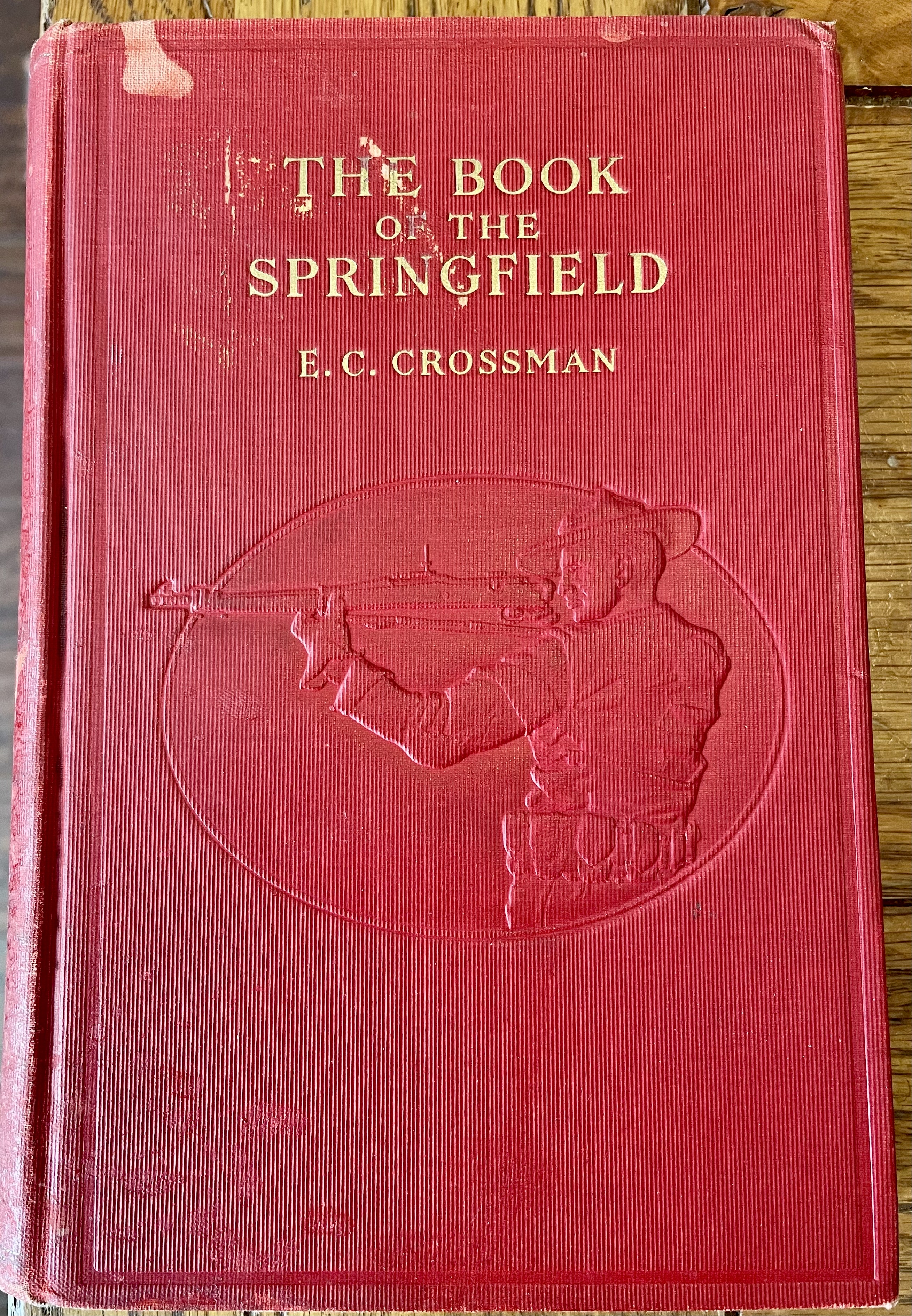

The Book of the Springfield, E.C. Crossman. Small Arms Technical Publishing Company, Marines, Onslow County, NC, 1932. Riling 2121. Also in Biscotti.
I’ve written quite a bit about Captain Crossman. In the interest of keeping this post shorter, I won’t recap his biography here.
As I noted in a previous entry, this started out as being part of Military and Sporting Rifle Shooting, but he had so much material, he ended up pulling all of the Springfield stuff into a second book. Smith calls this “Long the standard reference for shooters of the Springfield rifle”, but also says “The present-day Springfield collector will find variants and related equipment are better served by Campbell’s The 1903 Springfields and Brophy’s The Springfield 1903 Rifles.”
This is not an outstanding copy. Maybe “good”? There was no jacket, the corners are a little bumped, and there seems to be a lot of staining or something on the spine. I can’t tell if it is a first printing, first state, or first printing, second state: some of the points of issue that Smith identifies are obscured by the damaged spine. But it has three things going for it:
- It was cheap. I’ve spent more on lunches I liked less.
- The money is going to a church.
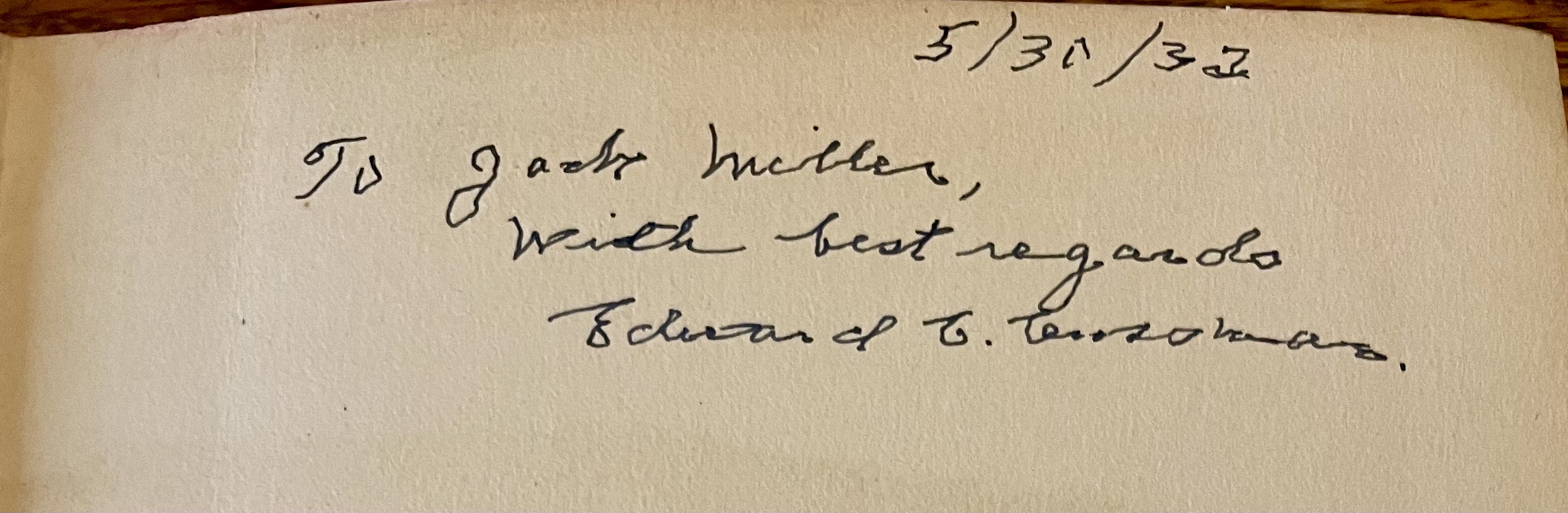
- This one is signed by Captain Crossman. They aren’t making any more of those.
This is also one of the few Samworths that has two acknowledged editions. The second edition was published in 1951, after Crossman’s death, and adds supplemental material by Roy Dunlap (who also wrote Ordnance Went Up Front and Gunsmithing for SATPC). I am looking for both a good copy of the second edition, and a better copy with jacket of the first.
$28.51 (with shipping and tax) from The Himmelreich Library in Lewisburg, PA. Bought off eBay based on a tip from my book buddy in the Association.
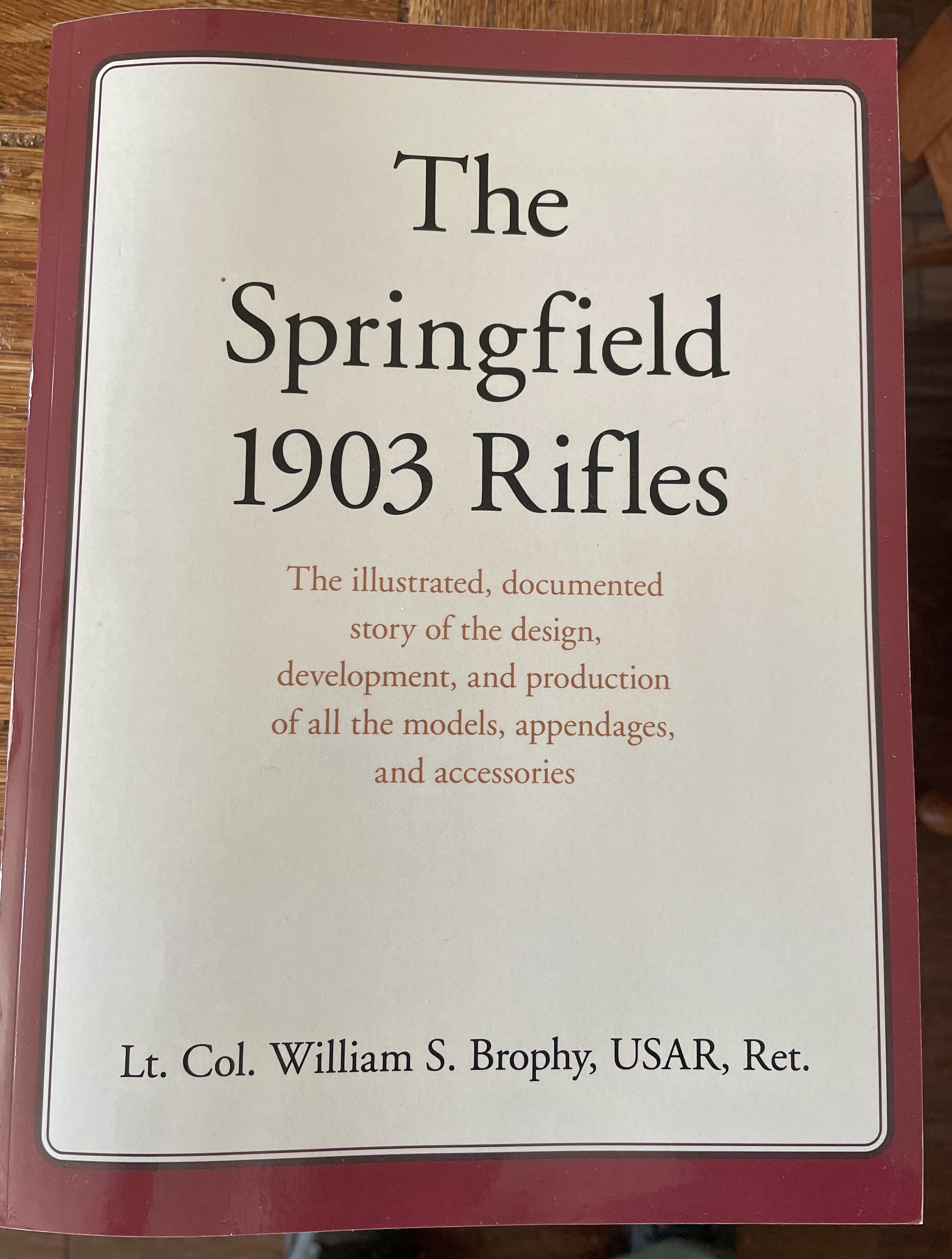
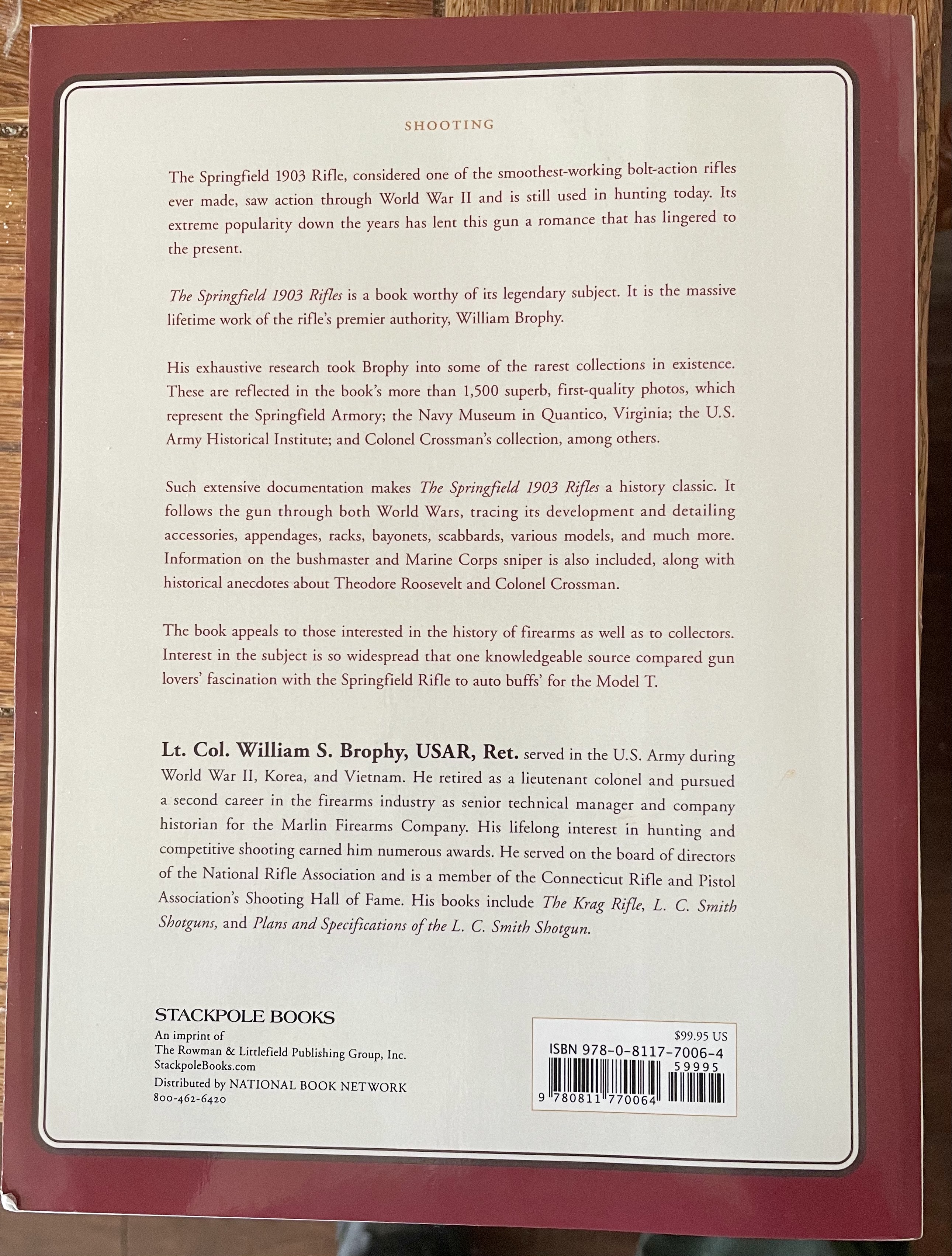
The Springfield 1903 Rifles: The Illustrated, documented story of the design, development, and production of all the models, appendages, and accessories, Lt. Col. William S. Brophy. USAR, Ret. Stackpole Books, Guilford, CT, 2021.
You can order this new from Amazon. It isn’t cheap, but it is massive: 616 pages in the paperback edition. (Which is actually cheaper than the Kindle edition.) Too late for Riling, but it is listed in Biscotti (first published in 1985).
I’ve also written about LTC Brophy before: as you may recall, he went on to write the definitive history of Marlin and became the company historian.
Haven’t read it, but it looks like something that’s a must-have for anybody who is serious about Springfields.
Next time…still working through the backlog. We’ll see what bubbles up to the top.