If I make a small push here, I can get the last of the gun books out of the living room. That will leave me with one on the kitchen table (which is there waiting for me to do the combination gun crankery/gun book post) and a few new additions upstairs. (Plus the backlog. We don’t talk about the backlog.)
Some of these books I can cover relatively quickly, so maybe it is worth making that push. All of them are interesting to me, but for varying reasons.
Shall we get on with it?
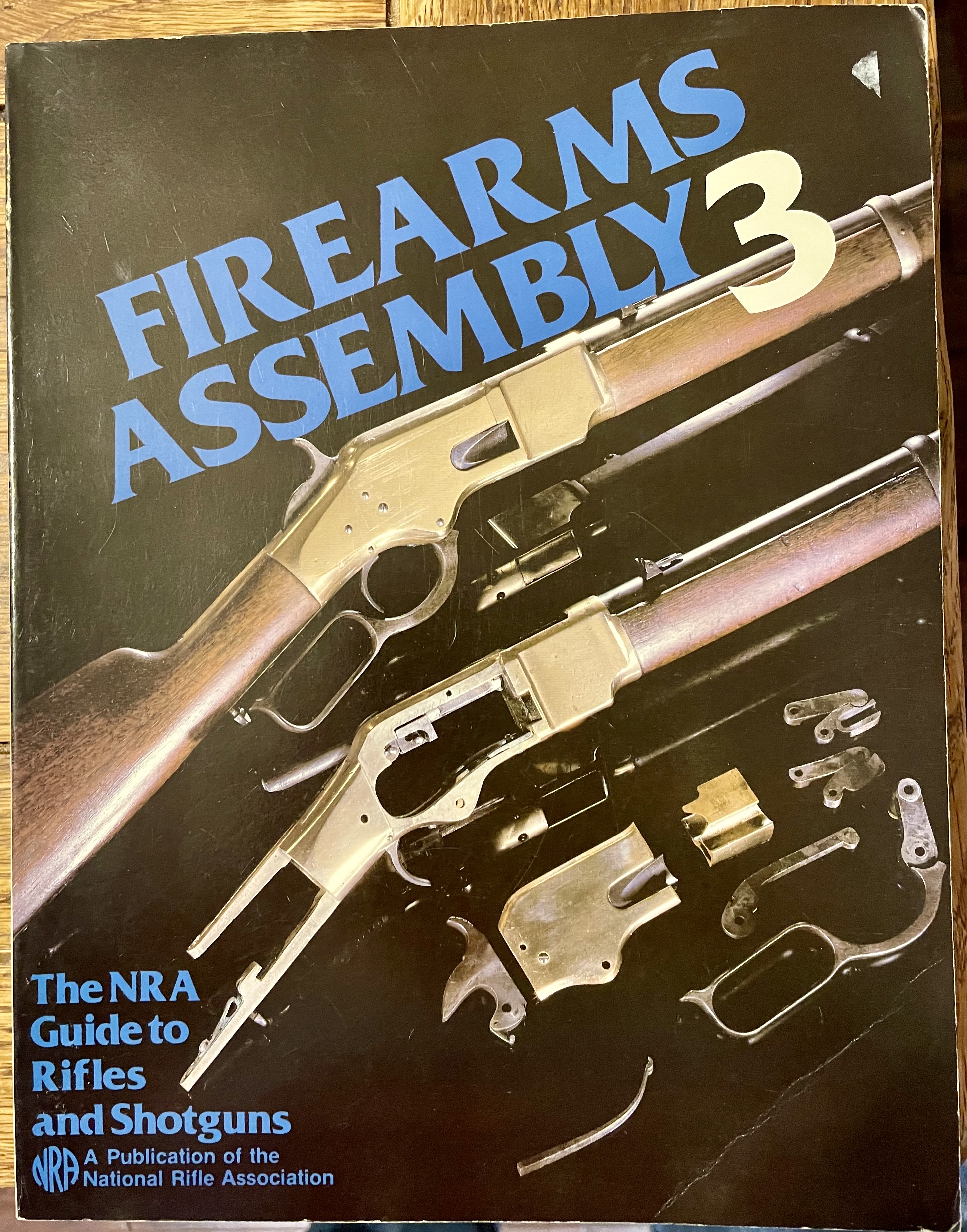
Firearms Assembly 3, National Rifle Association, Washington, DC, 1987.
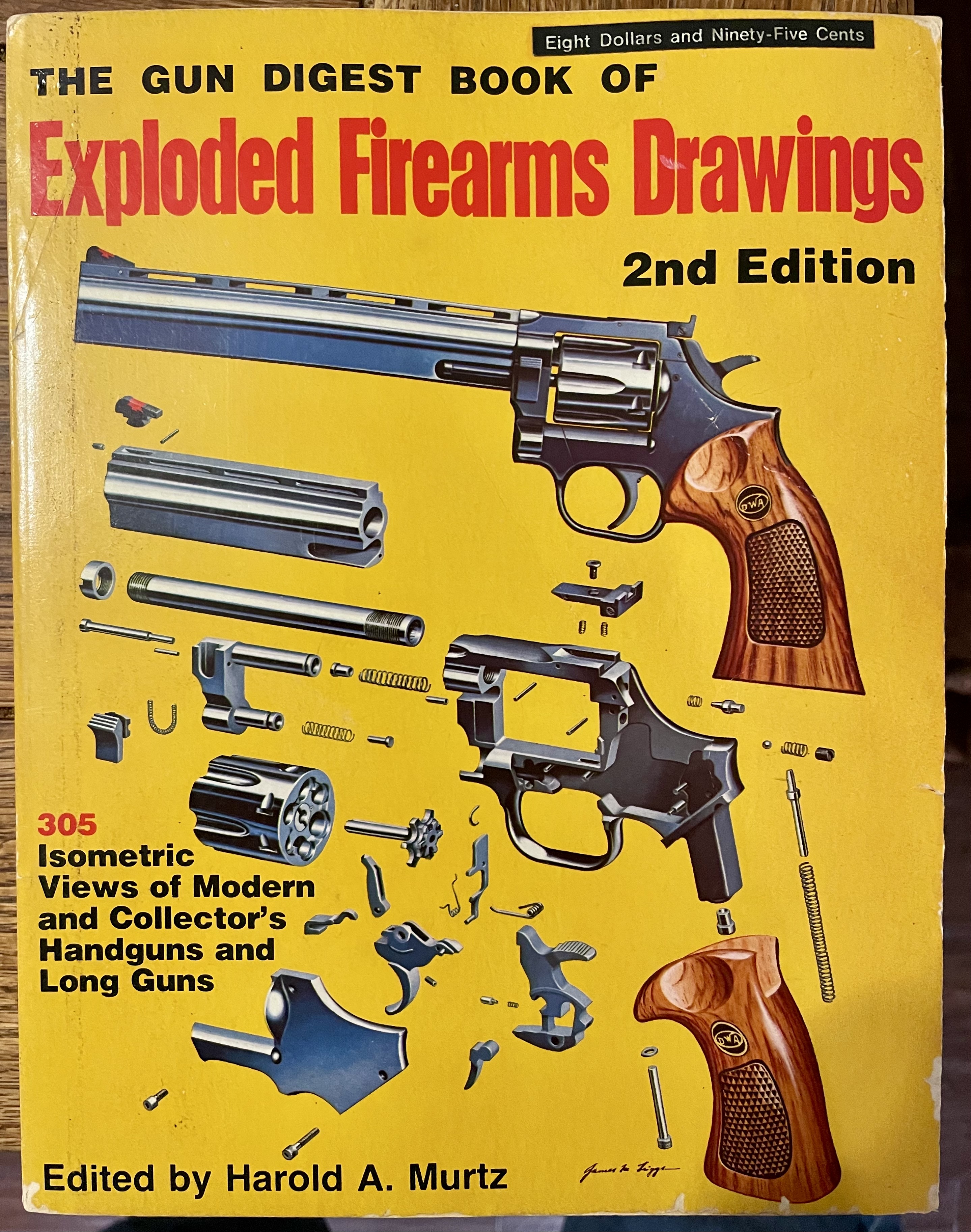
The Gun Digest Book of Exploded Firearms Drawings, 2nd Edition, Harold A. Murtz (ed.). DBI Books, Inc, Northfield, IL, 1978.
I’ve written before about my fondness for picking up these books whenever I find used copies at a reasonable price, just in case someone has an obscure gun like a Browning T-Bolt (wink) or a H&K MP-5 and needs assembly instructions or an exploded drawing for their gun. These seemed to be in decent shape, and were $9.99 and $4.49 respectively at Half-Price. I think Firearms Assembly 3 overlaps an existing copy in my collection, but Exploded Firearms Drawings is a new volume for me.
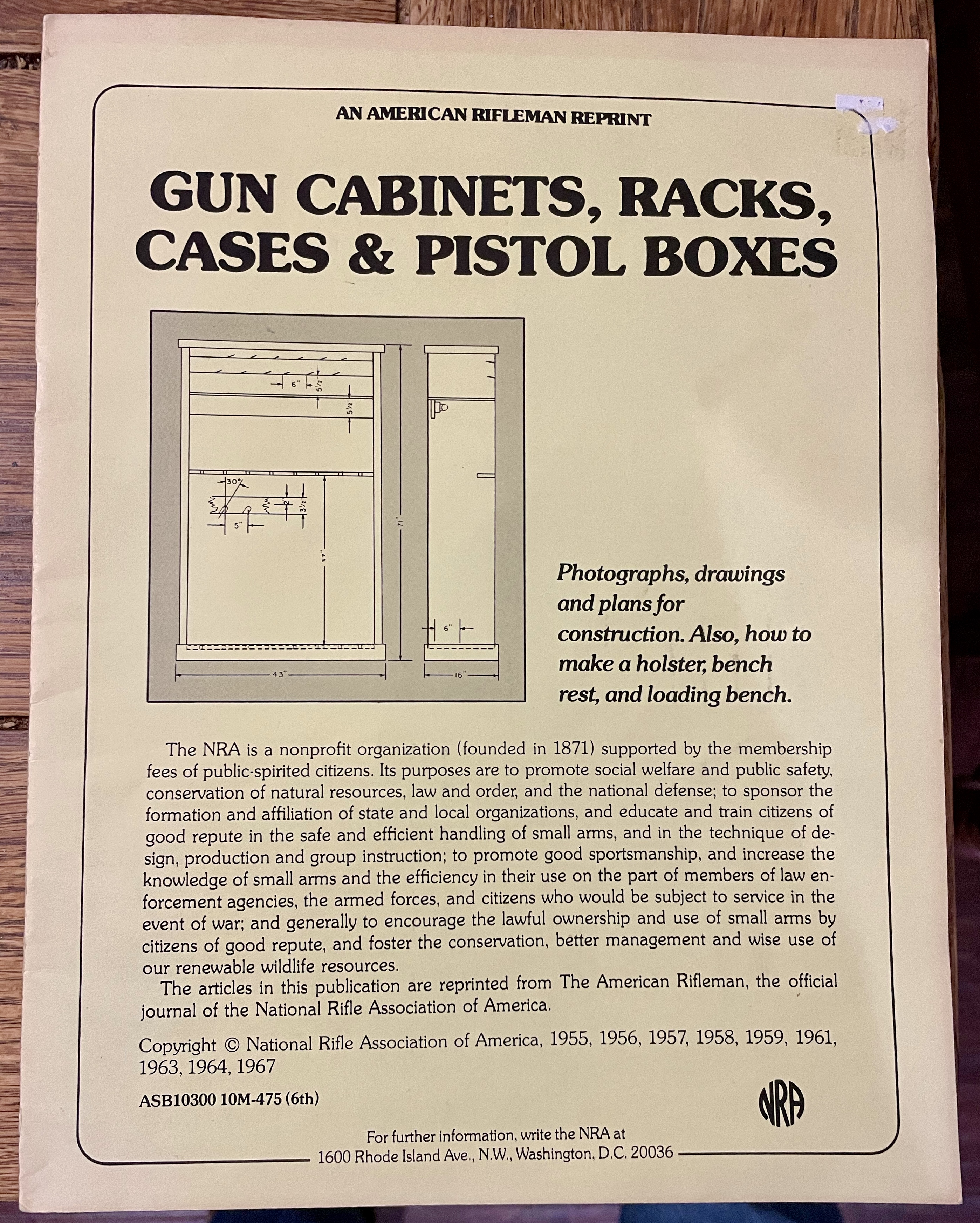
An American Rifleman Reprint: Gun Cabinets, Racks, Cases & Pistol Boxes, National Rifle Association, Washington, DC, 1967.
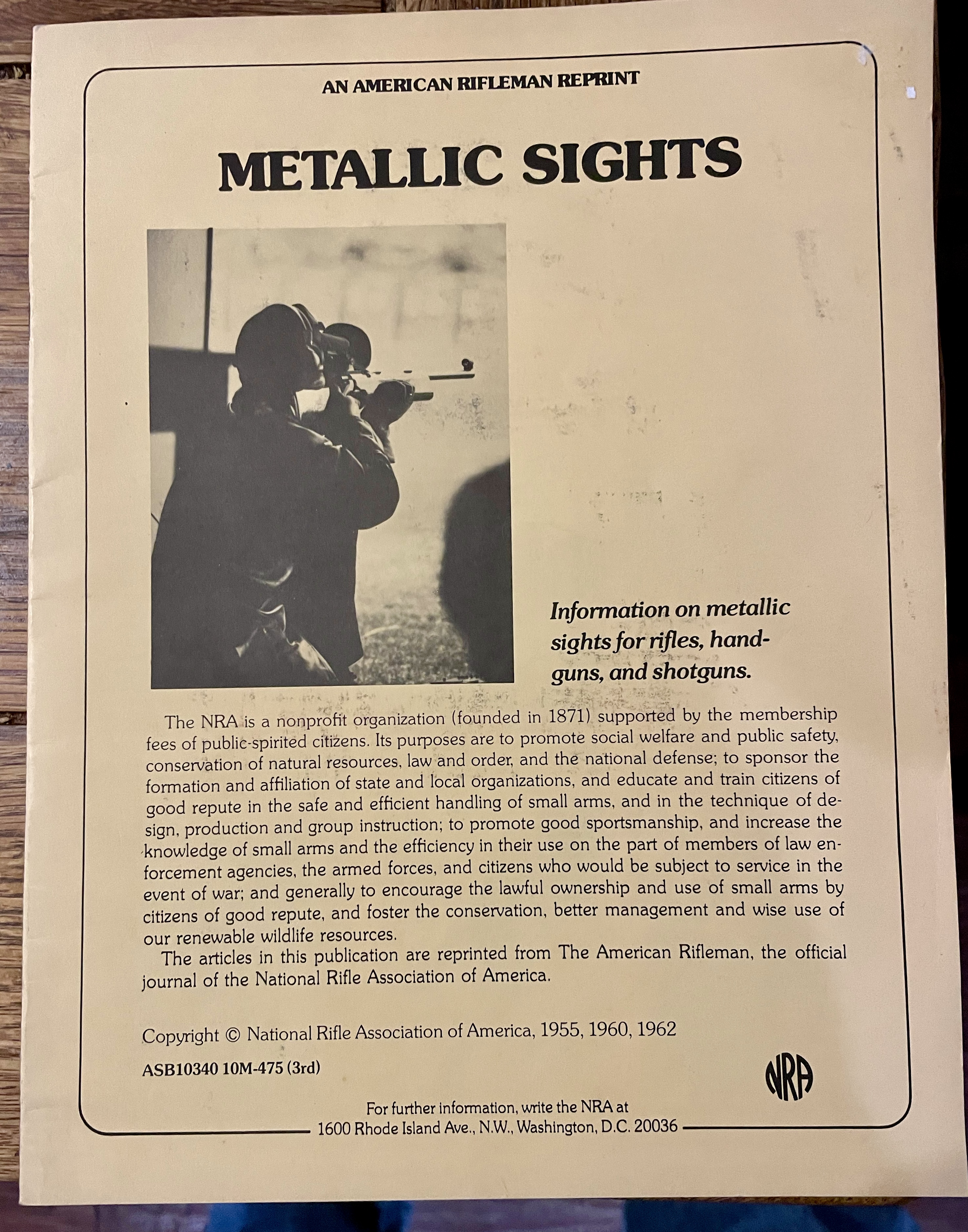
An American Rifleman Reprint: Metallic Sights, National Rifle Association, Washington, DC, 1962.
These are two collections of reprinted articles from the American Rifleman. These reprints are another thing I’m a sucker for, and this is a good set.
Gun Cabinets covers a fair number of woodworking projects, such as gun racks, gun cabinets, pistol boxes, and display cases. It makes me wish I had woodworking talent, but, you know, it is never too late to learn. There are also reprints on making your own holsters and (leather) gun cases, along with various other useful accoutrements.
Metallic Sights covers the various types of non-scope sights for rifles and handguns. The centerpiece is a three-part article detailing the types of sights available at the time, but there are also some useful articles on using metallic sights with “old eyes”, and how to actually shoot well with them. This is a nice reference work to have around.
These were $10 each in the same Half-Price Books batch. One of these days, I swear, I’m going to start scanning and uploading some of these NRA reprints for the benefit of my readers. But first I need to get a better scanner…
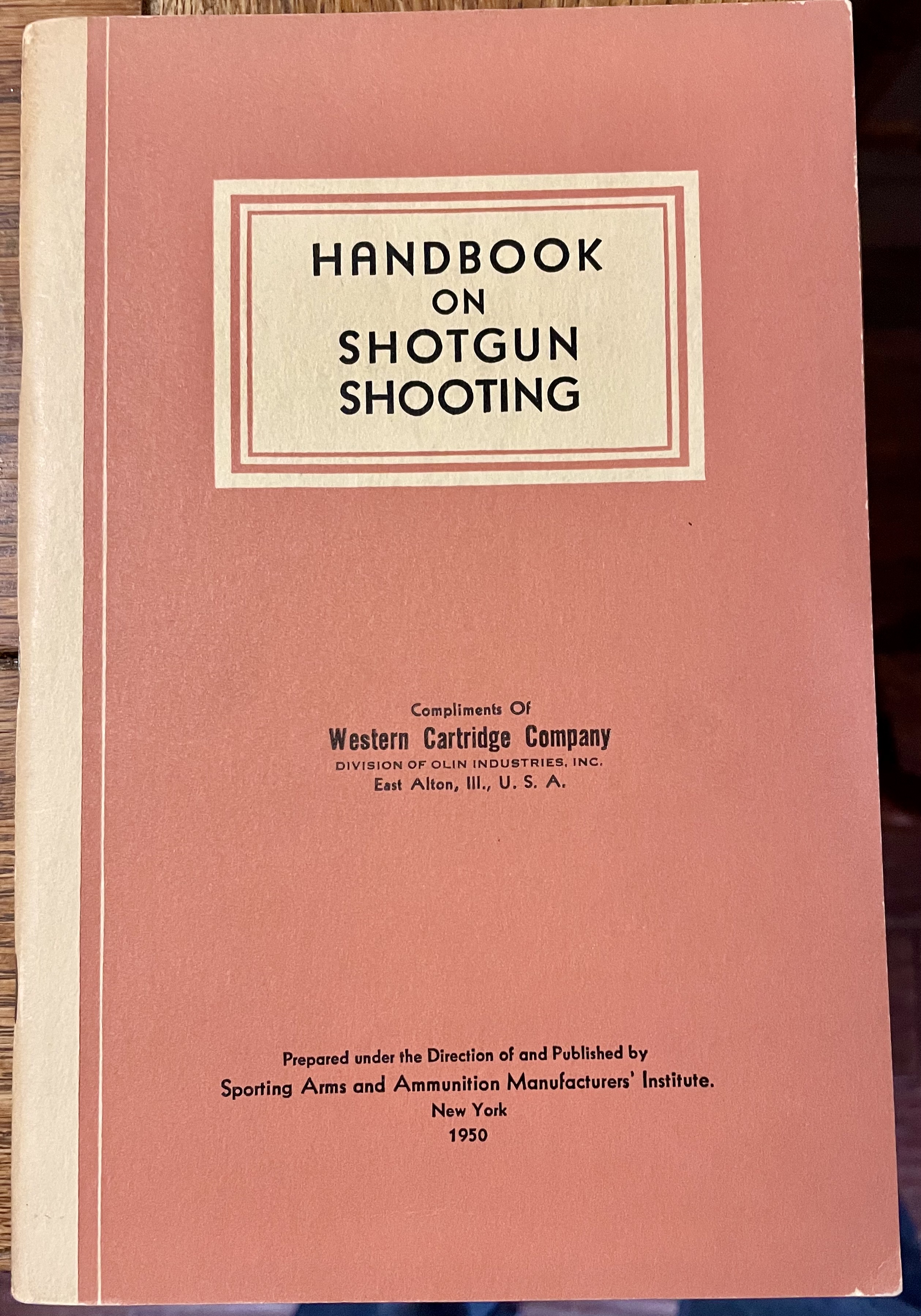
Handbook on Shotgun Shooting, Sporting Arms and Ammunition Manufacturer’s Institute, New York, 1950.
A bit of ephemera. 144 pages on shooting the shotgun, both at clay targets and at game, published by one of the major manufacturing organizations. This is a fourth printing, so I think it was fairly popular. I believe this was subsidized by the members of SAAMI (“Compliments of Western Cartridge Company”) and probably sent out to anyone who wrote in and enclosed a SASE. Which was the style at the time.
(I have a very vivid memory from when I was a small child. My mother had a yellow booklet, I’d say probably 8 1/2″ by 11″ and maybe 150 pages. Inside the book, it gave the names and addresses of various companies, and listed things they’d send you if you wrote in and included a SASE. We probably spent hours sending off to companies in that book for stickers and catalogs and other fun stuff. Seems like a simple thing, but I remember it being both fun and moderately educational. As a matter of fact, I think one of the things I sent off for was a catalog from Remington…and that’s how I was introduced to the XP-100.)
$4 as part of a batch from Callahan and Company, and it looks pretty nice for a 75 year old pamphlet. SAAMI also did a “Handbook on Small Bore Rifle Shooting”, and now I want to find a copy of that, too.
(Edited to add 3/7: since I had the bibliographies off the shelf for a new entry, I decided to double-check them. I had assumed that all of these would not be in Riling or Biscotti. It turns out I was correct…except for Shotgun. Riling 2267, also in Biscotti. Both say this was originally published in 1939 (I don’t know if Biscotti got that from Riling: not that I would throw stones at him if he did, but having just read Scott Brown’s essay on Cormac McCarthy covers, I feel it is important to note where information comes from) and reprinted many times.)
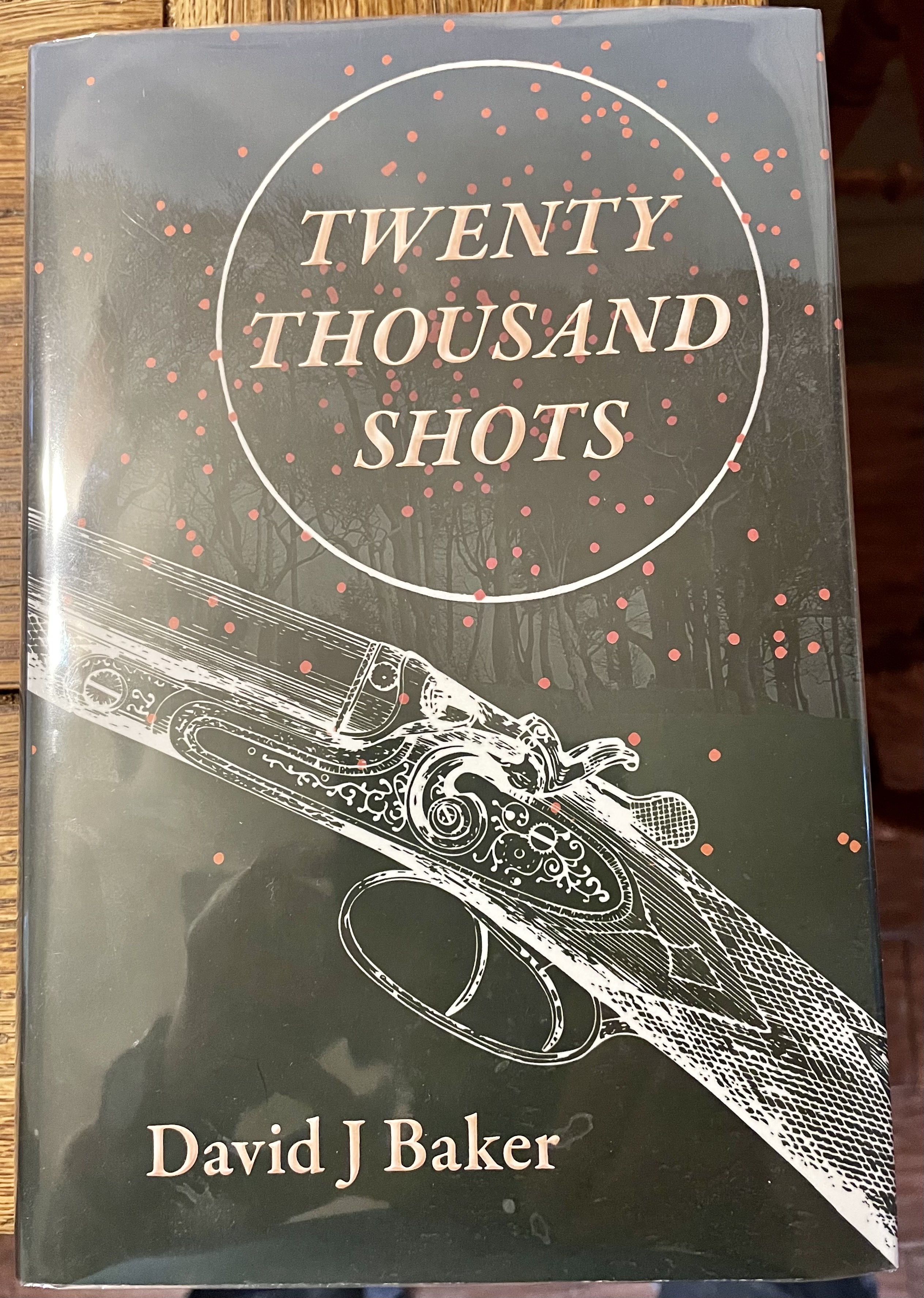
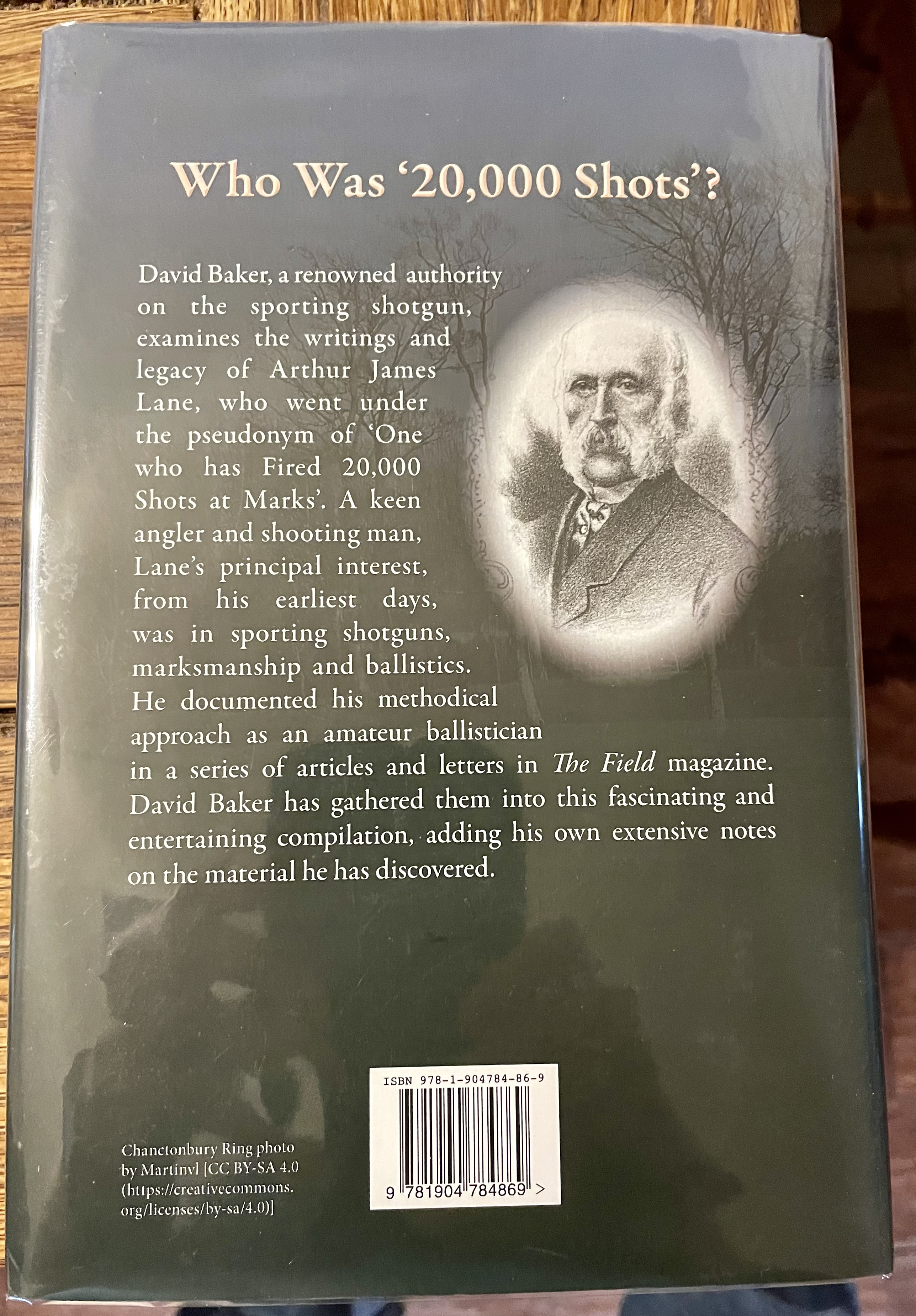
Twenty Thousand Shots: The Writings of a Remarkable Victorian Amateur Ballistician, David J. Baker (ed). Coch-y Bonddu Books, 2018.
Back in the day – and by “back in the day”, I mean, “during the Victorian era” – English gentlemen loved to get out in the fields and hunt game with their shotguns. (John Hanning Speke, discoverer of the source of the Nile, was a shotgunner, and died in a shooting accident.) Any time you have a sport, or even an area of interest, there are going to be publications appealing to that subject. I know I have seen cryptocurrency “magazines” at Barnes and Noble, just as one example. This would have been even more true in the Victorian era.
One famous publication was “The Field”, which (according to the introduction) covered “all sorts of topics related to the countryside”, including shooting. Much of the shooting content came by way of letters from readers. And one of those letter writers was “One who has Fired 20,000 Shots at Marks”, a pseudonym for Arthur James Lane.
I gather Lane had money and leisure time, and spent a lot of both studying shotguns and shotgun ballistics. He was a prolific letter writer to “The Field” (and other publications). More to the point, he did the work. “…we were always very careful to put forward nothing that we had not arrived at by actual experiments at the target…” Lane did a tremendous amount of work on how shotguns performed, how various loads patterned under various circumstances, and other aspects of shotgunnery. It seems fair to call him an influential early ballistician in the style of F.W. Mann, but without even stone knives and bearskins.
David Baker has collected some of his work into this volume. The combination of early ballistics (and early ballisticians) plus practical experiment pushed my hot buttons, so when it came up, I ordered a copy from Callahan and Company. The book is practically new as issued, and was only $30. (It has a cover price of £19.95 on the front jacket flap, which works out to about $25 US. I don’t feel cheated.)
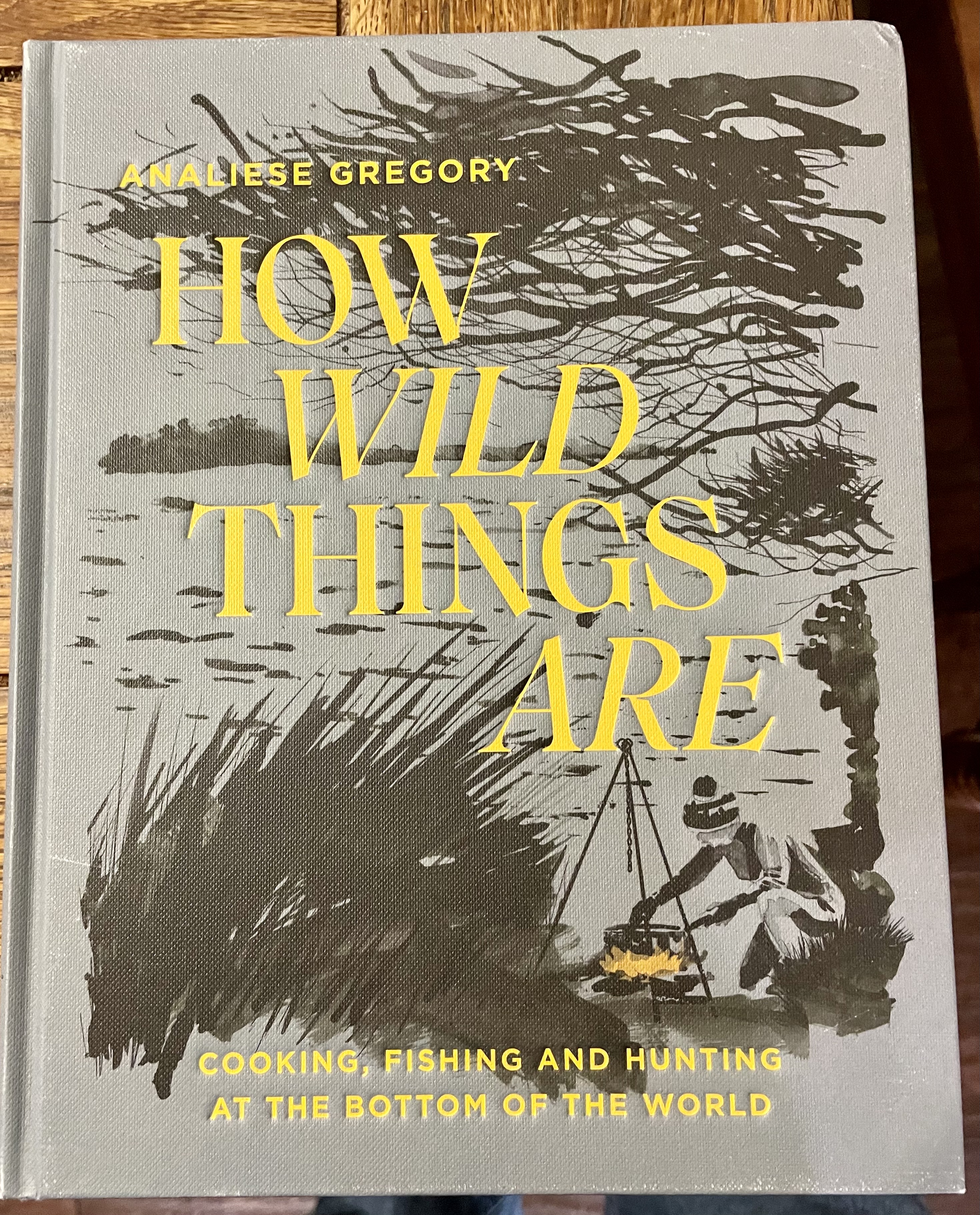
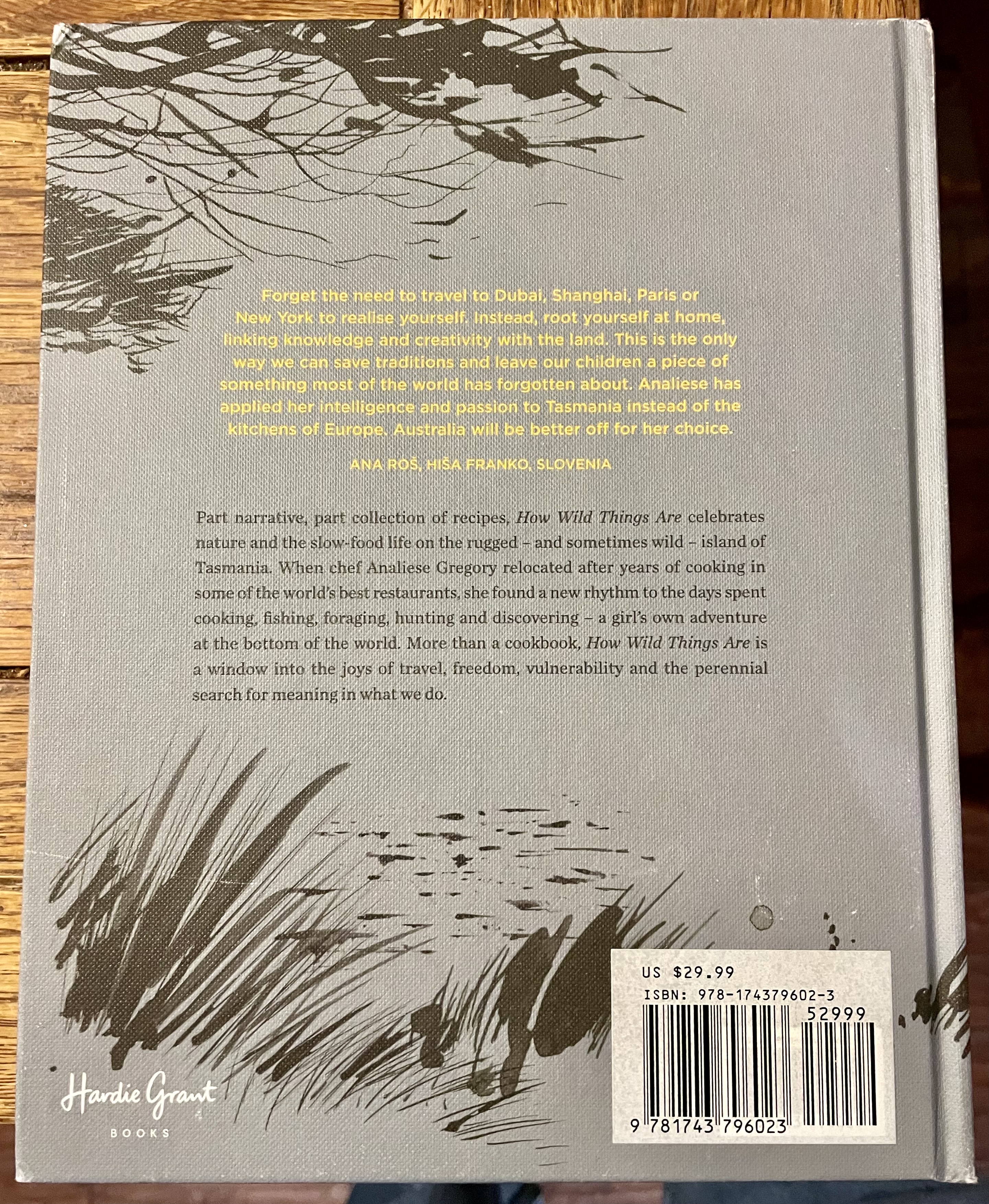
How Wild Things Are, Analiese Gregory. Hardie Grant, 2021. You can actually get this new from Amazon.
Ms. Gregory was a successful and respected chef. She worked in Michelin starred restaurants. She hung out with Gordon Ramsay.
And she was unhappy with the cooking rat race. So she dropped out, ended up in Tasmania, and started hunting, fishing, and foraging for food.
Then she wrote a cookbook about her experiences. Yes, this is where the possum sausage recipe came from. I’m still sort of not allowed to buy cookbooks, but the idea of a cookbook based on hunting and foraging appealed to me (and would have appealed to my late stepfather, who loved wild game cookbooks). I haven’t tried to cook anything from it yet, but her recipes for honey vinegar and garum intrigue me.
$22 in the same Callahan and Company order as the previous two books (with $7 total shipping added). Honestly, this was an impulse purchase when I saw the Callahan catalog entry (which mentioned the possum sausages) so I didn’t investigate much before buying. There’s some very slight wear: I would call this “very good”. And still cheaper than a new copy from Amazon.
Next time, I think I’m going to continue with tradition. I have one new-to-me non-gun book, which fits in with my particular interests (booze and crime), one sort of non-gun book (about a famous crime from 1964) and a couple of new or new-to-me actual honest to Ghu gun books. Keep an eye on this space.